
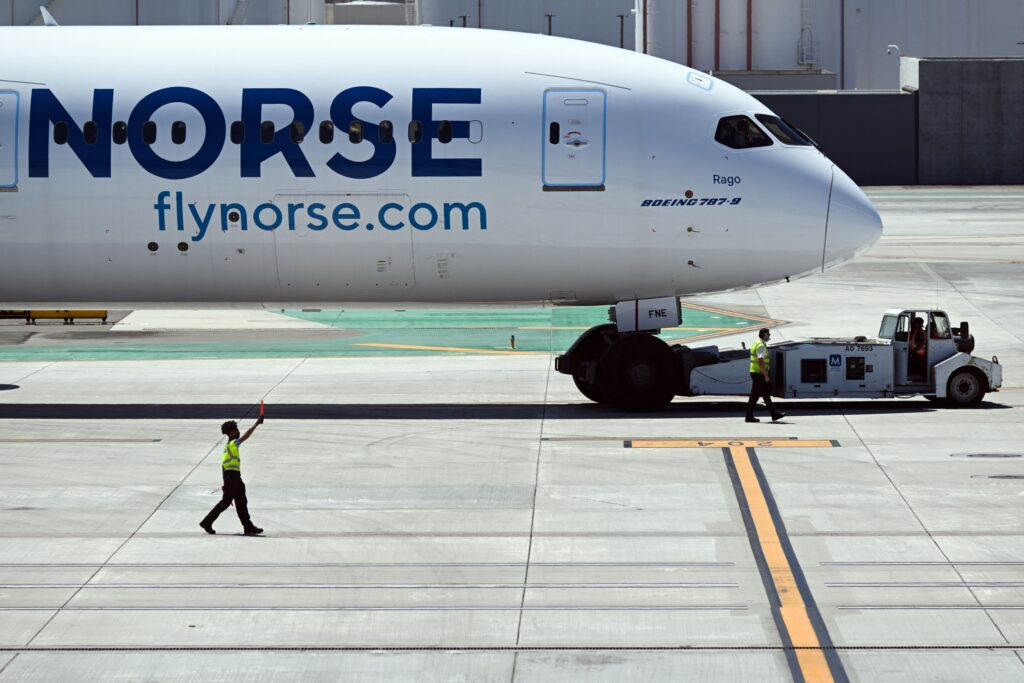
A new wave of turbulence has struck the airline industry, as Norse Atlantic, a low-cost long-haul carrier based in Norway, announced on November 27 that its Norwegian operating subsidiary has filed for bankruptcy. This decisive move includes the cessation of ticket sales and cancellation of all scheduled flights. The airline’s CEO pointed to the rising fuel costs, exacerbated by the ongoing conflict in Iran, as a primary factor leading to the company’s financial downfall.
Earlier that same day, Norse Atlantic had revealed that all twelve of its Boeing 787 aircraft had received notices from their leasing companies indicating the termination of their leases. The airline, however, contested the validity of these notices. The leased aircraft are provided by an Irish aviation leasing firm and BOC Aviation from Singapore.
On November 25, the company had already signaled that its financial status was “critical,” leading to a staggering 85% drop in its stock price on that day alone, accumulating to a total plunge of over 99% for the year.
The situation escalated on November 26 when the airline announced it was suspending all flights. In a sobering warning, the board cautioned that without immediate access to short-term financing, they might have no choice but to file for bankruptcy.
Following their inability to secure new funding, the board submitted a bankruptcy petition to the Agder district court in Norway. The court has since appointed a bankruptcy administrator to oversee the relevant procedures. Reports indicate that the subsidiary is burdened with liabilities amounting to approximately $647 million, while its assets stand at around $411 million, affecting approximately 300 employees.
CEO Eivind Roald, in an interview with Norway’s national broadcaster NRK, expressed the severity of the situation: “We simply cannot absorb any further costs… The issue with fuel has been the primary catalyst for the collapse of this airline.”
In light of this distressing news, Norse Atlantic has advised its customers not to head to the airports, stating that customer service has been halted. Travelers can apply for refunds through the bankruptcy procedure; however, the airline cannot guarantee reimbursement. Passengers are encouraged to reach out to their travel agencies, insurance providers, and credit card companies for alternative arrangements and refund inquiries.
Norse Atlantic primarily operates long-haul routes connecting Europe to Asia, Africa, and the United States, including flights from Oslo and London to Thailand’s Bangkok and Phuket. In recent times, the company had temporarily suspended its New York routes, shifting focus towards the Asian market in an attempt to cut costs.
It is important to note that only the Norwegian operating subsidiary has filed for bankruptcy, while the parent company Norse Atlantic ASA, listed in Norway, and its UK subsidiary are not included in the bankruptcy proceedings.
The UK Civil Aviation Authority has indicated that the parent company is actively seeking solutions to ensure that the UK subsidiary may continue its operations.
In a statement, Roald mentioned that the board, management team, and advisers are making efforts to keep the residual business operational. According to the company’s latest quarterly report, as of June 30, Norse Atlantic employed a total of 1,071 staff members.
The pilots’ association of Norse Atlantic shared with Reuters that this day has been overwhelmingly difficult for all pilots, employees, and their families. They also expressed sympathy for the passengers whose travel plans have now been disrupted.
The airline industry is experiencing one of its most serious crises since the COVID-19 pandemic struck, intensified by a conflict in the Middle East that began in late February. This situation has disrupted flight operations and elevated fuel prices, further burdening airlines with rising operational costs.
The BBC reported that unlike many of its European peers, Norse Atlantic did not hedge its fuel prices ahead of the peaks, leaving it vulnerable during times of sharp increases. In fact, during the first half of the year, the company reported a staggering loss of $94.6 million.
Tony Payne, a partner at the international law firm DLA Piper, emphasized that Norse Atlantic is the twelfth European airline to encounter financial distress since February. Other carriers, like Spain’s Volotea and Plus Ultra Airlines, have recently undertaken restructuring efforts as well.
Payne noted that instead of witnessing a widespread wave of mergers in the airline industry, it is more likely that financially stronger airlines may seize the opportunity to acquire aircraft, recruit personnel, and take over routes that their weaker competitors have vacated.