
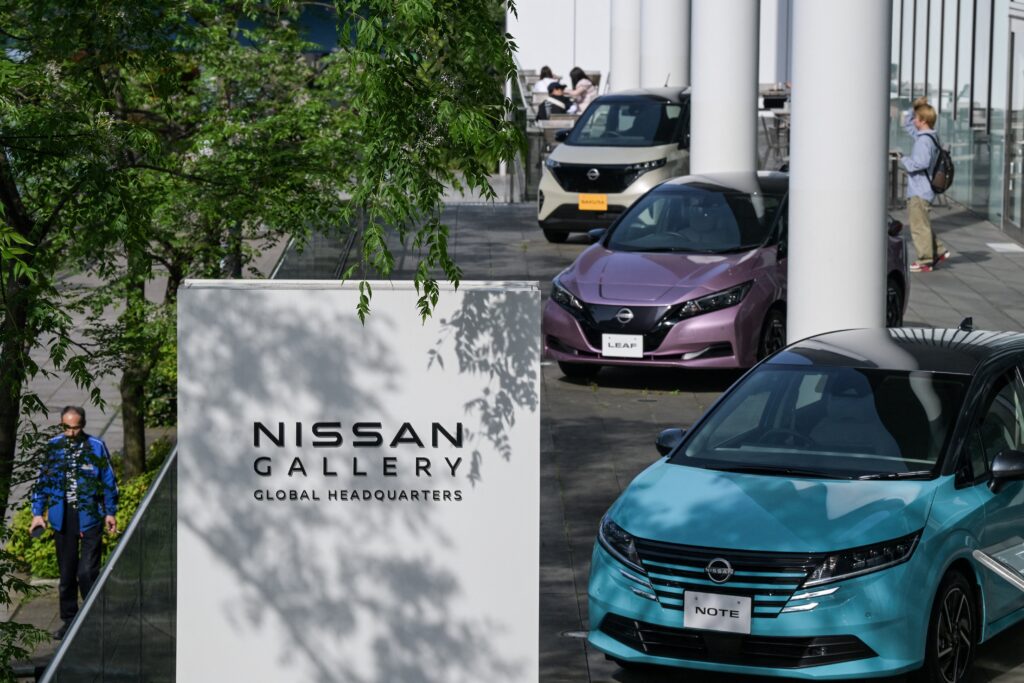
The Chinese automotive market is experiencing a dramatic contraction, leading to significant declines in sales for Japan’s three major car manufacturers. On November 27th, Nissan reported that its sales in China fell by a staggering 67% year-on-year in October, marking the lowest level since the outbreak of the pandemic in February 2020. Meanwhile, Honda and Toyota also reported decreases of 52% and 25%, respectively, during the same period.
According to reports from the Financial Times, overall automobile sales in China dropped by 27% in October. Data from the automotive industry consultancy Automobility reveals that as local competitors such as BYD and Geely rise, foreign car manufacturers have seen their market share in China diminish from 64% in 2020 to about 25% today.
In October, Nissan managed to sell only 22,295 vehicles in China. Data supplier MarkLines noted that Honda’s sales have been in continuous decline for 33 months. The company also acknowledged that its production in China fell sharply by 37% in October, yielding only 37,568 vehicles.
The urgent shift towards electric vehicles (EVs) in the Chinese automotive market is placing heavy pressure on traditional automakers. The surge in gasoline prices triggered by conflicts in the Middle East has further accelerated this transition.
European car manufacturers are also feeling the effects; both BMW and Mercedes-Benz have issued profit warnings due to sluggish sales in China.
Nissan, in particular, has been hit hard. With its automotive business continuously consuming cash, the company’s stock price has plummeted to historic lows. In response to the drastic decline in sales, Nissan plans to export vehicles produced in China to more than 70 markets by 2027.
Nissan CEO Ivan Espinosa mentioned, “This will help us cope with the instability currently observed in China.”
The competitive edge of Japanese auto parts manufacturers is also waning. As reported by Nikkei Asia, Japanese suppliers have been overtaken by German companies, losing their position as the leaders in global market share.
An analysis conducted by Nikkei Asia, based on data from MarkLines including some estimates, indicates that Japanese companies have seen their sales share within the top 30 global automotive parts suppliers drop from 29% in the fiscal year 2015 to just 19% in 2025. Additionally, the number of Japanese firms on the list decreased from ten to five, with total sales from these companies amounting to $130.1 billion, marking an 11% decline from ten years ago.
It is estimated that a traditional gasoline vehicle requires about 30,000 parts, while an electric vehicle only needs around 20,000, reflecting a reduction of approximately 30%. As the focus of competition shifts from internal combustion engines to batteries and electronic components, the technological advantages previously held by Japanese firms are being challenged.
Chinese battery manufacturer CATL has climbed to the third position among global automotive parts suppliers in the fiscal year 2025, a significant rise considering the company was not even among the top 30 a decade ago.
In parallel, to narrow the price gap with domestic Chinese manufacturers, Japanese car companies are increasing their procurement of more competitively priced local parts. Toyota’s newly launched bZ3X electric SUV in China seemingly relies almost entirely on Chinese-made components.
Nobuhiro Shibata, an executive at Deloitte Japan, stated, “As Japanese automakers face challenges in sales, incorporating parts from local manufacturers in their largest market, China, is adding further pressure.”
According to Bloomberg, Toyota’s global sales in October, including its subsidiary Daihatsu, dropped by 6.3% year-on-year to 940,809 vehicles, marking the ninth consecutive month of decline. Global production also fell by 9.4% to 953,989 vehicles.
In October, Toyota’s sales in Japan and India declined by 5.7% and 12%, respectively. However, strong demand for hybrid vehicles boosted its deliveries in the United States, which increased by 6.5%.
The Financial Times noted that the sales growth of high-margin hybrid models for both Toyota and Honda in the U.S. has somewhat mitigated the impacts of the sluggish Chinese market.
Toyota anticipates that hybrid vehicle sales will surpass 5 million units for the first time in 2026. Benefiting from strong performances in the U.S. market, the company has revised its operating profit forecast for the fiscal year ending March 2027 to 3.9 trillion yen ($24.5 billion).