
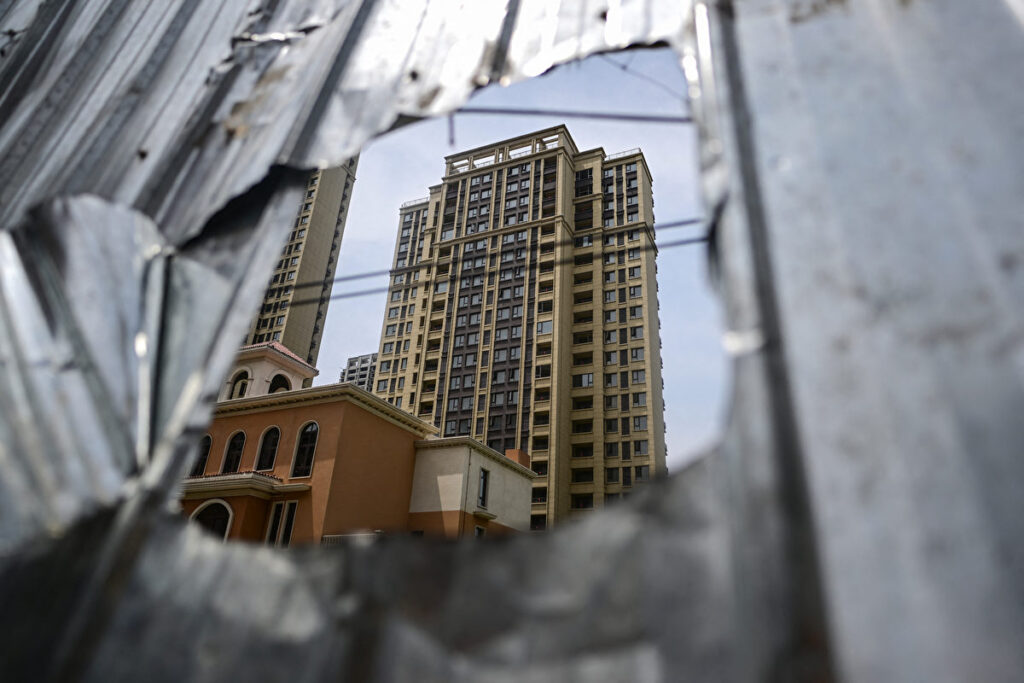
On November 24, 2026, Rongsheng Development Co., Ltd. announced a plan for its core personnel to increase their shareholdings in the company. This decision follows a risk alert regarding the potential delisting of the company’s stock, which has plummeted below 1 yuan (RMB), placing this once billion-dollar real estate enterprise in a precarious position regarding its listing status.
In a formal announcement regarding the share purchase plan, Rongsheng Development stated that its key personnel intend to invest their own or self-raised funds in the company’s stock through concentrated bidding on the secondary market over the next three months, starting from November 24. The announcement went on to specify that there would be no price range for these purchases and that the total amount invested would not be less than 9.25 million yuan and not exceed 18.5 million yuan.
Importantly, the announcement clarified that none of the participants in this share purchase are major shareholders, board members, or senior executives of the listed company. The group consists of 19 individuals, which includes three heads of functional departments, four heads of business lines, eleven general managers of major regions, and one general manager of a city company. The motivation behind this stock acquisition is stated as a measure to support the company’s risk resolution and debt management efforts.
Just a day prior, on November 23, Rongsheng Development had issued a risk alert concerning the potential delisting of its stock due to its closing price of 0.96 yuan per share as of November 20, 2026, marking the first time it dipped below the 1 yuan mark. According to the listing rules set by the Chinese stock exchanges, if a company’s stock closes below 1 yuan for 20 consecutive trading days, it faces the risk of being delisted.
Recent reports indicate that this is the second attempt by Rongsheng Development to buy back shares in a short span. On November 18, six of the company’s executives had announced plans to increase their stock holdings, committing amounts ranging from 6 million to 12 million yuan. This follows the noticeable decline in share prices, which has fallen below the critical threshold of 1 yuan.
Rongsheng Development is not alone in its struggles; other listed real estate companies, such as Jinfu Co. and Huaxia Happiness, have also recently faced delisting risks. Jinfu’s stock closed below 1 yuan on November 16, while Huaxia Happiness followed suit just a day later.
These three companies share a common history of being among those that once saw their market values soar into the hundreds of billions. Jinfu and Huaxia Happiness were ranked among the top 20 in sales within the industry at one time, while Rongsheng Development also ranked within the top 30. However, as the Chinese real estate sector has plunged into a deep downturn, many of these firms have found themselves entangled in financial crises characterized by debt defaults and liquidations.
The prevalent trend in recent years has seen numerous property companies sound the alarm on potential delistings, with a number eventually ceasing to trade altogether.
In the Hong Kong market, many listed real estate firms have faced delisting mainly due to prolonged trading suspensions. In November of this year, Hengsheng Properties and Xiwang Properties had their listing statuses revoked after failing to resume trading as promised following extended suspensions.
In mainland China’s A-shares, listings are primarily delisted for financial reasons or due to stock values falling below par. The former is typically determined by a company’s financial fundamentals and may include a buffer period before delisting, while the latter is directly linked to stock performance with nearly no buffer mechanism in place. Reports indicate that between 2022 and 2024, over ten publicly listed property firms have been delisted from A-shares, most falling into the category of below-par delistings.
Experts in the field, such as Liu Shui, the research director of the China Index Academy, have noted that these developments reveal that the risks facing the industry are far from being fully resolved. Instead, they suggest we are transitioning from “risk exposure” to a more complex phase that includes “capital elimination and credit cleansing.” Liu posits, “The real estate risks are still manifesting.”
Regarding future prospects for real estate firms striving to maintain their listings, some analysts have posited that short-term market value management remains crucial. By repurchasing stocks and disseminating positive news, companies can avert further declines in stock prices and buy themselves time to adjust their operations.
As of the third quarter of 2026, out of 95 A-share real estate companies, around 60% are still operating at a loss. Data compiled by media outlets show that among those that have reported results for the third quarter of 2026, 57 companies recorded losses, accounting for 60% of the sample. Notably, Vanke reported a net loss of 23.94 billion yuan, while Poly Development saw a profit of 2.332 billion yuan, down 16.03% year-over-year. Meanwhile, China Merchants Shekou reported a staggering 75.82% year-on-year decrease in profitability.
Statistics from the National Bureau of Statistics of China indicate that from January to September 2026, nationwide real estate development investment fell by 20.6% year-on-year, with sales area for newly constructed residential properties dropping 13.2%, and sales revenue plummeting by 13.9%. Furthermore, funding from real estate firms shrank by 21.6%, with domestic loans decreasing by 33.1% and personal mortgage loans down by 22.1%.
Liu Shui remarked that the cash flow capabilities of real estate companies have not yet rebounded, as sales remain sluggish, assets continue to depreciate, and liquidity issues persist. Given the stringent requirements for cash management and regulatory oversight on property sales, firms with existing risks may face even more formidable challenges to survive in the future.