
Last week in Washington D.C., an important meeting took place with Anthony D’Esposito, the Inspector General of the U.S. Department of Labor (DOL). D’Esposito, who previously served as a detective in the New York Police Department before entering Congress, approaches the issue of fraud with the analytical mindset of a detective. He treats it as a criminal case rather than merely a bureaucratic error that needs to be tallied at the end of the fiscal year.
During our discussion, he shared insights about an ongoing investigation by his office that revealed alarming practices. The investigation revolves around a shell company that was disguised as a legitimate online trading platform. On the surface, this company appeared to engage in regular commerce by buying and selling goods. However, D’Esposito disclosed that the company was actually funneling taxpayer dollars from the United States directly to entities in China. These funds were not ending up in the hands of local merchants in Shenzhen or Shanghai but were instead enriching the coffers of the Chinese Communist Party.
The realization that unallocated unemployment relief funds are being mishandled in this manner is deeply troubling. Moreover, this is not the first instance we’ve encountered of such claims.
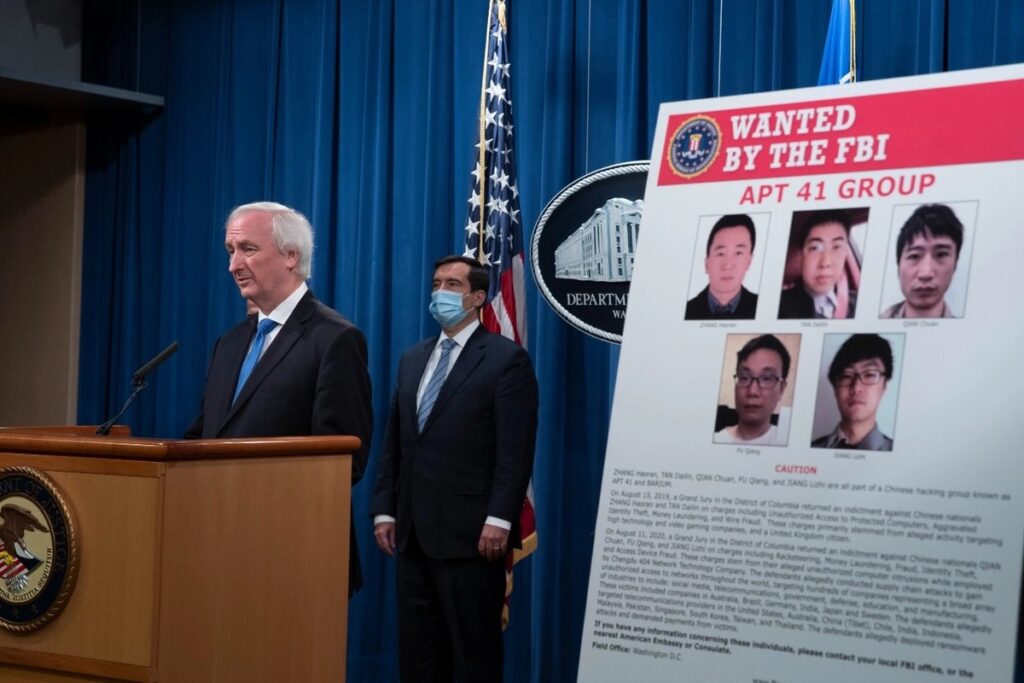
In December 2022, the U.S. Secret Service (USSS) reported that a Chinese hacking group known as “APT41” stole at least $20 million in COVID-19 relief funds across several states. These stolen funds included unemployment benefits and loans from the Small Business Administration (SBA).
APT41, based in Chengdu, Sichuan, has conducted espionage activities on behalf of Beijing while also engaging in various illicit ventures. This marked the first time the Secret Service made a connection between COVID-19-related fraud and foreign hackers. A USSS official noted that believing the group targeted fewer than all 50 states would be naive.
Compared to the total estimates, this $20 million theft is mere pocket change. The Inspector General estimates that around $76 billion in unemployment benefits during the pandemic fell into the hands of fraudsters. As of September 30, approximately $2.4 billion had been recovered by states, translating to only about three cents recovered for every dollar lost to fraud.
Yet, the profit made by Beijing from these activities has never been the primary concern. The troubling aspect lies in their ability to access and exploit this money.
In 2020, states expedited unemployment benefit payments at least speedily as the system allowed, with minimal verification of recipients. This created a wide-open door not only for local fraudsters possessing stolen Social Security numbers but also for anyone globally aware of how to navigate these systems. The individuals most familiar with such exploits are often those who have studied our systems over many years.
Subsequent cases have shed further light on the problem. In May, a federal judge in Pennsylvania sentenced a 72-year-old man from Los Angeles to 10 years in prison for participating in a fraud ring that opened thousands of bank accounts in stolen names to claim unemployment benefits. The funds were subsequently funneled into a company masquerading as a dealer of masks and protective gear. One of his accomplices wired over $35 million to an account belonging to a Chinese company, as noted by the DOL, asserting that some fraudulent claims were filed by scammers operating out of China.
However, the issue extends beyond Beijing alone. D’Esposito’s office recently released its first wanted list, showcasing 16 fugitives implicated in defrauding around $60 million. Three of these individuals are linked to a South American crime syndicate, which has reportedly utilized stolen U.S. unemployment funds to finance gang violence. This pattern of exploitation suggests an urgent need for systemic reforms.
Thus, this is not merely a concern of waste; it is a matter of national security. Foreign governments and criminal enterprises are exploiting our resources as funding sources to undermine the very institutions they target.
The foremost concern is the issue of time. Most federal COVID-19 unemployment fraud cases have a five-year statute of limitations, with some cases set to expire as soon as March 2025. Every month that passes allows more individuals who have engaged in these acts to evade prosecution due to the expiration of claims.
Congressional representatives Beth Van Duyne (R-TX) and Tom Suozzi (D-NY) have put forth the HR 8873 bill in the House of Representatives to extend the statute of limitations to ten years. This bill was passed by the House on June 29 and was submitted to the Senate Finance Committee in July but remains unaddressed.
D’Esposito’s sentiment is clear: if Congress fails to extend the deadline, each day that passes provides a get-out-of-jail-free card to those who have pilfered essential relief funds from the most vulnerable Americans. The Senate should prioritize reviewing this legislation before the end of the year.
The second crucial point revolves around state responsibility. Unemployment insurance is managed at the state level, which is critical in determining whether identity verification processes are properly enforced. Each state needs to clarify who is receiving these funds: there must be genuine identity verification and real assessments of bank accounts. If a payment is transferred to an account that is immediately moved overseas, an alarm should be triggered. Any detection of unusual patterns should prompt immediate intervention from federal investigators rather than simply being classified as “overpayments” and left to be resolved later.
State agencies might be able to recover a check, but they cannot prosecute a hacking ring based in Chengdu or track the funds sent to a shell company in China. These issues necessitate intervention by the FBI, Secret Service, and Inspector General’s offices, which can only investigate cases that have been reported to them.
The third major point concerns future emergencies. It is very likely that we will face crises again in the future, putting pressure on the government to rapidly disburse funds. However, a program without regulatory oversight not only fails to assist the intended target demographic but also leaves the door open for individuals waiting to exploit such programs. During the last crisis, Chinese Communist influence clearly indicated that they were closely observing our systems.
D’Esposito’s approach, grounded in years of detective experience, emphasizes the importance of tracing the flow of funds.
In this case, the money has gone to places that Americans would never agree to support. At the very least, we should ensure that the statute of limitations remains open until the full extent and destination of these funds are clarified, enabling us to implement meaningful measures to prevent such incidents from recurring.