
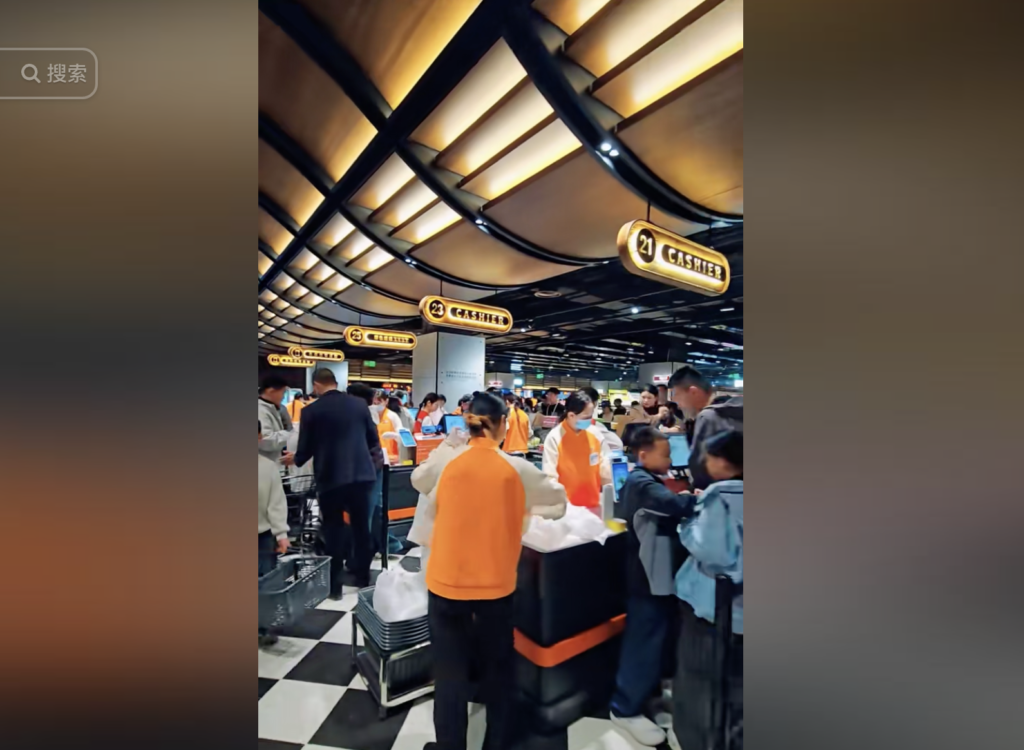
The Jingye Shengshi Building in Xinxiang City, Henan Province, once stood as an important commercial landmark due to its association with the popular brand Pang Dong Lai. However, it has now found itself facing a prolonged vacancy crisis. Recent media reports indicate that the annual rental price for the building has plummeted from the previously quoted 24 million yuan to just 4 million yuan, yet no businesses have emerged willing to lease the entire space. The second to fourth floors of the building are largely vacant, while a few shops continue to operate on the ground floor.
According to public reports, Pang Dong Lai established its presence on Pingyuan Road in Xinxiang in December 2005 by signing a 10-year lease agreement with the Jingye Company, with an annual rent of around 8 million yuan at that time.
After a decade of operation, Pang Dong Lai cultivated a steady customer base and contributed to the surrounding commercial development. However, upon the expiration of the lease, the two parties failed to reach an agreement regarding the renewal terms. Reports from that time indicated that the landlord’s proposed rent soared from 8 million yuan to an unprecedented 24 million yuan, prompting Pang Dong Lai’s eventual decision to vacate the premises.
Yu Donglai, the founder of Pang Dong Lai, recalled the significant jump in rental costs from over 8 million yuan to 24 million yuan. He chose not to accept these terms and ultimately walked away from the opportunity.
In December 2015, after a decade of successful operation, Pang Dong Lai’s store on Pingyuan Road officially closed its doors.
Following the exit of Pang Dong Lai, the site was taken over by the Dashang Group, which transformed it into the Dashang New Life Plaza and brought in popular brands such as Haidilao and ZARA in hopes of sustaining the previous commercial success.
Nevertheless, after the transition to Dashang Group, the bustling customer traffic experienced during the Pang Dong Lai era failed to materialize. By early 2021, Dashang New Xinxiang Company had virtually withdrawn from Jingye Shengshi Building, leading the commercial operations into a decline. Since then, the building has struggled to attract new large-scale commercial operators.
Recent media reports highlight that the second to fourth floors of the building remain largely vacant, with only a few digital shops and other businesses operating on the ground floor. The overall business environment is vastly different from the thriving atmosphere experienced during the Pang Dong Lai operations.
Reports indicate that the building’s annual rental price has dropped from 24 million yuan to 4 million yuan, marking a staggering 83% decrease. Yet, there are still no willing tenants to take on the entire property.
There is an added layer of complexity to the ownership of the building; the property rights are divided among hundreds of small owners, encompassing a total of 239 individual stakeholders. This fragmented ownership structure complicates the overall leasing and renovation efforts. Should a prospective tenant wish to reorganize the commercial layout, upgrade fire safety facilities, or renovate public spaces, they may need to negotiate with various owners, increasing both the negotiation and operational costs.
It’s important to note that the data regarding the 239 stakeholders and the 4 million yuan rental price currently only appears in media reports, as there are no official leasing documents available for public verification.
In recent years, China’s brick-and-mortar retail sector has been undergoing structural adjustments, facing mounting pressure on the operations of traditional large supermarkets, department stores, and shopping malls. Nationally influential retail companies have been reducing their number of outlets, with some long-established retailers even pulling out of the market entirely.
According to incomplete statistics from Oneview Business, at least 782 supermarket stores closed in 2024; this figure surged to 1,369 by 2025. Notable companies like Yonghui, RT-Mart, Walmart, and China Resources Vanguard have been among those shuttering their locations.
The contraction of well-established retail enterprises is also quite evident. Carrefour’s presence in China has dwindled from over 300 stores at its peak to just four by the end of 2024. Similarly, the number of stores operated by Bubugao Supermarket has declined from over 400 at its peak in 2019 down to just 27 by the end of 2024.
Shopping malls are likewise facing challenges in attracting tenants. A report released by the China Chain Store and Franchise Association and Huike Yun indicates that in a survey covering 66 cities and 1,619 shopping centers, the overall vacancy rate is projected to rise to 11.6% by the end of 2025, reflecting an increase of 1.1 percentage points compared to previous findings.
Research data from the China Index Academy reveals that in the first half of 2026, rental prices for commercial spaces in major business streets and key commercial districts across the country continued on a downward trend. Specifically, the average rent for commercial properties among a sample of 100 prominent business streets in major cities was reported at 23.87 yuan per square meter per day, with a month-on-month decline of 0.76 percentage points. The extent of this drop has widened by 0.29 percentage points compared to the latter half of 2025, with more than 90% of sampled commercial streets in second-tier cities reporting a decrease in rental prices.