
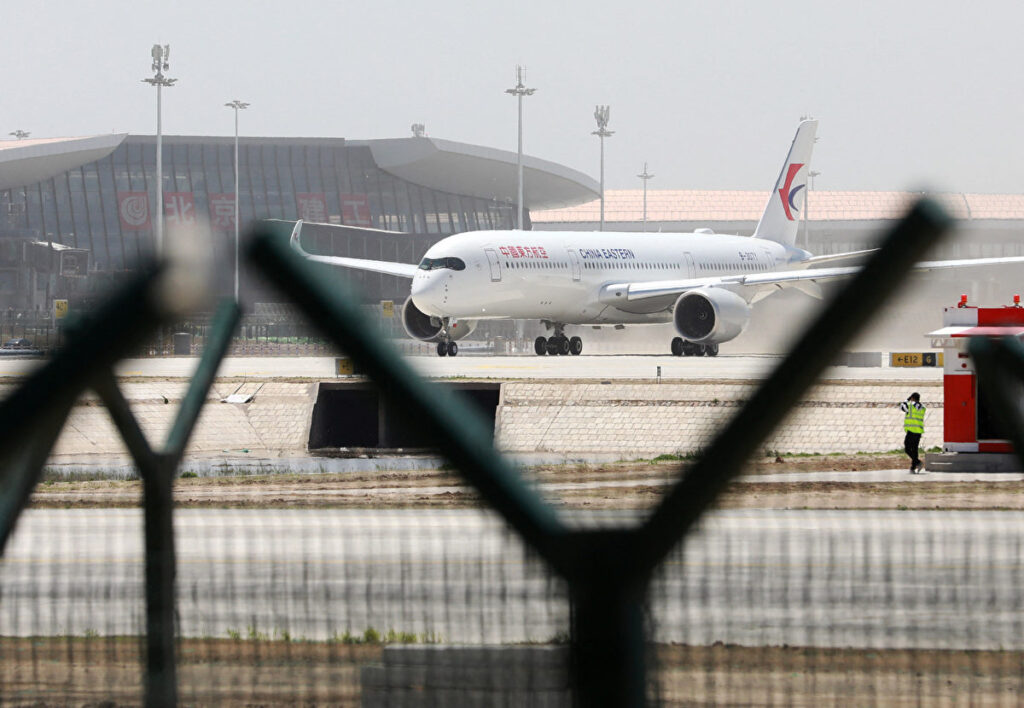
The Chinese government has invested heavily in infrastructure development over the years, but a significant issue of overcapacity in airport construction has started to become apparent. Recent statistics reveal that more than 70% of China’s transport airports have an annual passenger throughput of less than 2 million. In some cases, a number of airports recorded zero or single-digit passenger traffic in the first ten months of this year, earning them the label of “ghost airports.” Despite this stark reality, these facilities continue to rely on government subsidies to maintain basic operations.
According to reports from various outlets, including financial data from DAST, there were no passenger flights recorded at both Chongqing’s Xianren Mountain Airport and Yunnan’s Lijiang Lugu Lake Airport from January to October 2026. In Hubei province, Shennongjia Hongping Airport managed to operate only 58 flights during the same period, serving a mere 2,594 passengers—averaging less than 9 passengers per day. Similarly, Sichuan’s Jiuzhai Huanglong Airport also fell short of 20,000 passengers during the same timeframe.
Even with regular passenger flights seeing extremely low or nonexistent traffic, these airports still enjoy substantial subsidies, which allow them to keep operating. The situation at Chongqing’s Xianren Mountain Airport is particularly illustrative. In the first ten months of 2026, the airport operated no scheduled passenger flights and recorded zero passenger throughput. Opened in 2020, the airport was intended to serve tourism hotspots such as the Wulong Xianren Mountain. According to budget plans released by the Civil Aviation Administration of China, Xianren Mountain Airport is scheduled to receive a subsidy of 8.58 million yuan ($1.3 million) in 2026, with another 6.36 million yuan planned for 2027.
A similar lack of activity is evident at Lijiang Lugu Lake Airport. The Southwest Civil Aviation Administration reported that this airport had no passenger flights for six consecutive months from July to December 2025. DAST’s data confirms that in 2026, it too had zero passenger flights. Nonetheless, Lugu Lake Airport is set to receive a central financial subsidy of 9.87 million yuan in 2026, with an additional 8.07 million yuan budgeted for 2027.
While Shennongjia Hongping Airport has maintained some flights, its passenger numbers remain dismal, with only 2,594 passengers served in the first ten months of the year. Yet, this airport is also slated to receive 5.88 million yuan in subsidies for 2026 and 5.8 million yuan for 2027, as per the Civil Aviation Administration’s budget.
Jiuzhai Huanglong Airport, which opened in 2003, once boasted passenger throughput of 1.75 million in 2012, but this figure plummeted to approximately 32,000 passengers in 2025, reflecting a staggering 98% decline from its peak. From January to October 2026, Jiuzhai Huanglong Airport operated only 304 flights, a 41.5% drop compared to the previous year, and served merely 19,934 passengers—a 35.8% decrease.
In late October this year, the airport briefly ceased regular passenger flights due to seasonal adjustments in flights. However, it announced that flights between Chengdu Tianfu and Jiuzhai Huanglong would resume starting November 7, operated weekly by Sichuan Airlines.
Notably, Jiuzhai Huanglong Airport is one of the airports in recent years that has received the highest amount of subsidies from the central government for small and medium airports. In 2017, it received 15.62 million yuan; in 2020, that figure was reduced to 6.76 million yuan. According to the budget plan released by the Civil Aviation Administration, the subsidy for Jiuzhai Huanglong Airport will reach 103.69 million yuan in 2026, and it is projected to receive an additional 94.33 million yuan in 2027, making it the top recipient among small and medium airports in the nation.
Statistics from the Civil Aviation Administration’s report on the production of national civil transport airports reveal that by the end of 2025, there were 270 certified transport airports in China, of which 191 airports—representing 71%—had an annual passenger throughput of less than 2 million. However, these 191 airports collectively accounted for only 6% of the total passenger throughput in the country.
The data on subsidies underscores the ongoing challenges in managing these smaller airports. In 2017, 163 small airports in China received a total of 1.429 billion yuan in subsidies. By 2020, this number had grown to 1.560 billion yuan for 171 airports, and in 2023, approximately 1.8 billion yuan was distributed among 180 airports. For 2025, the budget proposed subsidies totaling 2.405 billion yuan for 188 airports; in 2026, this number is expected to rise to 191 airports, with a total budget of 2.584 billion yuan.
In fact, China introduced policies to subsidize small and medium airports and regional airlines as early as 2008. Many industry observers suggest that the financial losses for these airports are largely due to rapid construction of high-speed rail and highways, which have diminished the transport advantages of these smaller airports, leading to a diversion of traffic. Experts in the field, such as Yang Xite from the Anbang Think Tank’s Macroeconomic Research Center, note that the construction of some local airports has outpaced actual demand, which has significantly contributed to the operational difficulties faced by these airports.
However, some analysts argue that the blind construction of numerous local small airports, which often leads to persistent losses, is an inevitable outcome of structural flaws within the Chinese government system. Promotions for local officials depend entirely on the approval of superiors, and large airport projects, often worth billions, bypass public hearings on cost-benefit analyses and lack effective media oversight. Even if these projects result in “ghost airports” or suffer from continual losses, decision-makers frequently rise in rank long before the repercussions become apparent.
Additionally, significant corruption and benefits related to these large infrastructure projects are often involved. Many local governments undertake airport construction not primarily for aviation transport purposes, but rather in the guise of creating “aerotropolis economic zones,” which involves acquiring collective land at low prices to inflate surrounding property values, thus supporting a land finance system. They also seek substantial loans from state banks through local financing platforms, which ultimately exacerbates China’s systemic local debt crisis.