
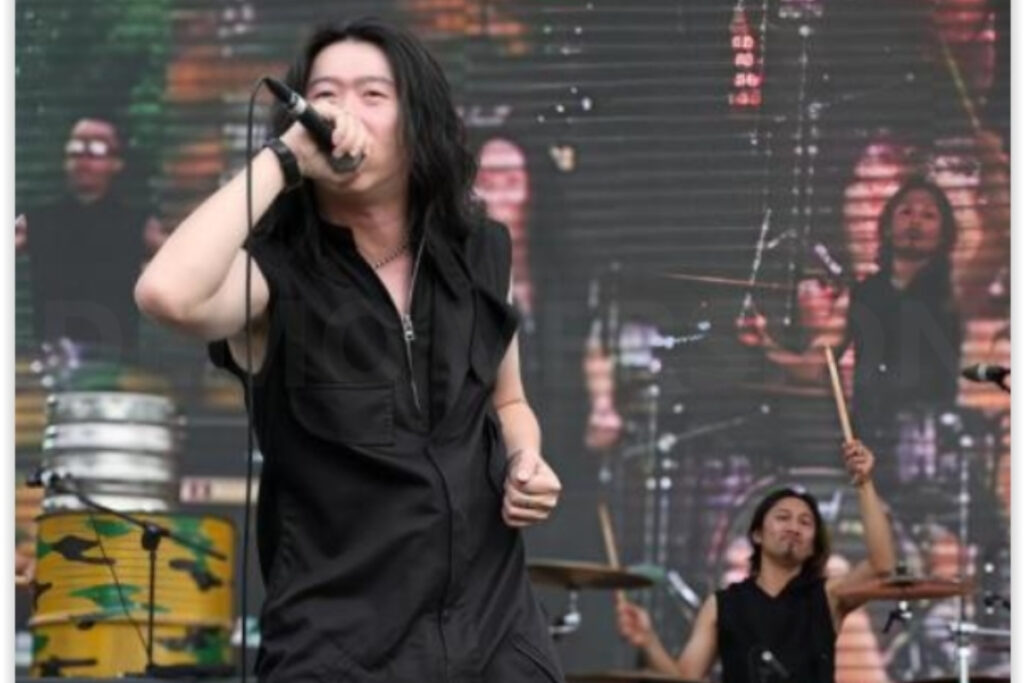
The renowned Chinese rock band “Liquid Oxygen Band” (originally called “Liquid Oxygen Can”), led by its vocalist Zhang Yu, tragically passed away on November 19 due to illness, at his hometown in Anshan, Liaoning. He was only 48 years old. The band later confirmed the heartbreaking news through an official obituary posted on their Weibo account, which featured a somber black background with white text.
While the specific cause of Zhang Yu’s illness has not been publicly disclosed in the band’s announcement, sources close to the musician revealed that he had previously suffered from cirrhosis of the liver.
Zhang Yu, as the frontman of the “Liquid Oxygen Band,” was celebrated as a pivotal figure in China’s new metal scene, known for its distinctive Eastern influences. His musical journey commenced in 1996 when he moved to Beijing to pursue his passion. In August 2002, he officially joined the “Liquid Oxygen Band” as the lead vocalist. The band was notable for its unique blend of Western new metal and traditional Chinese percussion instruments, such as the Chinese big drum. They innovatively incorporated elements of Funk, Hip-hop, and even used unconventional instruments like gasoline barrels and beer kegs in their performances, with lyrics that often articulated the sentiments of youth.
In addition to leading the band in releasing several albums, including “Everything Is Changing” and “Ten Years of Oxygen,” Zhang Yu also spearheaded a national tour in 2008, which lasted 57 days and covered 35 cities, setting a record at the time for heavy metal bands in China. The band’s notable hits include “Pain Kills Me,” “Concepts,” “Smash,” and “The Moon is the Brightest in My Hometown.”
Around 2020, the band officially changed its name from “Liquid Oxygen Can” to “Liquid Oxygen Band.” Although there was no formal statement from the band regarding this name change, it seemed to stem from both practical and artistic considerations, reflecting the band’s evolution over the years.
Initially, the name “Liquid Oxygen Can” symbolized the encapsulation of high-energy liquid oxygen within a metal container, poised to explode at any moment. However, after nearly two decades of performing, dropping the word “Can” was meant to signify breaking free from the confines of a closed container, representing a transition towards a more open, free, and mature musical state.
Moreover, throughout its more than twenty years of development, the band experienced numerous changes in its core lineup. Zhang Yu remained the consistent and central figure amid these shifts. When a new ensemble was formed around 2020, the simplified name “Liquid Oxygen Band” was adopted to signal the beginning of a new chapter in their artistic career.
Importantly, the earlier identity of “Liquid Oxygen Can” was characterized by the ferocity of new metal shouting, percussive beats from gasoline barrels, and the raw anger of youth. As the band members approached middle age, their compositions began to incorporate more introspective, grounded, and diverse melodic expressions. The new name better aligned with their evolving musical sensibilities, which favored a more elegant and atmospheric quality.
Notably, just nine days before Zhang Yu’s untimely passing, his social media account remained active. On November 10, he posted a video to promote his clothing brand “Attitude Design.” Regarding the apparent contradiction between his public engagements and his battle with cirrhosis, medical experts noted that patients with liver cirrhosis often maintain a semblance of normalcy in their daily lives until their condition sharply deteriorates, making it difficult for outsiders to perceive their critical health status.
Following the news of Zhang Yu’s passing, the rock community and fans flooded social media to express their condolences. Liang Long, the lead vocalist of the band “Second-hand Rose,” took to social media on the 19th to honor Zhang Yu, posting “Wishing Zhang Yu a peaceful journey ahead.”
Zhang Yu’s legacy will undoubtedly continue to resonate within the music scene, as he embodied the spirit of a generation yearning for authenticity and emotional expression through the powerful medium of rock music. His contributions to the genre and the cultural landscape of China will be remembered and celebrated by fans for years to come.