
A recent incident at a popular café in Nanchang, Jiangxi, has sparked significant debate following the enforcement of a “one customer, one consumption” policy. The controversy arose when a patron accompanied by two friends found herself asked to leave after declining to order any drinks.
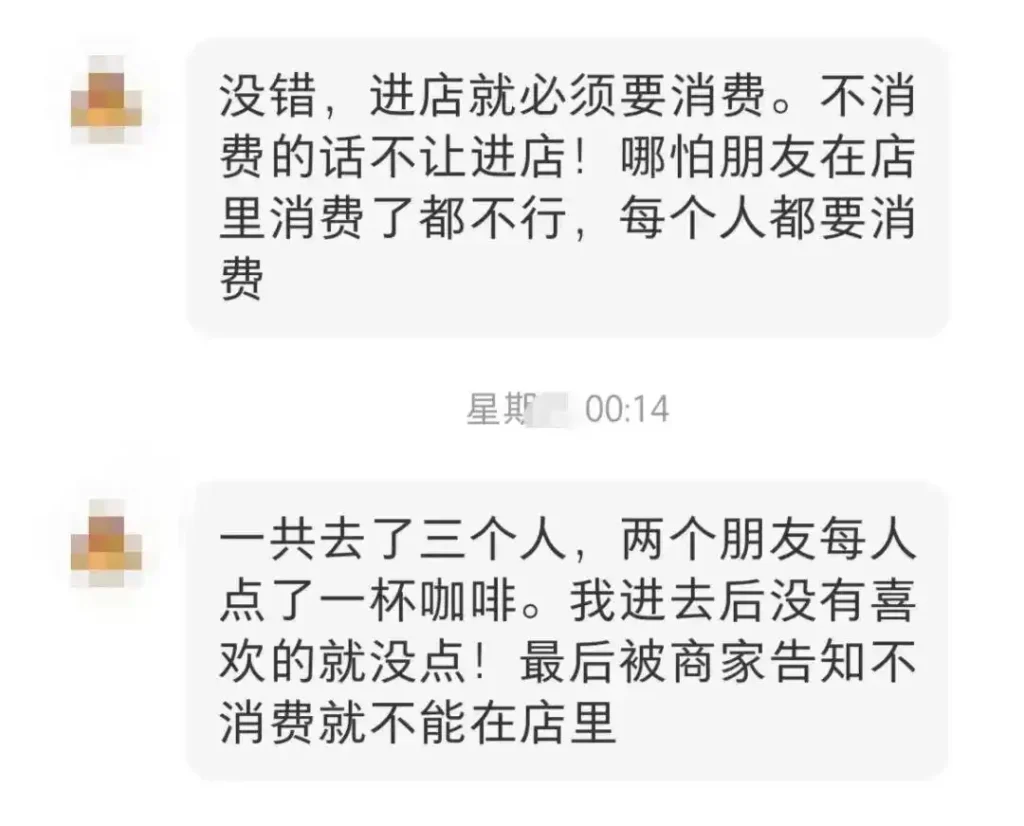
The incident began when a group of three friends visited a café known as “A Spoonful of Peony.” While two members of the group made standard coffee purchases, the third felt uninterested in the available options and chose only to wait for her friends inside the café. Despite not monopolizing a table or taking photographs, she was nonetheless told by the staff that she needed to make a purchase to remain on the premises, leading to her being asked to exit.
In discussions with local media, the individual expressed a degree of understanding for the café’s efforts to prevent non-paying visitors from occupying seats. However, given that two of the three individuals had made purchases, she felt the enforcement of a blanket consumption rule was excessively strict and lacked consideration for genuine waiting customers.
On November 18, employees of the café confirmed that they had indeed implemented the “one customer, one consumption” policy, mandating that each patron must make a purchase to be allowed in. Staff members elaborated that the café, aiming for an aesthetically pleasing environment popular with social media users, had invested a significant amount—approximately 200,000 to 300,000 yuan—to create an enticing space. As a result, the management felt it necessary to establish these policies to deter individuals from occupying seats without spending.
When asked whether the café might consider refining their consumption rules to distinguish between malicious seat hogging and normal waiting, staff members acknowledged the suggestion.
Later, a reporter reached out to the Donghu District Market Supervision Administration in Nanchang to report on the situation. Officials noted that the café’s policies differed from those of Starbucks, which does not explicitly require each person to order separately to occupy a seat. The café’s mandatory consumption policy has raised concerns about the implications of forced minimum spending.
This incident quickly became a trending topic online, with mixed reactions from netizens. Some supported the café’s approach in enforcing their policy, while others raised questions about the fairness of the practice. One suggestion proposed that if the staff were to ask a non-paying customer to leave, they should refund the orders of the other friends, allowing them to go spend their money elsewhere, reflecting a sentiment that a more customer-friendly approach might yield better business outcomes.
Notably, on October 21, Starbucks China announced the implementation of a similar “consumption for seating” policy in its stores nationwide starting from October 22, alongside the placement of informational signage. Starbucks underscored their commitment to engaging with customers in a friendly manner while appropriately addressing unexpected demands and unique circumstances. They also offered accommodations for needs arising from different customer situations, such as for expectant mothers or those with mobility issues, ensuring a hospitable atmosphere.
Starbucks employees indicated that individuals such as delivery personnel, transient patrons seeking shelter, and pregnant customers could find respite in their stores without making a purchase—garnering goodwill with complimentary hot water offerings.
Meanwhile, a report from “New Yellow River” on October 28 highlighted calm customer traffic at Starbucks locations in Jinan, Shandong, with the majority of patrons opting to consume before seating themselves. Staff members generally advised those who occupied tables without ordering that they should make a purchase, yet they refrained from forcibly ejecting them, usually giving them a grace period of about 10 to 15 minutes.
Following Starbucks’ introduction of the new seating policy, other establishments like IKEA and Tea King have also begun implementing similar rules in select locations, continuing to stir an ongoing conversation about consumption policies in cafés and retail environments.
This discussion around “purchase for seating” remains a hot topic online, as many users empathized with café owners, citing the frequent sight of individuals occupying tables for extended periods with devices like laptops and chargers without making any purchases.