
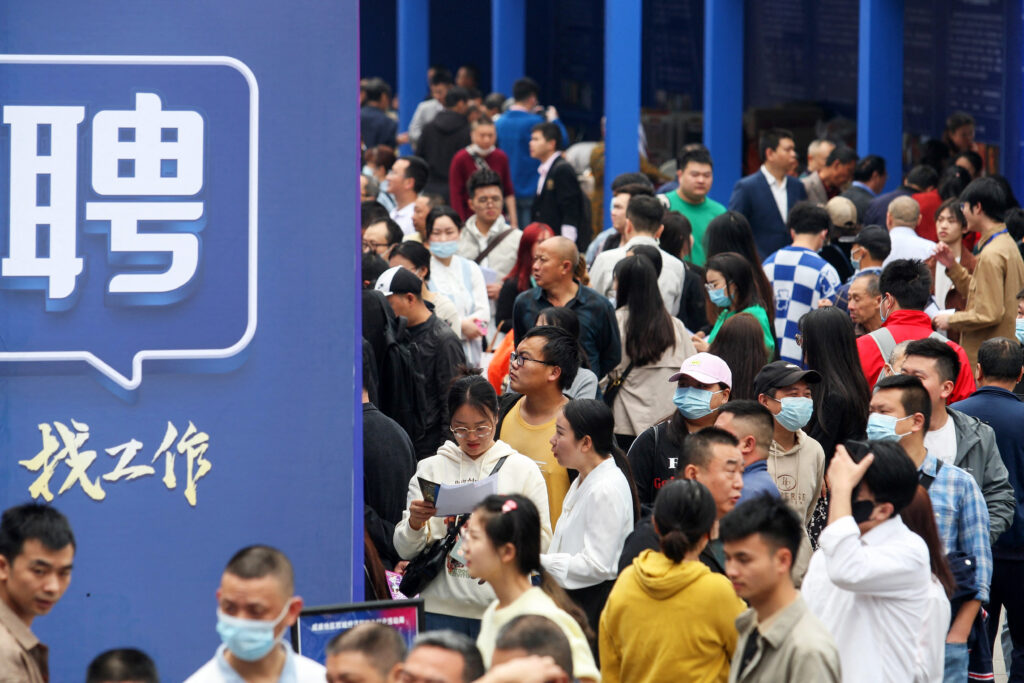
China is on track to witness an unprecedented increase in the number of university graduates in the coming year. According to the latest official data, the projected number of graduates from national higher education institutions for the class of 2027 is anticipated to reach 12.99 million, setting a new historical record. As the number of university graduates continues to rise, the pressures on the youth employment market also intensify.
The announcement made by the Ministry of Education on November 19 reveals that the number of graduates for 2027 will increase by 290,000 compared to the class of 2026. This significant rise indicates that the number of university graduates entering the job market each year has surged from just over 7 million a decade ago to nearly 13 million today.
Recent statistics reveal a consistent upward trend in the number of graduates over the years:
– In 2017, there were 7.95 million graduates,
– Followed by 8.20 million in 2018,
– 8.34 million in 2019,
– 8.74 million in 2020,
– 9.09 million in 2021,
– 10.76 million in 2022,
– 11.58 million in 2023,
– 11.79 million in 2024,
– 12.22 million in 2025,
– 12.70 million in 2026, and
– The estimate for 2027 at 12.99 million.
Over the past ten years, the number of graduates has increased by 5.04 million, resulting in a growth rate of 63.4%. Particularly noteworthy was the year 2022, when the number of graduates first surpassed the 10 million mark, adding 1.67 million graduates in a single year. This figure has been maintained above the 10 million threshold ever since, with a steady annual increase.
This rapid growth in graduates is a consequence of universities continually expanding their enrollment capacities. The increasing number of undergraduate and graduate admissions has resulted in a rising influx of young individuals entering the job market each year, leading to a heightened level of employment competition.
According to data released by the National Bureau of Statistics on November 18, the unemployment rate among the urban labor force aged 16 to 24, excluding students, stood at 17.2% in October 2026. This figure represents a decline of 0.8 percentage points from September, marking a two-month consecutive drop. Nevertheless, youth employment remains one of the most pressing topics in China’s labor market.
As the number of university graduates approaches 13 million, the challenges facing the job market extend beyond the short-term recruitment pressures associated with graduation season. A more profound and persistent structural contradiction is emerging between the continuously expanding talent supply and the insufficient capacity of the economy to absorb these new workers. This scenario calls for urgent attention to address the long-term implications of such disparities for the future of employment in China.