
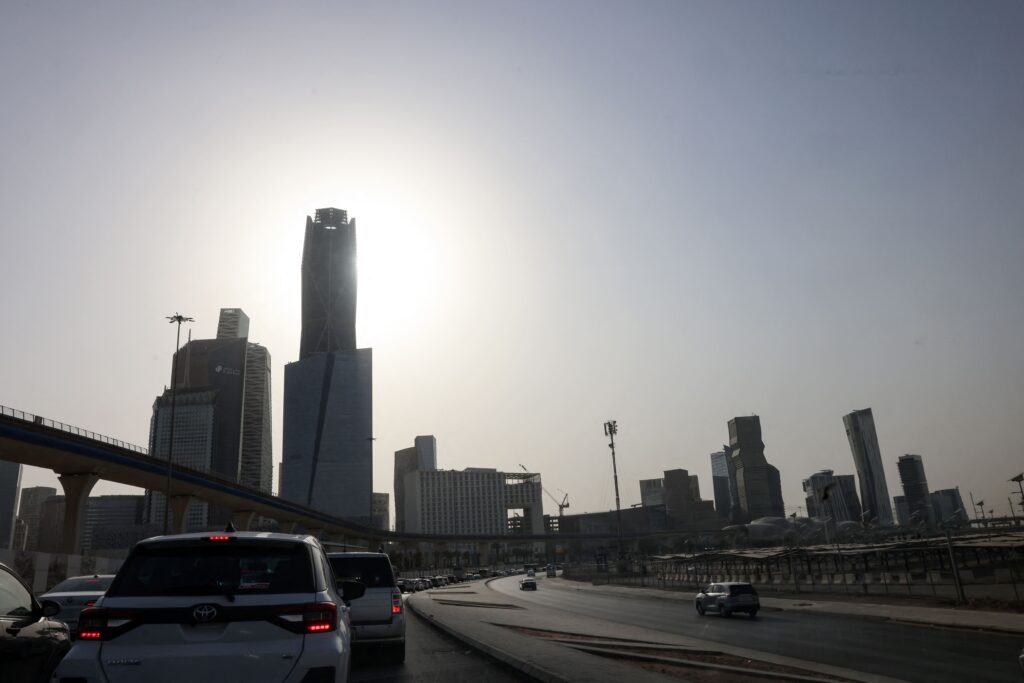
A massive explosion was reported in Riyadh, the capital city of Saudi Arabia, in the early hours of Thursday, November 19. The Saudi-led coalition in Yemen announced that it had dealt with a missile threat from Houthi forces aimed at the capital. However, fragments of the intercepted missiles fell to the ground, resulting in property damage.
According to reports from three informed sources, the Public Investment Fund (PIF) building, located in Riyadh’s financial district, sustained damage during the incident. This marks the second attack on the financial district of the Saudi capital this month.
At around 4:42 AM local time, the Saudi Civil Defense issued a mobile alert to residents of Riyadh, warning them of an “aerial threat.”
Approximately three minutes later, a loud explosion echoed across the capital. Following this, authorities sent another mobile notification informing residents that the danger had been alleviated.
By around 5:20 AM, Major General Turki Al-Maliki, spokesperson for the Saudi-led coalition, took to social media platform X to confirm that the coalition had addressed the missile threat posed by Houthi forces targeting Riyadh.
He noted that initial assessments indicated missile debris had fallen and caused property damage, and relevant authorities are evaluating the extent of the damage.
As of now, there are no reports of casualties.
Witnesses also reported to media outlets that they heard a powerful explosion in the capital that morning. A resident from northern Riyadh described the blast as “extremely loud.”
Reports from three informed sources cited by Reuters indicated that the Public Investment Fund building in the King Abdullah Financial District was hit, with damage to multiple floors of its exterior and some windows blown out.
Standing at approximately 385 meters tall with 80 floors, the PIF building is one of the tallest structures in Riyadh and serves as the headquarters for the Saudi Public Investment Fund.
In the aftermath of the incident, all entrances and exits to the financial district were shut, and authorities evacuated personnel from the area. Emergency vehicles, including ambulances and fire trucks, were seen arriving at the scene.
The Public Investment Fund is one of the nation’s largest sovereign wealth funds and plays a crucial role in Crown Prince Mohammed bin Salman’s economic transformation initiatives. Its investments span various sectors including energy, technology, tourism, and infrastructure.
The Houthi forces claimed to have designated significant facilities such as Riyadh International Airport and the financial center as targets for their attacks.
On the other hand, the coalition reported that it had destroyed a ballistic missile launch platform used by Houthi forces in Dhamar province, Yemen, which was allegedly utilized for launching attacks against Riyadh.
The coalition also stated that it intercepted several ballistic and cruise missiles fired by Houthi forces in southern Saudi Arabia and destroyed another missile launch platform in the Saada province of Yemen.
Additionally, the Houthi-controlled Saba News Agency reported that Saudi warplanes launched airstrikes on the Yemeni capital Sanaa early Thursday morning, though further details were not disclosed.
Interestingly, the explosion occurred shortly after Crown Prince Mohammed bin Salman met with Admiral Brad Cooper, the commander of the U.S. Central Command (CENTCOM), in Riyadh. As reported by the Saudi Press Agency, the two discussed military relations between Saudi Arabia and the U.S., as well as the latest developments in the Middle East.
This attack comes amid an escalation in military conflict between Saudi Arabia and the Houthi forces. In recent weeks, the Houthis have intensified their missile and drone attacks on Saudi targets, including cities, airports, and vital oil facilities.
On November 8, the Saudi Aramco office building in Riyadh’s King Abdullah Financial District was also damaged in an attack. The recent destruction of the PIF building highlights the increasingly serious security threats faced by crucial economic facilities in the Saudi capital.
The Saudi government has repeatedly condemned attacks on civilian infrastructure and emphasized its right to take necessary measures to protect the nation’s territory, people, and vital infrastructure.
After a relatively quiet period, the conflict in Yemen has escalated again this year. A ceasefire arrangement brokered by the United Nations in 2022 expired in October of the same year. Although both sides maintained a fragile calm for a while afterward, political resolutions have not yet emerged from the ongoing conflict.
In October, Saudi-backed Yemeni government forces launched counteroffensives along the Red Sea coast, recovering some strategic locations near the Bab el-Mandeb Strait. As the conflict expands, the security risks for important shipping routes in the Red Sea and surrounding areas have also increased significantly.