
Botulinum toxin, one of the most potent natural biological poisons known to humanity, can be lethal in extremely small doses. While cases of botulism are relatively uncommon, certain improper practices in daily life can significantly increase the risk of poisoning.
The primary effect of botulinum toxin is on the neuromuscular junction, where it disrupts the transmission of nerve signals, leading to symptoms such as drooping eyelids, slurred speech, and muscle weakness. When paralysis affects the respiratory muscles, it can result in acute respiratory failure, which is the leading cause of death associated with botulism.
In the United States, there are approximately several hundred reported cases of botulinum poisoning each year, with only about 8% of these cases linked to contaminated food. Understanding the growth environments of the bacterium that produces this toxin is crucial in mitigating the risk of poisoning.
Certain strains of botulinum bacteria found in seafood can thrive at remarkably low temperatures, as low as 38 degrees Fahrenheit (3.3 degrees Celsius). This implies that even food stored in the refrigerator can become unsafe.
Don Schaffner, the head of the Department of Food Science at Rutgers University, commented that “vacuum-packed fish provides the perfect breeding ground for botulinum bacteria.” He recommended that one of the simplest methods to reduce risk is to open vacuum-sealed packages before thawing, allowing oxygen to enter. Alternatively, fish can be removed from their vacuum-sealed packaging and placed in a plastic bag or food storage container for thawing in the refrigerator, or by employing a microwave’s defrost function, similar to other types of food.
Improper methods of home canning, pickling, or fermenting foods rank among the most common sources of foodborne botulism in the United States. Most strains of the bacterium prefer to grow in low-acid, low-oxygen environments at room temperature. If low-acid foods such as carrots, green beans, or potatoes are not appropriately pressure canned, bacterial spores can survive, and a sealed, moist, warm jar provides an ideal environment for them to sprout and produce toxins.
In 2015, an outbreak of botulism in Ohio affected 29 individuals and resulted in one fatality. The outbreak was linked to potato salad made using home-canned potatoes. The Centers for Disease Control and Prevention (CDC) noted that these potatoes were processed using a boiling water canner rather than a pressure canner, with the boiling water method failing to reach temperatures sufficient to kill botulinum spores.
The pressure canning method utilizes steam in a pressure cooker to heat the contents to 240 degrees Fahrenheit (116 degrees Celsius) or higher, effectively killing bacterial spores.
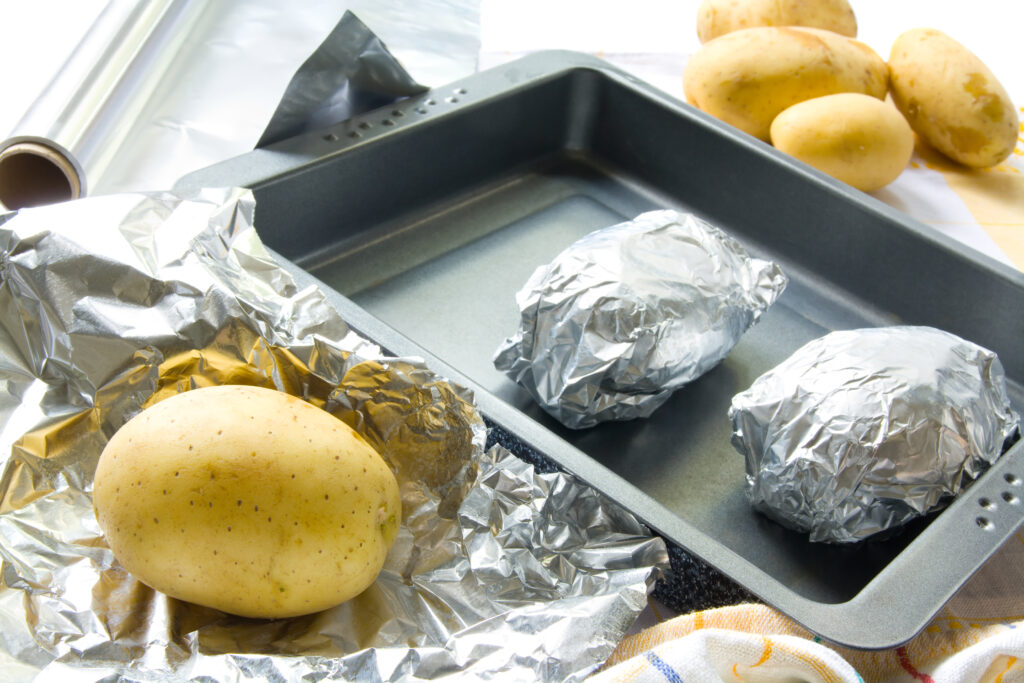
Potatoes can carry bacterial spores from the soil, and while baking can eradicate many microorganisms, it may not destroy spores. According to Schaffner, if baked potatoes, particularly those wrapped in aluminum foil, are left at room temperature for an extended period while remaining tightly wrapped, a low-oxygen environment is formed, conducive to spore growth and toxin production.
In 1994, a Texas restaurant served a dip made from baked potatoes, which had been covered in aluminum foil and left at room temperature for several days, resulting in 30 cases of botulism.
To lower the risk, it is advised to roast potatoes wrapped in aluminum foil and remove the foil once they are done cooking, avoiding leaving them out at room temperature for several hours.
Additionally, deteriorated low-acid canned foods can foster the growth of botulinum bacteria. Ellen Shumaker, a food safety expert at North Carolina State University (NCSU), pointed out that slight dents in cans are usually not a cause for concern; however, deeper or sharper dents can compromise the seal, potentially allowing bacteria to enter or altering the internal environment of the can.
She also mentioned that bulging cans are a sign that bacteria are proliferating and generating gas inside. Canned foods exhibiting these conditions should be treated as unsafe.
Furthermore, honey can contain botulinum spores. While mature gut microbiota can inhibit spore growth, in infants, these spores can germinate and produce toxins, leading to botulism.
Although such cases are rare, they are the most frequent type of botulism in the United States. Consequently, the American Academy of Pediatrics (AAP) advises against feeding honey to infants under 12 months old, including in other baby foods. Symptoms of infant botulism can include constipation, followed by decreased activity, reduced gag reflex, and diminished head control.
With awareness and proper handling of food, the risks associated with botulinum toxin can be significantly minimized, ensuring safety in our daily lives.