
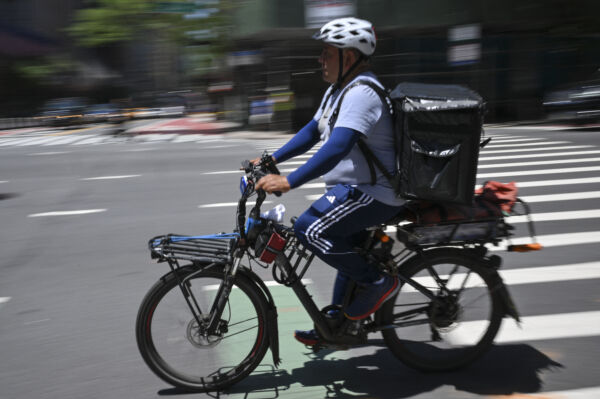
The competition in China’s takeaway market is progressively expanding from urban centers into rural towns, where several local platforms are starting to fill the gaps left by major players like Meituan, Taobao Flash Buying, and JD Takeout. However, it is important to note that the cost of cooking at home for residents in these towns is relatively low, resulting in less frequent demand for takeaway orders compared to urban office workers. Consequently, these platforms face a significant challenge: how to sustain operations and achieve profitability amid the dispersed nature of orders and the extended delivery distances typical in rural areas.
According to reports, the first operational sites of Star Delivery, a company under Shenzhen Xinghuo Delivery Technology Co., launched its pilot service in 2021 in the hometown of its founding team, Lu Feng City in Shanwei, Guangdong Province. Currently, there are nine operational sites in Shanwei City, which also includes county-level cities. Notably, the town of Hudong, located 45 kilometers from Lu Feng City and 90 kilometers from central Shanwei, has already begun offering takeaway services.
Zhuo Jinxiao, the founder of Star Delivery, explained that the platform is designed around towns and streets, extending its delivery radius to nearby villages, with capabilities to service areas up to 5, 8, or even 10 kilometers away.
In Xinjiang, another competitor, Dashikan Takeout, has established itself in regions with sparse populations and greater distances between towns, particularly in Southern Xinjiang. As reported, Dashikan currently operates 71 sites, all located within Xinjiang.
It’s essential to note that rural takeaway platforms are not limited to just Star Delivery and Dashikan. For instance, “Small Town Takeout,” founded in Zhengzhou, Henan Province in 2019, had expanded to over 4,000 cooperating towns across 31 provincial-level administrative regions by December 30, 2025. Other local platforms include “Chila Mi” in Jishishan County, Gansu Province, “Anda Tu” in Dongxiang County, “Lanzhuowa” in Yushu City, Qinghai Province, and “Meizilai” and “Pale” in Xinjiang.
Unlike urban office workers who often rely on takeaway due to busy schedules and lack of time to cook, rural residents typically find it more cost-effective to prepare meals at home. The additional surcharge for delivery could increase their overall meal expenses. Thus, the demand for takeaway in rural areas does not completely mirror the consumption patterns seen in traditional urban settings.
Yang Guangju, the founder of Small Town Takeout, indicated that the needs stemming from rural takeaway services include daily grocery purchasing for groups such as left-behind elderly and children. Some young adults returning to their hometowns bring back their established habits of ordering takeaway from cities. Additionally, children working in distant areas often place orders remotely for their elders and younger siblings at home.
Beyond food delivery, rural residents frequently require services such as parcel collection and purchasing daily necessities. Currently, food orders comprise over 80% of Small Town Takeout’s total business, with errands and other services making up the remaining 20%.
However, it is essential to understand that the data available mostly stem from the platforms themselves, which is insufficient to provide a comprehensive picture of the general frequency of takeaway orders among rural residents. It also does not allow for a direct estimation of the overall consumer spending scale in the rural takeaway market.
The most significant difference between takeaway in rural towns and urban areas is evident in the density of orders and the distances involved in deliveries.
Yang highlighted that in urban settings, both businesses and consumers are typically more concentrated. Delivery personnel can manage a steady flow of orders, often picking up subsequent orders along the way. In contrast, rural residents are dispersed, with businesses often centralized in town areas, making delivery distances of over 3 kilometers quite common, and sometimes extending beyond 5 kilometers, with remote villages possibly requiring travel distances of up to 20 kilometers.
This situation implies that after delivering an order, rural delivery personnel may need to return empty, and when the order volume is inadequate, the costs associated with long-distance delivery can increase the operational expenses per order.
Zhuo Jinxiao mentioned that rural residents sometimes increase their order quantities to share the delivery fee, resulting in a higher average ticket price compared to urban platforms. However, the higher delivery costs may also affect consumer willingness to place orders, requiring these platforms to find a balance between rider incomes and consumer acceptance.
Currently, Small Town Takeout uses specific criteria for site selection, including a permanent resident population of at least 30,000 and a minimum of 25 food businesses. They tend to avoid towns with existing large takeaway platforms within a 5-kilometer radius of the county seat. According to these standards, there are approximately 17,000 towns nationwide that meet the criteria for establishing sites.
By the end of 2025, Small Town Takeout plans to cooperate with over 4,000 towns. Given that there are 38,723 town-level administrative units in the country, this represents a coverage rate of around 10%.
While there remains a significant number of uncovered areas in the rural market, an increase in the number of sites does not necessarily equate to a synchronous growth in orders and revenue. Whether residents are willing to continue paying delivery fees, whether platforms can accumulate enough daily orders, and how to manage the costs incurred from long-distance empty returns are critical challenges that this business model must grapple with.