
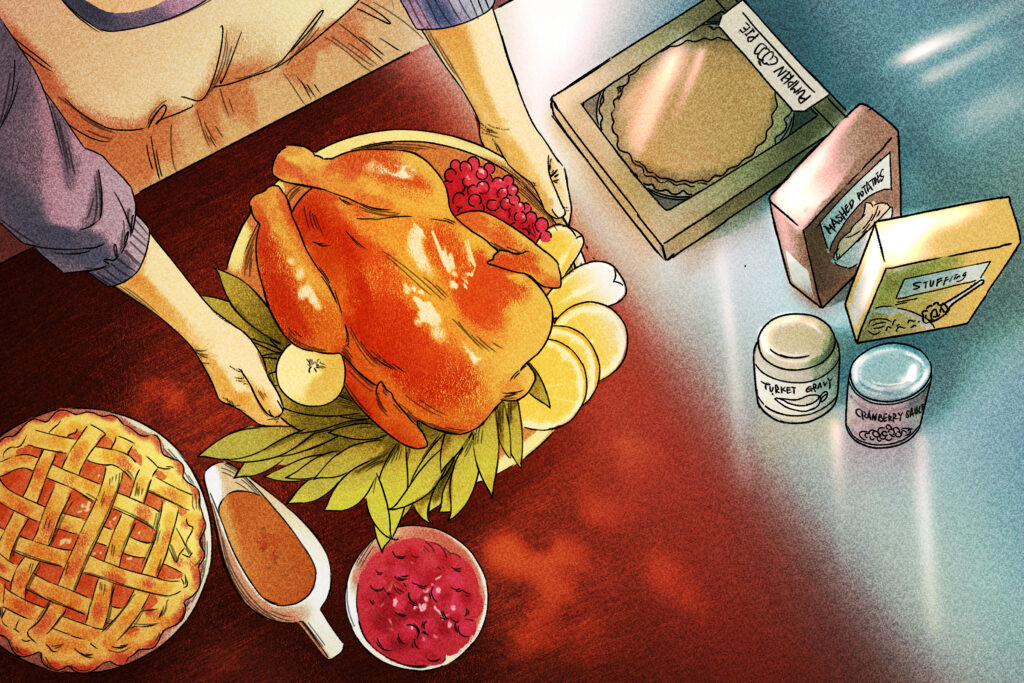
For Jennifer Gaily, Thanksgiving is synonymous with a bountiful feast prepared from scratch by her Irish grandmother. The dinner table becomes a vibrant display of a ten-course meal, featuring an array of dishes that range from rutabagas and sweet potatoes to homemade pumpkin pie, apple pie, and pecan pie.
“My grandmother would make me mashed potatoes specifically. A whole pot full—five potatoes cooked in a pressure cooker, combined with whole milk, salt, and an entire stick of butter! I would devour that entire pot,” Gaily reminisced during an interview.
Families like Gaily’s cherish Thanksgiving dinner as the quintessential American family gathering. The warm memories associated with Thanksgiving often unfold quietly as everyone gathers around the dining table. In the kitchen, watching Grandma peel potatoes, tear bread to make stuffing, simmer cranberries, or roll out pie crust, creates an atmosphere filled with delightful anticipation. The clatter of pots and pans, the sound of American football games on television, and the inviting smells wafting from the kitchen only heighten the excitement of family and guests waiting for the meal.
Certain specific dishes—and the loved ones who prepare them—become memorable for a lifetime. Nanette Gremillion from Louisiana shared that many recipes in her family have been passed down through generations, with some having been cherished for over a century.
However, gradually over the years, people have shifted from preparing classic dishes with fresh ingredients at home to relying on pre-packaged semi-prepared items that merely require simple assembly and heating. The ingredient lists on these packaged boxes or cans often brim with various unpronounceable additives, including emulsifiers, preservatives, and flavor enhancers.
During each Thanksgiving season, millions of prepared main courses, boxed stuffing mixes, bottled gravy, and canned cranberry jelly are sold across the United States.
According to an analysis by grocery delivery company Instacart, one in four orders for a whole turkey in the 2025 Thanksgiving shopping landscape included boxed stuffing. The prevalence of canned cranberry sauce on shopping lists was more than twice that of fresh cranberries.
Data from market research firm Circana showed that in the first week of November 2025, consumers spent nearly $19.5 million on prepared stuffing mixes, $8.9 million on cranberry sauce, and over $13 million on frozen pies.
The essence of Thanksgiving dinner has not entirely lost its homemade nature; rather, the definition of “homemade” is evolving. As the holiday table increasingly depends on boxed and canned pre-prepared ingredients, it’s worth pondering what we may be losing in the process.
Nutritional expert Sarah Otto noted in an interview, “The differences between boxed turkey stuffing, instant mashed potatoes, and bottled gravy compared to homemade versions are most pronounced.”
To extend shelf life, these products often contain higher levels of sodium, flavor enhancers, and emulsifiers, thickeners, and other additives that would generally not appear in home-cooked meals.
Let’s break down five common Thanksgiving side dishes to see how homemade versions differ from those found in stores.
While boxed stuffing may be convenient, it often comes with a high sodium content. Lauri Wright, an associate professor at the University of South Florida and a registered dietitian, remarked, “With homemade stuffing, you can incorporate whole grains, vegetables, nuts, and herbs at your discretion, which can enhance the fiber content and overall nutritional density.”
“You can purchase high-quality bread from a bakery or use plain bread cubes. Combine sautéed onions, celery, butter, sage, and quality broth. This way of making turkey stuffing is both simple and delicious,” stated Steve DiFillippo, the chef and owner of Davio’s Northern Italian Steakhouse.
If starting from scratch isn’t ideal, Wright suggests, “You could use a boxed stuffing mix and boost it by adding sautéed onions, celery, mushrooms, and additional herbs. Remember to choose low-sodium broth and consider replacing some of the stuffing mix with whole wheat bread. This is a straightforward way to enhance nutritional value.”
Dehydrated potato flakes themselves retain most of the nutrients from fresh potatoes, including potassium, though some vitamin C may be lost during processing.
Wright explained, “Pure instant mashed potato flakes are, in terms of nutritional value, quite comparable to homemade mashed potatoes. The main difference lies in what additional ingredients have been added.”
Many boxed mashed potato products available on supermarket shelves often contain significant amounts of seasonings and additives to create what is marketed as “homestyle” or “creamy” flavor. To find 100% pure dehydrated potato flakes or potato powder, it is essential to scrutinize food labels, comparing the ingredient lists to select variants with fewer additives.
For those hoping to serve homemade mashed potatoes without the pre-holiday kitchen chaos, DiFillippo recommends peeling and chopping potatoes a day in advance, soaking them in cold water, and refrigerating them to prevent oxidation.
“This way, you can alleviate some stress. You could even prepare the mashed potatoes a day ahead, then add a bit of warm milk and butter before reheating. Just be careful not to overmix,” he advised.
If opting for store-bought products, it’s advisable to select the plain versions and season them yourself. Milk or plain Greek yogurt can be used to replace a portion of heavy cream or butter, maintaining a creamy texture while increasing protein intake.
Commercially packaged gravies often contain sodium levels that reach between 220 to over 350 milligrams per quarter cup, depending on the brand.
Wright recommends, “It’s best to choose low-sodium packaged gravies or use low-sodium broth to make your own. Adding herbs, garlic, and black pepper can enhance the flavor without needing additional salt.”
If one desires to create a flavorful homemade gravy without spending hours making stock, DiFillippo suggests purchasing high-quality pre-made chicken stock or turkey broth and incorporating the drippings left behind from roasting the turkey.
“The essence is all right there. Just add it to the broth, and you have a simple gravy,” he said.
Wright expressed, “Fresh cranberries or unsweetened frozen cranberries are high in dietary fiber and contain beneficial phytochemicals, including polyphenols.”
While canned cranberry sauce also contains cranberries, most commercially available products have large amounts of sweeteners added. When making cranberry sauce at home, one can precisely control the type and amount of sweetener used while experimenting with other ingredients. DiFillippo noted that homemade cranberry sauce can take about 15 minutes to prepare and can easily be made ahead of time and stored in the refrigerator.
Wright mentioned, “Whether homemade or store-bought, pumpkin pie can contain significant amounts of added sugars, saturated fats, and calories.”
The nutritional value of pumpkin pie depends more on the ingredients and recipe used than on whether it is store-bought or homemade. Pumpkin is rich in beta-carotene, a plant pigment that can be converted into vitamin A within the human body. When baking at home, it’s possible to reduce sugar and ensure quality in both the pie crust and filling ingredients.
For decades and decades, the role of convenience foods on the Thanksgiving table has evolved. This shift towards “convenient cooking” began in the mid-20th century when the market positioning of frozen foods transitioned from being seen as a “luxury” only affluent housewives could afford to being broadly marketed as an economical option for everyday dinners. Among these dishes, one stands out significantly.
The Green Bean Casserole was invented in 1955 by Dorcas Reilly, a home economist and recipe developer at Campbell’s Soup Company’s test kitchen in Camden, New Jersey.
Mike Davis, a historian with a PhD and a current adjunct professor at Lees-McRae College, stated, “The original intent of this dish’s creation was for convenience and simplicity. It allowed housewives to make a ‘fancy’ dish utilizing canned goods and other convenient ingredients at hand.”
What began as a dish designed for practicality evolved into a classic Thanksgiving tradition that continues today, vividly reflecting how home cooks embraced convenience foods and integrated them into holiday meal culture.
Davis commented, “Generations of American women adopted the recipe offered by Dorcas Reilly and transformed it into their own tradition.”
For some, like Denise Dixon from California, preparing a meal from scratch offers not just enjoyment but also a way to express care for loved ones.
“I know they truly appreciate my effort and dedication,” she shared.
Nevertheless, preparing an unforgettable Thanksgiving dinner does not mean that every dish must be made from scratch.
DiFillippo remarked, “My principle for Thanksgiving is to make important dishes from scratch, and for the rest, to creatively utilize ready-made products. After all, the essence of the holiday lies in enjoying joy with one another.”
Taking a few “shortcuts” in the kitchen is perfectly acceptable if it allows for more quality time spent with family during the holiday.
Gaily fondly recalled, “Grandma Rita had a little ‘secret’—using Pillsbury’s ready-made dough rolls. In her eyes, these products taste great.”
With simple adjustments to ingredients and cooking methods, convenience foods can become more nutritious. Additionally, preparing elements ahead of time can significantly reduce stress on the day of cooking.
Wright explained, “One of my favorite methods is to increase the quantity and variety of vegetables rather than simply omitting certain ingredients. This approach enhances nutritional density while preserving the flavors and traditions people love, especially during holidays.”
Frozen vegetables often retain a nutritional value comparable to fresh ones and come at a more budget-friendly price.
Otto suggested, “If starches dominate the table, consider adding a simple dish of roasted vegetables or serving fermented vegetables like sauerkraut, which can enhance dietary fiber and diversify the meal.”
When purchasing store-bought products, understanding nutritional labels is key. Natural health practitioner Chad Larson advised paying attention to sodium, added sugars, saturated fats, and dietary fiber content on labels.
Larson remarked, “When comparing different products, ensure you refer to the same serving size. Additionally, be mindful of the cooking or preparation methods employed, as any extra liquids, fats, or other ingredients may significantly affect nutritional value.”
Otto emphasized, “Considering the overall meal’s perspective, one should focus on the total amounts of dietary fiber, vegetables, sodium, and added sugars present, rather than simply labeling a particular dish as ‘good’ or ‘bad.’”
Thanksgiving only comes once a year, and taking the time to create a table that balances taste and health is certainly worth the effort.