
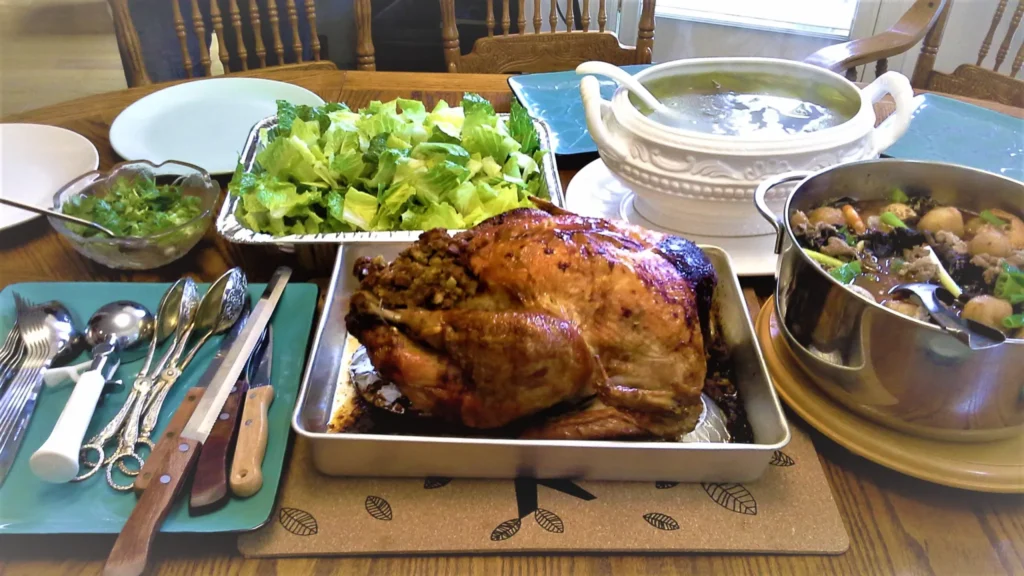
Thanksgiving is one of the grandest holidays in North America, second only to Christmas, cherished by locals for its origins, significance, and celebratory traditions.
The roots of Thanksgiving trace back to the arrival of the Pilgrims, who fled religious persecution in Europe aboard the Mayflower to an unfamiliar and harsh land in North America. Faced with the bitter cold and a lack of resources, survival was a monumental challenge. Many succumbed to illness and the unforgiving winter during their first year, leaving them on the brink of despair. At this critical time, the benevolent Indigenous peoples—specifically, the Wampanoag—extended a helping hand. A native named Squanto played a crucial role, teaching the Pilgrims vital skills such as how to cultivate corn, fish, and adapt to the local environment, effectively saving their lives.
As the seasons turned, the European immigrants enjoyed a bountiful harvest the following autumn. In gratitude for the aid they received, they invited the local Indigenous people to join them in celebration. The gathering featured roasted wild fowl, with the Indigenous people contributing venison. The immigrants adapted their customary festivity of roasting goose to prepare a golden, sumptuous turkey, which has since come to symbolize the Thanksgiving feast.
The roasted turkey quickly earned its place as the centerpiece of this holiday, which embodies warmth and hope. The sight of a large, golden-brown turkey is indeed a majestic centerpiece for any Thanksgiving table!
Over the years, an increasing number of Chinese immigrants have made their way to Canada and the United States. Although the timing of Thanksgiving differs—Canada celebrates it in October due to its colder climate and earlier harvest, while the United States observes it in late November—the essence of the celebration remains constant in both countries. Families gather to celebrate the year’s achievements and indulge in a lavish feast. Many Chinese newfound residents have quickly embraced Thanksgiving, blending in with local customs and learning to prepare roasted turkey.
However, a challenge surfaced. While the roasted turkey may appear impressive, its dense and coarse meat lacks the flavor that many are accustomed to. The traditional cranberry sauce served alongside turkey poses a conundrum for many Chinese families. The tartness of the cranberries contrasted with the blandness of the turkey might leave some puzzled, leading them to abandon the combination after a few attempts.
Yet, the resourceful Chinese community found a way to overcome this culinary hurdle. The fusion of European and American cuisine with Chinese culinary traditions resulted in a delightful, rich turkey feast. Incorporating elements of Chinese cooking, they carefully infused flavors and techniques into the turkey-preparation process, resulting in a beautifully seasoned meal.
The process begins with marinating the turkey. Chinese immigrants often adopt the marinating techniques used for Peking duck or Cantonese roast duck. The turkey is soaked in a marinade crafted from rice wine, soy sauce, and an array of spices. Typically, a turkey weighing around 13 pounds is selected for its tender and juicy meat. After marinating for a day, the flavors penetrate the turkey throughout.
Next comes the stuffing, which involves a traditional Cantonese sticky rice dish. During the autumn and winter seasons in China, the enticing aroma of Cantonese sausage and sticky rice evokes fond memories. Fresh peas are abundant, and homes come alive with meals featuring preserved meats and sausages. Sticky rice is soaked for about a day; shiitake mushrooms are pre-soaked; diced sausage and carrots are mixed with peas and seasoned with soy sauce, sugar, salt, and chopped green onions before being stuffed into the turkey.
This flavorful sticky rice stuffing becomes part of the main course, enriched by the delectable turkey drippings. The sticky rice absorbs the turkey’s juices, creating a dish that is no longer greasy but instead bursting with flavor.
The serving method for the turkey draws inspiration from famed Peking duck. Peking duck originates from the exquisite Beijing duck, renowned for its luscious meat. Dating back to the Ming Dynasty, this culinary delight was cherished by Emperor Zhu Yuanzhang, and later, his successor, Zhu Di, continued the tradition after relocating the capital to Beijing. Although the dish adapted to local customs, it retained its status as a delicacy, known initially as Jinling crispy skin duck.
During the Qing Dynasty, a chef skilled in royal cooking shared roasting techniques with the broader population, leading to the hanging oven roast technique, producing ducks with a rich red exterior and tender meat. Once the duck is roasted, it is sliced thinly and served with green onions, cucumber, and sweet bean sauce, rolled up in thin pancakes. The sweet bean sauce enhances the flavors of the marinated duck, while the vegetables provide a refreshing contrast, delivering a delightful bite of umami.
In North America, while the exquisite Peking duck may be hard to find, the robust and flavorful turkey more than compensates for this deficiency. The turkey fat offers a unique aroma; some may find it unpalatable on its own, but when paired with aromatic fresh scallions and cucumbers, it becomes a memorable taste experience.
To ensure even cooking during roasting, a layer of celery can be placed under the turkey to keep it elevated from the roasting pan, preventing the skin from burning and mimicking the hanging oven roasting technique. After roasting, the celery can also be enjoyed as a vibrant vegetable side dish, contributing to the feast.
Thus, a Thanksgiving dinner blending meat, vegetables, rice, and noodles comes together in perfect harmony. This meal is not just about eating; it is about experiencing the flavors of home, the richness of Chinese culture, the historical significance of Europe and America, and the wisdom of our ancestors—all encapsulated in the spirit of gratitude that defines this holiday.