
Recent observations offer a reassuring glimpse into a prevailing pattern: Regardless of where communist regimes hold power, their focus on maintaining face and prestige tends to overshadow genuine economic prosperity. Clearly, the Chinese Communist Party (CCP) fits this pattern.
Although China’s economy once seemed to rise above this unfortunate trend, it appears to have reverted to a destructive path, particularly under the leadership of CCP leader Xi Jinping in recent years.
In contemporary China, the ruling communist authorities are directing vast amounts of capital and effort into technological competition with the United States in fields like robotics, artificial intelligence, and space exploration. However, their response to the significantly weakened domestic economy has been at best a half-hearted attempt. As reflected by Larry Hu, Chief Economist for the Greater China region at the Macquarie Group, the measures taken are merely “just enough” to achieve this year’s modest growth targets.
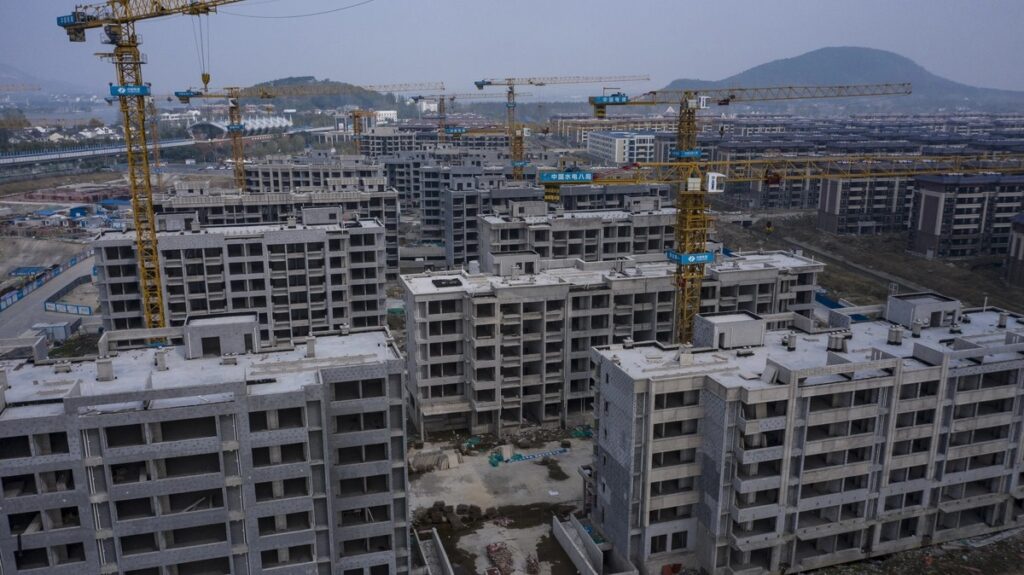
Even when considering Beijing’s tendency to manipulate public statistics, the state of the Chinese economy appears quite dire. The ongoing real estate crisis, which began six years ago, continues to worsen despite the CCP’s implementation of minimal and largely superficial measures. Housing prices have been on a downward trajectory, having fallen by 6.2% over the past year, with a cumulative decline of approximately 22% since 2021. Over these past six years, home sales and residential construction activities have also noticeably decreased year after year.
The downturn in the real estate market is not the only issue plaguing the Chinese economy. Consumer spending remains sluggish. In the most recent twelve-month period available, which ended in July of last year, retail sales increased by just 1.2%. This growth rate is slightly above the inflation rate but remains well below the 4.0% growth rate for consumer spending observed in 2025, a figure that itself lacks robustness.
Undoubtedly, the decline in real estate values has eroded household net worth, contributing to broader economic impacts. Moreover, the lockdowns and quarantines enforced during the COVID-19 pandemic, followed by the government’s strict “zero-COVID” policy, have fostered job security concerns among Chinese consumers.
While these uncertainties may have faded from public consciousness, the persistent underperformance in economic growth since the pandemic’s onset has heightened awareness of economic insecurity, especially when contrasted with the era of economic prosperity at the beginning of this century.
Chinese businesses are equally hesitant to invest. Capital expenditures aimed at improving efficiency, making upgrades, or expanding have languished for an extended period. Over the twelve months ending in September of last year, such expenditures decreased by 10.4%, and have consistently declined month over month for the past three and a half years.
The financial repercussions of the real estate crisis contribute to this unimpressive performance, severely restricting the amount of risk capital available for private enterprises. Simultaneously, the overall slowdown in China’s economy necessitates little in the way of expanding production capacity. The reluctance to spend on expansion unequivocally explains the persistently high youth unemployment rate, particularly among recent college graduates.
In October, China’s manufacturing Purchasing Managers’ Index (PMI) registered at 49.3. A PMI below 50.0 indicates a significant contraction in the manufacturing sector. While the services sector PMI remains slightly above 50, it has dropped significantly from earlier levels in the year.
Despite the CCP pouring substantial resources into technological competition with the United States, the government’s responses to a multitude of economic challenges have been only half-hearted. Dan Wang, China Director for the Eurasia Group, aptly characterizes these efforts as “limited” at best.
Indeed, the Chinese Minister of Finance, Lan Foan, recently committed to increasing public spending and enhancing subsidies to stimulate economic growth. However, like many previous promises made over the years, these declarations lack substantive content and have had negligible effects.
For instance, a recently announced subsidy involves a “first-time homebuyer loan interest subsidy,” offering a mere 1% of the home price as a subsidy, applicable only to properties smaller than 120 square meters and priced below 1.5 million yuan (approximately $223,000). This means the subsidy would tangentially benefit at most about 12% of home sales, a far cry from effectively reversing the impacts of the real estate crisis.
Additionally, while he pledged to implement tax reforms to improve the financial situation of local governments, such reforms—even if thoroughly executed—would struggle to repair damaged local finances, especially since in some instances, municipalities are unable to fulfill their obligations to residents on behalf of the provincial government.
The People’s Bank of China has made periodic cuts to interest rates by fractions of a percentage point to stimulate economic activity. However, these measures have proven insufficient. The cumulative rate cuts over the past six years amount to less than one percentage point, far too meager to shake the already weak financial markets.
In September of last year, Beijing injected approximately $54 billion into the Chinese financial markets, having previously made a slightly larger injection. Yet for an economy as large as China’s, these sums are paltry.
Furthermore, most of this injected capital has flowed toward state-owned banks, which are expected to support the CCP’s technological development strategy and, thereby, do little to address the broader economic needs.
These examples represent merely a small fraction of the measures Beijing has introduced over recent years, yet they are indicative of a distinct pattern. No single action—nor even a collective effort—has adequately addressed the economic requirements.
Currently, two major trends are discernible in China. First, Beijing appears either unwilling or incapable of providing the economic support necessary to reinstate even a semblance of previous growth momentum. Second, the CCP’s prioritization of prestige—and potentially military power—over the welfare of the Chinese populace is starkly evident.
The ultimate outcome is this: despite the bright lights of major cities, soaring skyscrapers, and a continuous stream of proud proclamations, the Chinese economy has languished for a considerable period and is likely to continue in this state, regardless of how Beijing officials dress up the data to present a rosier picture than reality.