
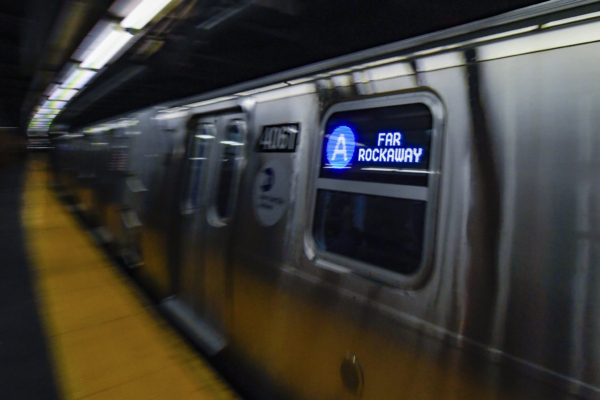
In a busy subway station in Brooklyn on Monday evening during rush hour, a rare and tragic fatal accident occurred. A passenger, while exiting the train, had his backpack unfortunately caught in the closing doors, and was subsequently dragged by the departing train onto the tracks, resulting in his immediate death.
According to the latest details released by the New York City Police Department (NYPD), the incident happened around 5:48 p.m. on Monday, at the Utica Avenue station on the A subway line in Brooklyn.
At the peak of the evening commute, an adult male was preparing to leave the subway car when his backpack got caught in the rapidly closing doors as he stepped out of the car. The train then started to depart from the platform, exerting tremendous force that dragged the man along, eventually causing him to fall between the cars and onto the tracks. Upon arrival, rescue personnel confirmed the man’s on-site death. The police have not yet revealed the victim’s identity.
Although incidents like this “door dragging” are relatively rare in the New York subway system, they have tragically occurred several times in recent years. In 2022 at the Columbus Circle station, a passenger boarding the 1 train during the evening rush hour had his clothing caught in the doors while exiting and was dragged by the departing train to his death; in 2016, a bartender working in Chelsea was killed while aboard an F train heading towards Manhattan after being dragged due to clothing caught in the doors.
The tragedies caused by similar incidents of “backpack/clothing caught in doors leading to dragging” highlight serious shortcomings in safety protection and technological upgrades in the aging subway system. To fundamentally prevent such accidents, other countries around the world primarily address these issues by implementing a three-pronged approach involving “upgrading anti-jamming technology, installing physical barriers, and employing manual safety monitoring.”
Different countries’ subway stations employ various safety measures to prevent such accidents. For example, in Japan (especially in Tokyo subway and JR Yamanote Line), there has been comprehensive installation of platform doors with automatic sensors to prevent passengers from getting too close to the train or forcefully pushing the doors during closing.
The edges of the train doors in Japan are made of a special highly elastic hollow rubber material, which, even if thin clothing or straps get caught, leave a buffer gap; at the same time, the door obstruction detection system can sense foreign objects with minimal resistance, thereby preventing the train from opening.
Japan’s subway heavily relies on the coordination between station staff and conductors (train rear attendants). After the train doors close, conductors must lean out of the window, gesture, and loudly confirm “no one is caught in the train body, and the platform is clear” before allowing the train to depart from the platform.