
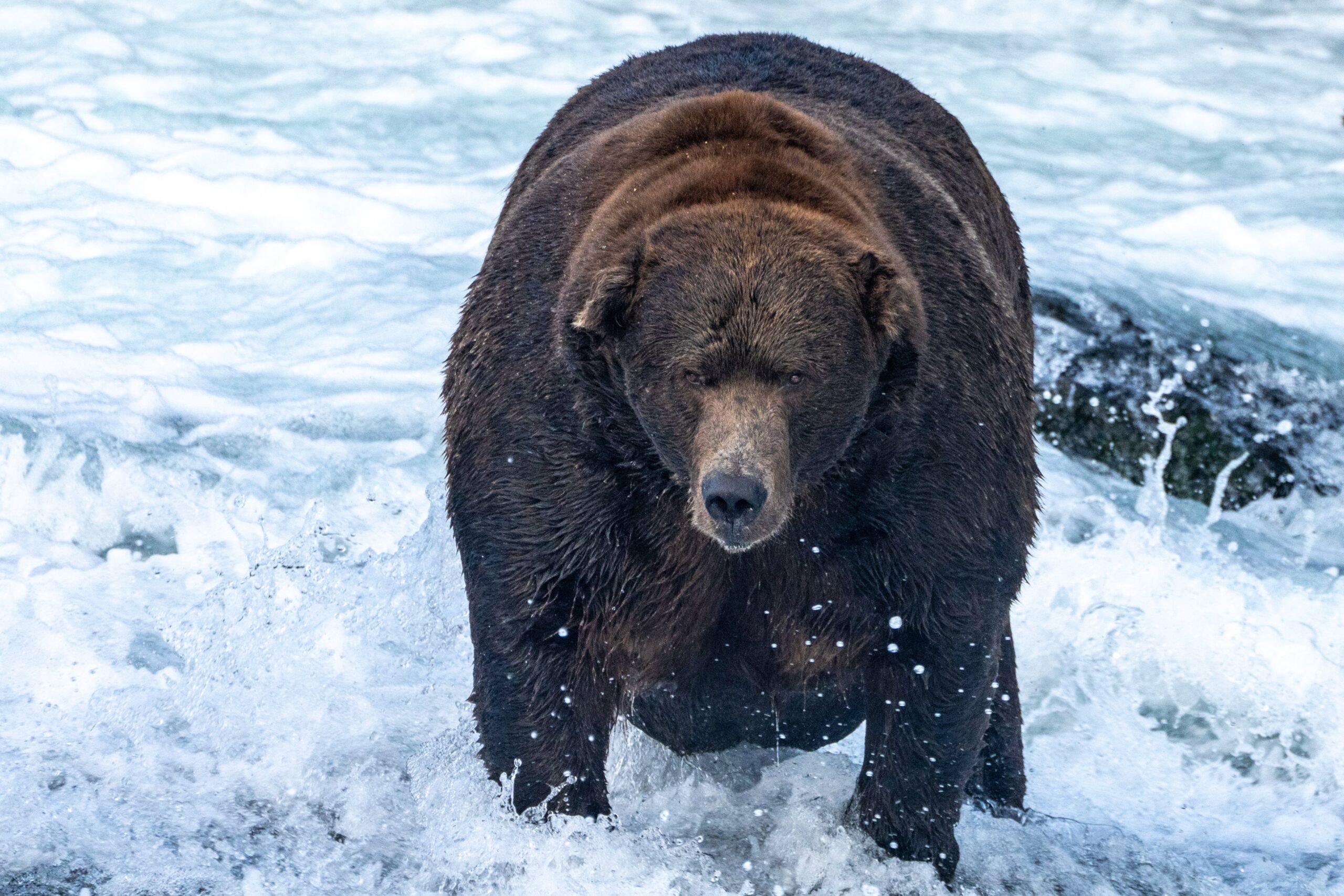
Due to the unusually large number of sockeye salmon migrating this year, the brown bears at Katmai National Park and Preserve in Alaska have been feasting heartily this summer, each one looking round and plump, making every bear in the running for this year’s “Fat Bear Week” competition.
Katmai National Park is located on the southern Alaska Peninsula in the United States, known for its wildness with the Valley of Ten Thousand Smokes and dense population of brown bears. Every fall, the park hosts a fun online voting event to celebrate the bears’ efforts in fattening up for winter. Starting on Tuesday (September 22), you can vote online to choose your favorite “fat bear champion.”
Park ranger Sarah Bruce from Katmai National Park said, “The fatter the bear, the better.”
“There’s no such thing as ‘too fat’ for bears,” she said. “The fatter they are, the healthier they are.”
“Fat Bear Week” began in 2014 as a one-day celebration. Now, these bears have become internet sensations, attracting fans from around the world. Last year, over 1.7 million people participated in the voting, and this year’s competition will feature even more bears, highlighting the intense competition among bear mothers trying to bulk up for their families.
Fat bears signify success as they need a lot of body fat to survive the hibernation period. This competition is meant to celebrate their weight gain by showcasing how much their bellies have grown through comparison photos.
This year, there are 16 “fat bear” contestants, more than the usual 12 in previous years. Additionally, there is a new twist this year: instead of a “Fat Bear Junior” category with four young bears competing, the entire bear families are now participating.
Bruce mentioned that bear mothers with cubs have to put in extra effort to gain weight.
“We can showcase how bear moms not only have to feed themselves but also take care of all the cubs around them,” Bruce said.
Bruce explained that these bears can almost double their weight during this season. She mentioned a bear that was estimated to weigh as much as 1400 pounds (about 635 kilograms).
Among this year’s lineup of contestants are some familiar faces. For example, last year’s heavyweight champion “Chunk.” Chunk is not only massive in size but also stands out with his broken lower jaw. Chunk is one of the largest bears in the Brooks River area, but his whereabouts have been a mystery for much of this summer.
Several other well-fed and competitive brown bears are descendants of former champions. Gully, bear 903, is believed to be the offspring of Grazer, a former “Fattest Bear” titleholder in 2023 and 2024. Backpack (bear 89) is the progeny of the 2019 champion Holly.
Bruce refrained from making predictions on the winner of “Fat Bear Week.” She mentioned that it’s tough to pick a favorite champion, but subadult bears (3 to 5 years old) are often at a disadvantage and not considered frontrunners.
Bruce has been primarily working at Katmai National Park since 2019. She shared that witnessing the growth process of these bears has been an incredible experience. When Bruce started her job, bear 428, known as Studious, was just a cub.
“She might give birth in her den this year. Judging by her size, she’s ready for it. Watching these bears grow up is truly amazing,” Bruce expressed.
Originally from Maryland, Bruce’s experience working at Katmai National Park has shifted her perspective on conservation as the park is estimated to have more bears than humans.
“Growing up on the East Coast, it felt like we weren’t fully integrated into the surrounding ecosystem. You had to go out of your way to find those places to truly connect with nature,” Bruce remarked. “But in Alaska, being intimately connected with nature is part of daily life.”
Seasoned “Fat Bear” enthusiast Landin Norman is an administrator of a Facebook group with over 20,000 fans of the “Fat Bear Week” competition. He shared that the stories of these animals deeply resonate with voters.
“I believe the stories of bear moms overcoming obstacles, like raising multiple cubs alone or regaining strength after losing cubs in the spring, often resonate with people’s own experiences in daily life and inspire them through the resilience of these bears,” Norman explained.
Norman, a pastor in northwestern Arkansas, mentioned that “Fat Bear Week” provides a brief respite from the stresses of daily life. He noted that there are no divisions or conflicts, just delightfully plump bears.
“I particularly enjoy the sense of community,” he said. “And getting to meet new friends through this.”