
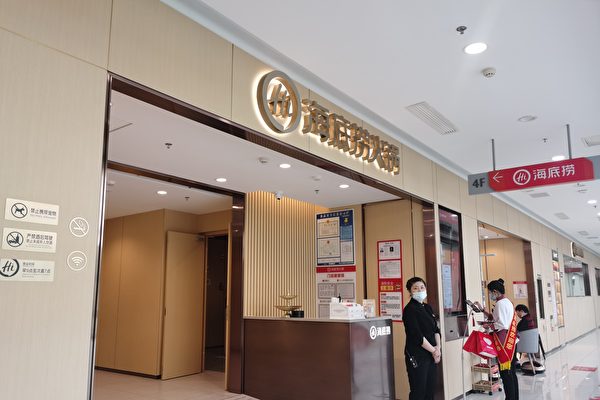
Guangzhou’s Hai Di Lao was exposed to shortchanging in takeout orders but refused to admit it. Consumers had to purchase a food scale themselves, categorize and weigh all the ingredients, and record videos to prove that the 200 yuan (RMB, Renminbi) dish they ordered was short of about 50 yuan worth of ingredients. Only after receiving the video did Hai Di Lao acknowledge the consumer’s complaint.
On December 1st, Ms. Yang from Guangzhou, Guangdong Province, posted a video online exposing Hai Di Lao for shortchanging customers.
Ms. Yang recounted that she ordered a Hai Di Lao spicy hot pot dish, where customers could choose the ingredients themselves, albeit at a slightly higher price. Since she was dining with a friend, they ordered a 200 yuan spicy hot pot. However, upon receiving the dish, she found that the 200 yuan bowl of spicy hot pot was pitifully small in portion.
Spicy hot pot in other restaurants costs around 50 yuan per pound, meaning with 200 yuan, you could get about 4 pounds of spicy hot pot. Yet, Ms. Yang’s 200 yuan spicy hot pot was served in a small container. Upset, she contacted Hai Di Lao to raise the issue, but they ignored her and insisted that they did not skimp on ingredients, basing it on the weight of each portion.
Seeing that the business refused to acknowledge the issue, Ms. Yang immediately purchased a food scale to weigh the ingredients inside.
In the early hours of December 2nd, Ms. Yang posted a video revealing that after weighing the ingredients with an electronic scale, she found that the value of the received ingredients was short of about 50 yuan from the order.
The video showed Ms. Yang taking out each portion of ingredients listed on the order, weighing them individually, and then tallying up the weights.
Ms. Yang stated that she ordered a nearly 200 yuan dish, paid around 170 yuan after using a coupon, and felt that the amount of ingredients in the takeout was insufficient. She contacted the restaurant to inquire about the missing items, but they claimed there was no issue of shortage.
To verify her suspicions, Ms. Yang bought a scale, meticulously weighed and recorded the ingredients from the takeout, a process that lasted over 20 minutes.
Ms. Yang said, “When cooking bok choy, it absorbs water once boiled. I weighed everything including soup and water, but still, it was half short. In addition, there was half serving of beef omasum missing, a whole serving of potatoes, a whole serving of winter melon. I ordered 200 grams of meat in total, but it was short by 70 grams.”
After calculations, Ms. Yang estimated that the restaurant had shortchanged her by about 50 yuan worth of ingredients. She sent the video to the restaurant.
According to the report, when contacted, a staff member at the Hai Di Lao hot pot restaurant mentioned that Ms. Yang had ordered a substantial number of dishes that day, leading to possible oversight.
After receiving Ms. Yang’s video, the restaurant refunded her and apologized. The staff admitted that there might have been operational errors by the staff, but they were unsure if it was a definite mistake.
Some netizens commented that Ms. Yang’s initial contact with Hai Di Lao was to urge the big corporation not to skimp on ingredients and maintain its brand image. However, Hai Di Lao initially denied the shortage, only changing their stance after seeing Ms. Yang’s video. Some netizens expressed their disappointment, stating that this was not an example of honest business operations.