
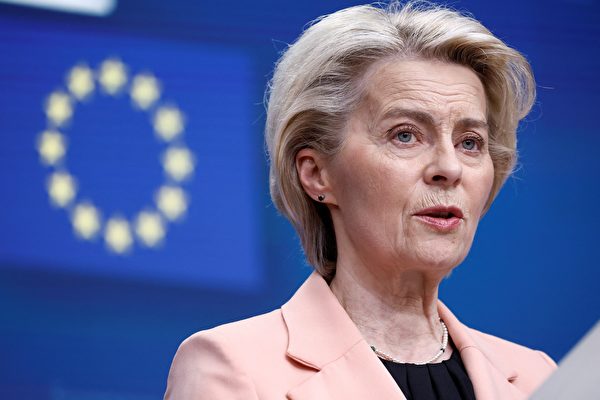
EU Commission President Ursula von der Leyen arrived in Kyiv on Friday, September 20th, to discuss Ukraine’s energy needs ahead of the upcoming winter season.
This marks von der Leyen’s 8th visit to Kyiv, with concerns over Russia targeting energy infrastructure persisting as the heating season approaches.
“We will assist Ukraine in its courageous fight,” von der Leyen stated on the social platform X, adding that discussions will also include European support for Ukraine, ranging from winter preparations to defense, as well as progress in joining the EU and G7 loans.
During her visit, von der Leyen is scheduled to meet with Ukrainian President Zelensky and other officials.
In a speech on Thursday evening, Zelensky expressed anticipation for the “important talks” with von der Leyen, as warnings circulate about Ukraine preparing for what could be the “harshest” winter since the outbreak of war.
Von der Leyen announced on Thursday that 160 million euros would be allocated from frozen Russian assets to meet Ukraine’s urgent humanitarian needs for this winter.
Out of this additional aid, approximately 100 million euros will be directed towards repairing energy facilities and developing renewable energy sources.
“This 100 million euros come from Russia’s assets in the EU. It is only fair that Russia pays the price for the damages it has caused,” von der Leyen emphasized.
Since Russia’s invasion of Ukraine, the EU has provided at least 20 billion euros in energy funds to Ukraine.
Von der Leyen highlighted that Russia has destroyed around 9 gigawatts (GW, 1 gigawatt equals 1 million kilowatt-hours) of Ukraine’s energy infrastructure, equivalent to the power sum of the Baltic states.
The EU’s objective is to aid in the restoration of 2.5 gigawatts of generating capacity, increasing exports to supply Ukraine with 2 gigawatts of power, meeting 25% of Ukraine’s 17 gigawatts of required generating capacity for this winter.
From March to the end of August, Russia carried out 9 large-scale attacks on Ukraine’s electricity infrastructure, targeting facilities in 20 provinces.