
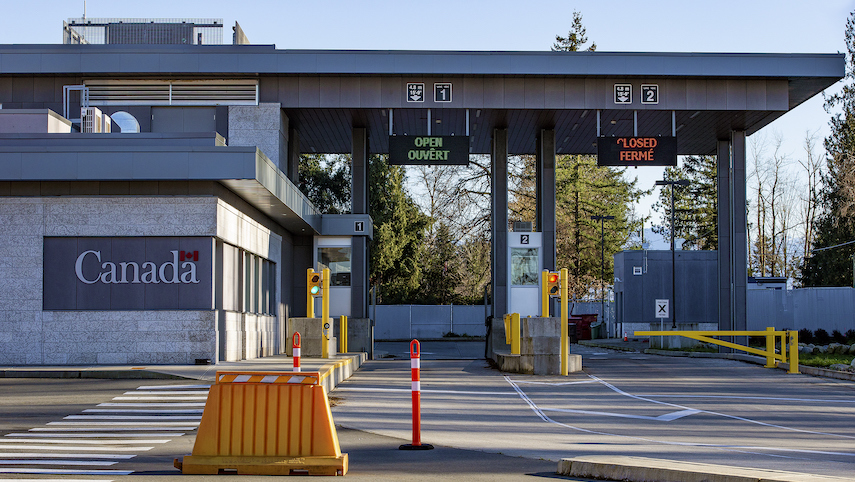
Starting December 1, travelers entering Canada from specific remote areas near the U.S. border will no longer be able to use a transit permit for direct entry. Instead, they will be required to process their entry at border crossings or designated locations every time they travel. To facilitate this change, the Canada Border Services Agency (CBSA) has established 17 new telephone reporting points in Ontario and Manitoba.
These new regulations will primarily impact residents who frequently cross the Canada-U.S. border, as well as those visiting Canada for activities such as fishing, boating, vacationing, or visiting family and friends. According to data from the Canada Border Services Agency, approximately 11,000 individuals participated in the transit permit program annually, with around 90% of those being American citizens. It is important to note that the changes will not affect individuals entering Canada through standard border crossings.
The CBSA has stated that this adjustment to entry regulations aims to enhance border security and streamline entry management in remote areas to align more closely with U.S. practices.
Under the previous rules, eligible Canadian and American citizens and permanent residents could apply for a Remote Area Border Crossing (RABC) permit for a fee of $30. Permit holders were allowed to enter Canada from designated remote areas without processing their entry each time, although they were still required to declare any items they were bringing into the country.
This program will conclude on November 30, with all existing permits expiring at 11:59 PM that same evening.
The new rules will apply to five remote areas along the Canada-U.S. border, including the northwest corner of Minnesota, the Pigeon River to Lake of the Woods area, the coast of Lake Superior within Canada, the upstream lock system at Sault Ste. Marie, and Cockburn Island.
On November 25, the CBSA announced that the 17 new telephone reporting points had been activated, with 16 located in Ontario and one in Manitoba. These points are situated at public docks, boat launches, and provincial park management stations, among other locations.
Travelers entering Canada from the specified remote areas can report their arrival by phone at designated locations or at the border crossings.
After consulting with local communities, indigenous groups, and other relevant stakeholders, the CBSA has identified additional locations for telephone reporting points, which will be announced to the public once they are operational.
The agency has reminded potential travelers from these areas to verify the locations and hours of operation for reporting points before embarking on their journey to Canada.
When using the telephone reporting system, travelers must provide information regarding their itinerary, the vessel or vehicle they are traveling with, and declare all accompanying persons as well as items being brought into the country, even if some of those items might be duty-free.
Border services personnel will assess the declaration to determine whether to permit entry or to require further onsite inspection.
Failure to comply with the reporting requirements could result in fines, confiscation of items or vehicles, and even criminal charges.