
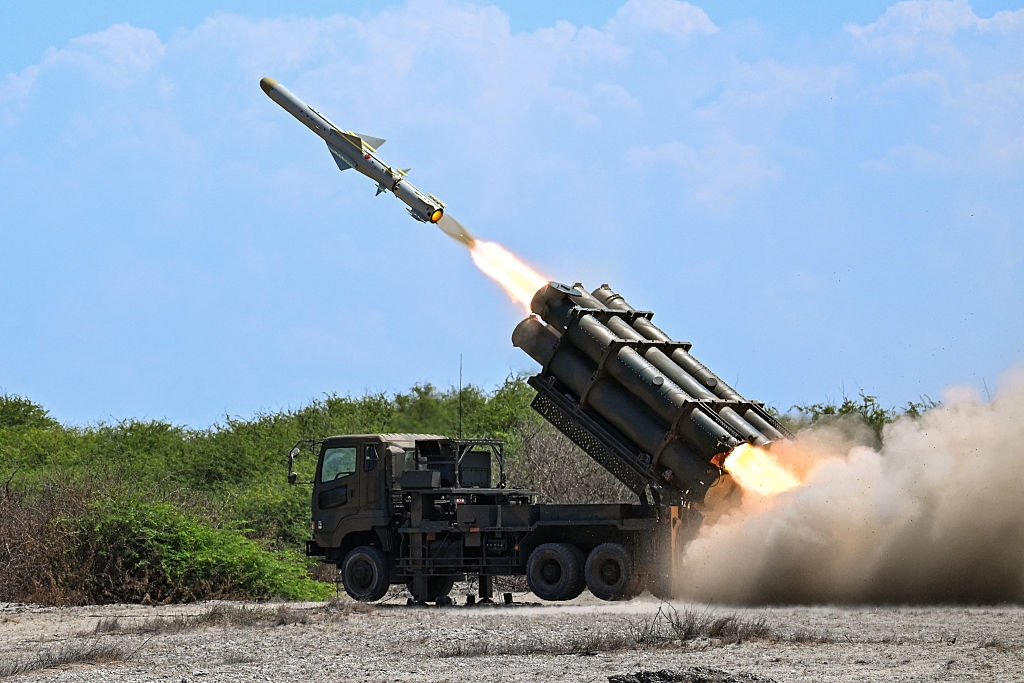
Japan’s Defense Minister Shinjiro Koizumi announced on Friday, November 27, that the country will deploy a long-range missile system at an Ground Self-Defense Force base in Hokkaido in December. The “Type 25 High-Speed Glide Missile” has a range of several hundred kilometers and is capable of striking enemy bases as a countermeasure.
During a press conference, Koizumi noted that the decision to expedite the deployment was made because some of the equipment could be delivered ahead of schedule. He emphasized the necessity of initiating troop training and establishing operational frameworks as soon as possible.
Just two days prior, on November 25, the Hokkaido Defense Bureau had already released a statement regarding the deployment. The bureau indicated that the “Type 25 High-Speed Glide Missile” would be stationed at the Kamifurano base, considering factors such as ensuring a suitable training environment and the necessary supporting infrastructure. The launch equipment and other related systems are expected to arrive at the base in December, with the Defense Ministry planning to announce a specific deployment date.
In addition to the preparations in Hokkaido, the deployment of long-range missile systems is also progressing in other regions of Japan. Successful deployments have already been completed in areas such as Kumamoto Prefecture.
The “Type 25 High-Speed Glide Missile” system offers a counter-strike capability, allowing Japan to target enemy positions from beyond their firing range. The deployment of this system primarily aims to address threats posed by hostile naval vessels that may intrude from the sea.
Earlier this year, in March, the Japanese Defense Ministry first deployed the “Type 25 High-Speed Glide Missile” system at the Fuji base located in Shizuoka Prefecture, in central Japan.
Furthermore, the Defense Ministry has previously stated plans to deploy this missile system at the Ebino base in Miyazaki Prefecture in the southwest by the end of the current fiscal year, which concludes in March next year.
The missile can be launched from vehicle-mounted platforms, enabling it to hit targets several hundred kilometers away. The Japanese Defense Ministry categorizes this capability as a “counter-strike ability,” intended for use in emergencies to target enemy bases and other crucial locations. This marks the first deployment of this type of weaponry within Hokkaido.
Amid increasing tensions in Sino-Japanese relations, Japan is striving to bolster its military capabilities and expand the deployment of long-range missiles domestically. This strategic move aims to deter the growing influence of the Chinese navy in regional waters. Last year, the Japanese Defense Ministry requested a historic budget allocation of 8.8 trillion yen (approximately 59.9 billion USD) for the 2026 fiscal year, intending to develop long-range missiles and drones as a response to threats from China, North Korea, and Russia. Japan also plans to increase its defense spending from about 1% to 2% of its GDP by 2027, with allied pressure from the United States pushing for greater military expenditure.
In August of the previous year, then-Defense Minister Gen Nakatani pointed out that deploying long-range missiles was essential for defending against threats targeting Japanese territory, including those emanating from outside Japan aimed at its islands.
This article draws references from reports by Jiji Press and Hokkaido Broadcasting Station (UHB).