
As gold prices continue to decline, interest from consumers in mainland China has notably shifted towards gold, despite similar declines in silver prices which have not attracted the same attention. A significant example comes from Mr. Zhang, a businessman from Zhengzhou, who purchased over a ton of silver bars. Initially, he profited 1 million yuan, but his investment has now soured, leading to a staggering loss of 7.4 million yuan. This scenario highlights a stark disparity in the sales landscape for gold and silver.
Recent trends have shown a decline in the prices of both gold and silver; however, their sales dynamics diverge sharply. While gold counters are bustling with inquiries, many silver counters are seeing very few customers. This contrast illustrates a significant difference in consumer confidence and behavior between the two precious metals.
According to reports from regional news outlets, a jeweler named Mr. Zhang, who has been operating in the Zhengzhou gold and silver trading market for over a decade, described his experience in the silver market. He began purchasing silver at 15 yuan per gram and continued to buy as the price rose to 24 yuan per gram. At its peak, he enjoyed profit margins exceeding 1 million yuan, but the price has since plummeted to just over 9 yuan per gram, resulting in a dramatic loss of 7.4 million yuan.
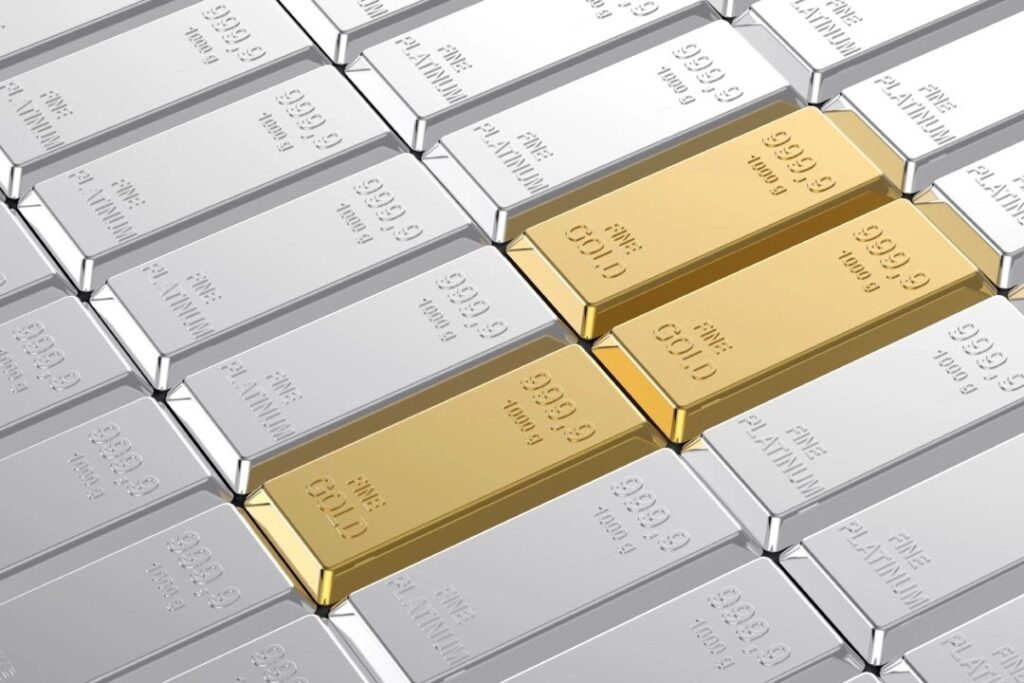
Mr. Zhang indicated the seriousness of his situation while pointing at the neatly stacked silver bars in his shop: “This bar weighs 15.5 kilograms, which is around 30 pounds, along with a batch of inventory locked inside. In total, over a ton.”
The relentless fall in silver prices has left Mr. Zhang in a difficult position. He notes that the risks associated with holding silver are growing exponentially, yet his finances do not allow for further investments—leaving him with little option but to wait.
In contrast, the economic expert Pan Helin provided an analysis of the situation, noting that silver possesses both financial and industrial characteristics. The recent downturn in demand for silver used in photovoltaic production has compounded the situation. Additionally, the long-standing market mentality of “buying on the rise, not on the fall” has worsened the bleak conditions in the silver market. He cautioned ordinary investors, highlighting that silver is inherently more volatile than gold, and approaching it with blind optimism can lead to greater risks.
Despite experiencing a price decline, gold is attracting significant consumer interest. The recent drop in gold prices has spurred a wave of consumer buying.
On November 24, an investment screen in the Beijing Caibai Department Store displayed a base gold price of 781 yuan per gram. This is an increase compared to last Friday when gold prices fell. Consumers flocked to the investment gold bar counters on the store’s fourth floor, predominantly occupied by middle-aged and older buyers, many of whom indicated their purchases were motivated by investment purposes.
This surge in gold purchases has resulted in shortages for certain specifications of gold bars. Sales personnel mentioned that the 5-gram and 10-gram investment gold bars are sold out, and there is currently no timeline for restocking, with no new pre-orders being accepted. “The 30-gram bars are selling the best,” a sales representative remarked.
In the golden jewelry sales area on the ground floor, the retail price for 24-karat gold is set at 1,095 yuan per gram, with 999 fine gold retailing for 1,098 yuan per gram. In contrast to the investment gold bars on the fourth floor, promotional campaigns are ongoing for gold jewelry, which includes a discount of 80 yuan for purchases over 5,000 yuan.
Regarding the current trend of gold sales, Zhu Zhigang, the supervising director and chief gold analyst of the Guangdong Gold Association, stated that this buying frenzy resembles the reaction seen in 2013 when gold prices fell, albeit with less intensity. However, there is still debate within the market regarding whether the gold bull market has ended, making it difficult to determine price floors. He advised investors against making blind purchases at the bottom and suggested considering small, incremental buys while remaining cautious of ongoing price volatility.
Additionally, a staff member from the Caibai Corporation’s securities affairs department remarked that “gold bars are low-margin products, and the appreciation potential for gold materials is minimal.” As sales of gold bars have surged, overall average gross margin has decreased significantly. The company’s focus will remain on gold jewelry operations with no plans for heightened investments in gold products.
According to Yu Song, head of the jewelry research department at Wuhan New World Jewelry King, the robust sales of gold bars are not likely to generate substantial profits for the jewelry stores. The inherent low-profit margin of investment gold bars, when considering operational costs such as capital, wages, and rent, leaves little net profit for businesses, who also face the risk of significant fluctuations in gold prices.
Looking ahead, Zhu Zhigang expressed that if gold prices stabilize at relatively low levels, the demand for gold jewelry might see some recovery. However, the future direction of gold prices remains uncertain, with potential sustained growth in demand for investment products.
A report from the Financial Alliance cited an analysis from Citic Securities on November 25, attributing the current weakness in gold prices primarily to tightened liquidity rather than central bank sell-offs. The potential for a short-term rebound will hinge on whether expectations surrounding Federal Reserve interest rate hikes begin to cool.
International news sources reported that after a nearly 4% rebound on November 23, gold prices fell again by over 2% on November 24. The rising expectations of Federal Reserve interest rate hikes, alongside declines in U.S. stock markets prompting some investors to sell their gold and silver to replenish margins, place further pressure on gold prices.
Historically, in China, there exists a saying: “Buy antiques in prosperous times, buy gold in turbulent times.” During periods of peace or economic prosperity, where government credit is stable and the purchasing power of currency remains relatively intact, people are more inclined to invest in securities, real estate, or antiques that promise high returns or appreciation in line with economic growth.
Conversely, during times of war, unrest, or severe economic crisis, shifts in power may lead to the devaluation of existing fiat currencies due to hyperinflation. Gold, with its natural scarcity and stable physical and chemical properties, does not rely on any single government’s endorsement, establishing it as humanity’s recognized “ultimate currency,” effective in preserving wealth and purchasing power.
According to data released by the China Gold Association on November 4, the consumption of gold bars and coins in the first three quarters of this year reached 444.576 tons, reflecting a year-on-year growth of 26.26%. In contrast, the consumption of gold jewelry saw a significant decline, amounting to 178.612 tons, a decrease of 33.86% year-on-year. When considering consumption weight, gold bars and coins now account for roughly 65% of total domestic gold consumption, while gold jewelry has dropped to approximately 26%.
Yu Song noted a profound change in the demand structure for gold: there has been a substantial decrease in jewelry demand accompanied by a significant increase in investment demand.