
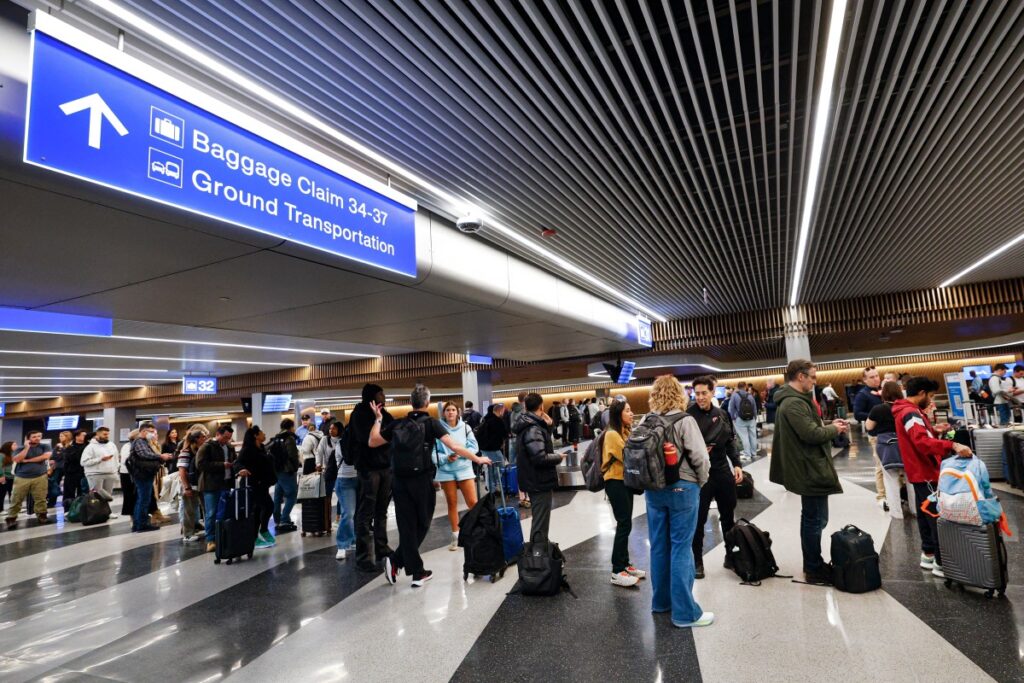
As Americans prepare for one of the busiest holiday weekends of the year, Thanksgiving, concerns are rising over potential disruptions to air travel due to technical failures. Additionally, weather-related issues loom large, as both the East and West Coasts of the United States brace for storms expected to affect holiday travel plans.
Beginning earlier this week, regions along the Pacific Northwest and coastal Northern California have been on alert for a new wave of coastal flooding. The National Weather Service (NWS) has issued warnings that rising tide levels could inundate low-lying infrastructure and lead to road closures. In San Francisco, officials are predicting that the tide levels on Wednesday morning, November 25, may reach some of the highest recorded levels in the city’s history.
On the East Coast, a significant storm is developing, raising concerns that strong winds could hinder the launch of large Thanksgiving balloons, potentially impacting the 100th Macy’s Thanksgiving Day Parade.
Meteorologist Joe Wegman from the National Weather Service’s forecast center has indicated that both the East and West Coasts will experience rainy weather throughout the Thanksgiving holiday.
Currently, the East Coast is grappling with an approaching storm system. Wegman anticipates that heavy rain and strong winds will commence along the South Carolina and North Carolina coasts starting Wednesday evening. By Thanksgiving Day, the storm is expected to hit the New York City area, reaching as far north as Maine by Friday.
The forecast for strong winds has led to apprehension regarding the iconic Macy’s Thanksgiving Day Parade in New York City. According to city regulations, if sustained winds exceed 23 miles per hour (37 kilometers per hour) or gusts reach over 35 miles per hour (56 kilometers per hour), the balloons cannot be launched.
The National Weather Service has stated that while rain in New York is expected to hold off until after the parade concludes, high winds could pose a significant challenge.
Meanwhile, the West Coast is also bracing for heavy rain and strong winds, with predictions of moderate to severe coastal flooding from Washington State down to Southern California.
San Francisco is taking precautions in anticipation of possible flooding in coastal areas, with threats expected to persist until Thursday.
In the higher elevations of the Cascade Mountains in the Pacific Northwest, snowfall is anticipated, which could further complicate travel for holiday visitors.
Adding to travelers’ anxiety is the looming threat of airline chaos due to technical malfunctions. On November 13, the Federal Aviation Administration (FAA) issued a rare nationwide ground stop due to a network failure, halting nearly all departing flights for nearly five hours. This incident represented the longest nationwide ground stop in U.S. aviation since the 9/11 terrorist attacks in 2001.
In the week that followed, both United Airlines and Delta Airlines experienced additional system failures, resulting in thousands of flight delays.
Moreover, rising airfare prices in recent months have added to travelers’ stress. According to estimates from travel booking company Hopper, domestic round-trip ticket prices during this Thanksgiving season have surged more than a third compared to the previous year.
Travelers across the nation find themselves navigating not only the complexities of holiday travel logistics but also the uncertainty of potential disruptions, as they embark on their anticipated Thanksgiving journeys.