
Recent reports indicate that Saudi Arabia and Bahrain have once again faced attacks by Iranian forces and the Houthi movement over the weekend.
The Saudi-led Coalition to Support Legitimacy in Yemen announced on social media platform X on Sunday, November 22, that they had successfully “intercepted and destroyed a drone launched towards the Riyadh area by the Houthi terrorist organization.”
This coalition has been at the forefront of military efforts against the Houthi rebels in Yemen. Just the previous evening, they reported that their air defense systems had also “intercepted and destroyed a ballistic missile,” which was aimed at the western region of Saudi Arabia that includes critical energy refining and export infrastructure.
On the same day, Bahrain confirmed that it had been attacked by Iranian forces. This small island nation serves as the base for the U.S. Navy’s Fifth Fleet.
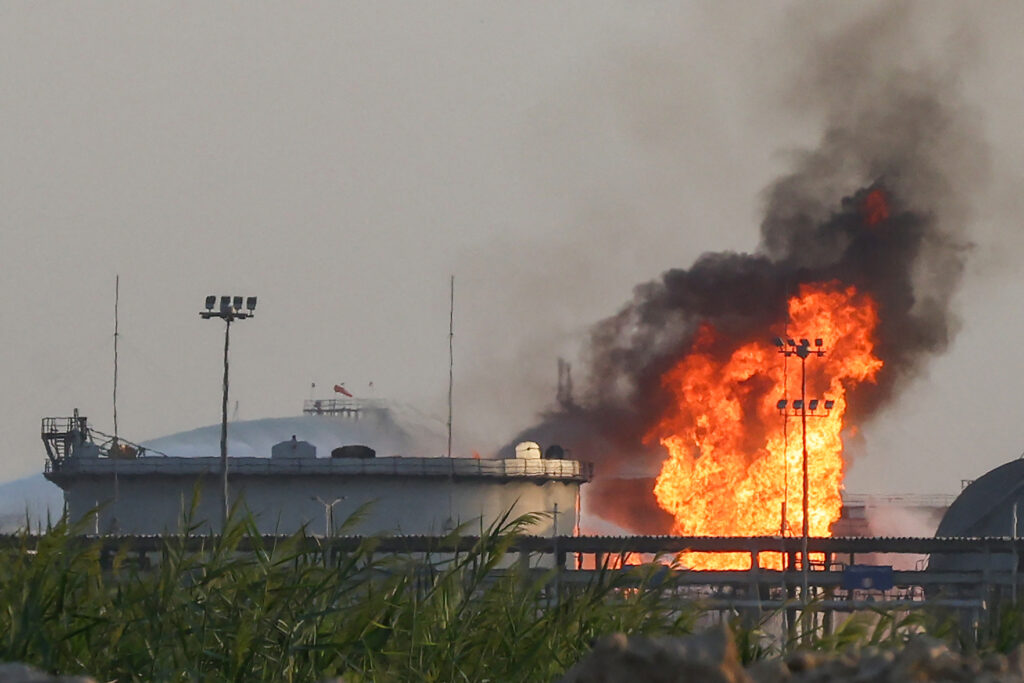
The Bahraini Ministry of Interior posted on X that a civil industrial facility had come under attack due to what they described as “Iran’s malicious aggression,” resulting in a blaze at the site.
The ministry later clarified that two individuals were injured in the attack; one was a Pakistani resident in critical condition, while the other was a Bahraini citizen whose condition was reported to be stable.
The Bahrain Defense Force stated that its air defense systems intercepted several Iranian strikes. They noted that while debris from the intercepts caused property damage, there were no reported casualties.
Furthermore, the Bahraini military condemned Iran for continuing its “systematic hostile actions” directed at Bahrain.
On the evening of the attacks, Iranian state media reported that the Islamic Revolutionary Guard Corps (IRGC) had fired missiles and drones at U.S. military facilities located in Bahrain.
As of now, the U.S. Central Command has not issued any comments regarding the Iranian claims.
Supported by Iran, the Houthi forces have increasingly targeted American allies in the Middle East, including Saudi Arabia, Bahrain, and Kuwait. These aggressive actions have compelled the Yemeni government forces to withdraw from areas near the Bab el-Mandeb Strait, enabling the Houthis to regain control over this vital shipping route that connects the Red Sea to the Gulf of Aden.
This situation underscores the escalating tensions in the region, as regional players continue to confront threats from both state and non-state actors. The ongoing conflict and military aggressions highlight the fragile security dynamics in the Middle East, with implications for broader international stability and regional governance.