
The Chinese Communist Party (CCP) has been actively seeking advanced artificial intelligence (AI) technologies from the United States and various third-party jurisdictions, including countries like the Netherlands, Japan, Taiwan, South Korea, Singapore, Malaysia, Thailand, Vietnam, Hong Kong, and the United Arab Emirates.
Acquiring AI-related chips frequently involves methods such as cloud computing, smuggling, or transshipment through a third country. In certain instances, the chips are repackaged or integrated into low-cost servers, circumventing export control laws and exploiting legal loopholes.
These loopholes that have allowed China to obtain AI technologies have persisted due to lobbying by established companies such as Nvidia, Oracle, and ASML, as well as some nations seeking to expand their AI influence, which in turn exerts foreign influence directly.
Peter Wennink, the former CEO of ASML, admitted to lobbying against export controls. He stated, “I think in Washington, they might sometimes think that Mr. Wennink is a friend of China.” He clarified, “No, I am a friend of my customers, suppliers, employees, and shareholders.”
However, when the clientele is based in China and the technology supplied can enhance China’s overall economy and bolster its AI capabilities, there is virtually no difference between being a “friend of China” and a “friend of the customer.”
Historically, AI chips were typically smuggled in small quantities by individuals. Today, however, cross-border AI computing is more frequently delivered through “neocloud” platforms or concealed within server shipments, with a single smuggling operation potentially containing thousands of chips. When AI servers are hosted in approved countries’ neoclouds, they can be legally rented and utilized remotely from within China.
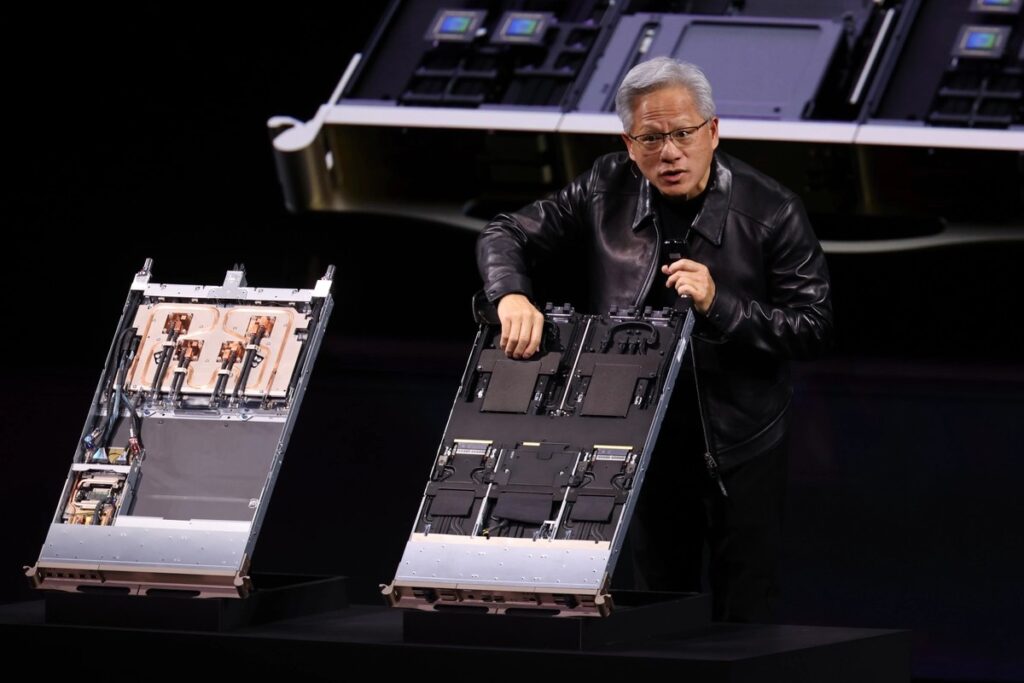
Among the chips affected by export controls are Nvidia’s Blackwell graphics processing units (GPUs) and high-bandwidth memory (HBM) chips from South Korea. ASML in the Netherlands produces equipment for chip manufacturing, including some older models that can be legally sold to Chinese customers. Even dated semiconductor technology can accelerate China’s economic growth, fueling spending in its military and AI sectors. Notably, just this June, the Dutch government was still lobbying the U.S. against export controls.
Recently, it was reported that billions of dollars worth of Nvidia chips have reportedly been flowing into the Chinese market through a Singaporean company known as Megaspeed. This firm’s Malaysian sister company purchased $4.8 billion in advanced Nvidia equipment over the past three years, which included AI chips. Alibaba, a major Chinese tech firm, is believed to be one of the primary buyers of this computing equipment. Allegations suggest that besides acquiring chips through its neocloud, Alibaba also procured other semiconductor products.
According to employees of Megaspeed, Alice Huang was reportedly still working normally at the company as of May this year. U.S. intelligence suspects her to be a spy for the CCP. She had previously been in a relationship with Jensen Huang, the then-CEO of Nvidia, who led the company in lobbying against U.S. export controls on AI chips.
Both Megaspeed and Alice Huang have denied any wrongdoing; however, investigations are currently underway across the U.S., Singapore, and Malaysia. Reports indicate that Megaspeed’s headquarters in Singapore appears almost deserted, and its offices in Australia and Malaysia seem to operate merely as shell companies.
Nvidia claims it stopped supplying Megaspeed last year, yet reports suggest that transactions between the two entities are still occurring. Furthermore, in the first two quarters of 2026, Nvidia accounted for 34% of the AI accelerator shipments to China. Despite Jensen Huang resigning on November 12, the ongoing Nvidia case highlights serious gaps in the company’s due diligence and reveals vulnerabilities in the legal frameworks and enforcement mechanisms of the U.S. and its partners.
It is likely that Chinese companies will continue to pressure their U.S. and other foreign suppliers to find ways to circumvent export controls. The CCP’s state media has strongly promoted such practices. South Korea’s HBM chips are vital for AI computing yet are subject to export restrictions. Reports indicate that the price of these memory chips in the smuggling market has surged from several hundred dollars each last year to around $4,000 this year.
As noted by the CCP’s official media outlet, the Global Times, “Korean chip manufacturers need to provide advanced products to Chinese customers if they want to maintain or enlarge their market share in China. Thus, breaking through U.S. export restrictions on advanced HBM chips is key to achieving this goal.”
Although it is illegal to export HBM chips directly to China, they can be integrated into lower-end server processors, which are not subject to export restrictions due to their slower speeds. Once in China, careful heating can extract the HBM, allowing the rest of the server processor to be discarded. It has been reported that these HBM chips are later repurposed primarily for AI systems owned by Huawei. This scenario clearly illustrates a loophole in U.S. and South Korean export control laws that needs to be addressed.
The South Korean government should not seek to profit from loopholes in U.S. regulations but instead strengthen its own export control laws to ensure the CCP does not exploit South Korean technology to enhance its capabilities. South Korean companies have already spent millions lobbying the U.S. to permit the export of chip manufacturing equipment to their factories in China. Such lobbying efforts should be halted immediately.
The U.S. should implement new legislation requiring stricter disclosures for companies exporting products to China and other hostile nations, making lobbying activities more challenging. The lobbying efforts of these businesses have, to some extent, become akin to acting as agents for the CCP regime in exchange for money. The original intent of the First Amendment of the U.S. Constitution, which guarantees freedom of speech, was never to protect lobbying efforts funded by the CCP—these funds are essentially extorted from the system of “no taxation without representation.”
China is casting a wide net globally in search of AI technologies. A similar incident occurred in Singapore last year when law enforcement executed raids on 22 locations, arresting nine individuals allegedly involved in selling Supermicro and Dell servers equipped with Nvidia chips to a Malaysian company.
In May of this year, law enforcement in Taiwan arrested three individuals suspected of transshipping Nvidia chips through Japan and Hong Kong, where these chips were integrated into Supermicro servers. The strict customs enforcement in Japan means that the successful entry of these chips likely indicates that smuggling groups may also be operating through several other countries and regions.
Additionally, in May, Thailand cracked down on alleged “origin-tagging” fraud related to the smuggling of AI chips. Reports indicate that the CCP had been attempting to lease new cloud computing resources in Europe in recent months.
On November 16, the U.S. Department of Commerce announced an interim rule increasing the threshold for obtaining licenses to supply advanced chips to specific data centers, which provide significant computing power to companies headquartered in China, Russia, Iran, North Korea, and about 20 other nations under arms embargoes.
Moreover, this rule mandates that companies obtain licenses to export advanced AI chips to countries such as Singapore, Thailand, Malaysia, Indonesia, and Brazil. These stricter measures are supplements to existing restrictions targeting China, Russia, and Saudi Arabia.
While this regulation represents a step in the right direction, there are still certain exceptions, such as access permissions for recommendation systems and limited-scale neocloud services (where companies may distribute their computing power requirements among several unrelated suppliers to bypass scrutiny).
Enforcement efforts have lagged, and these new regulations may be too little, too late. U.S. export controls on chips and emerging cloud computing have long been riddled with loopholes. Some experts believe that the regulatory framework is fundamentally incapable of being effectively enforced on a global scale. The U.S. government must take concrete actions to prove these assessments incorrect. New U.S. legislation (currently, four bills are under consideration) should cut Chinese access to AI technologies thoroughly.
The four bills are: the AI Overwatch Act, which would give Congress more authority over AI chip exports; the Chip Security Act, requiring companies to track the locations of AI processors; the Match Act, applying pressure on U.S. allies to restrict semiconductor manufacturing equipment sales to China; and the Remote Access Security Act, empowering the Department of Commerce to stop Chinese companies from leasing Nvidia computing resources on cloud platforms.
We need stricter laws. U.S. legislation pertaining to China and other hostile nations should expand the scope of export controls to encompass “extraterritorial jurisdiction” over all countries, ensuring that American companies do not find themselves at a disadvantage. Any companies globally associated with entities blacklisted by the U.S. should face a complete ban on procuring Western AI equipment anywhere in the world.
U.S. laws should prohibit all international companies from supplying advanced and traditional chip manufacturing equipment to hostile nations such as China. Even older semiconductor equipment facilitates the economic and military enhancements of regimes that seek to undermine democracy.
If U.S. laws lag in limiting China’s technological advancement, American partners should enact their own regulations. For instance, the EU, UK, Japan, South Korea, the Netherlands, and Singapore have been slow to limit China’s access to AI and other semiconductor technologies within their jurisdictions.
U.S. allies should proactively fill the gaps in U.S. legislation and establish their own stricter laws. Given that the CCP consistently adheres to totalitarian and communist policies, the U.S. and its democratic allies should unhesitatingly leverage non-market measures to outmaneuver the CCP in the global marketplace. After all, the CCP employs a non-market economy and often uses these tactics to protect its domestic enterprises.
The privilege of free trade should only be granted to free nations. If democracy is to persist in the era of superintelligence, AI technologies must remain firmly within the control of democratic states.