
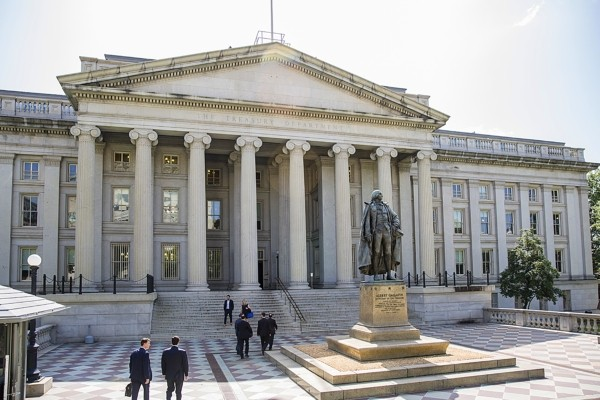
On Thursday, November 19, the Office of Foreign Assets Control (OFAC) of the U.S. Department of the Treasury imposed sanctions on three individuals involved in the operation and support of fraudulent schemes in Southeast Asia. Among those sanctioned is a person linked to Chen Zhi, a prominent figure in the Prince Group, whose two affiliated companies also faced sanctions.
The other two individuals targeted by the sanctions have affiliations with armed organizations that provide protection and support to the Southeast Asian scam networks.
U.S. Treasury Secretary Scott Bessent emphasized that the department is actively working against overseas fraud schemes to safeguard American citizens from fraudulent activities. The Treasury will continue to utilize all available means to disrupt and dismantle the networks supporting these scams.
The press release from the Treasury revealed that one of the sanctioned individuals is Zhao Hui, a Cambodian national. Zhao had previously rented a fraudulent operation site owned by the sanctioned Prince Group Transnational Criminal Organization and paid “protection fees” to its leader, Chen Zhi, who is also on the OFAC sanctions list. Additionally, Zhao operates another independent fraudulent site in Cambodia, where he directly engages in scam activities and manages leasing matters for the operation. These scam hubs primarily target Americans and Europeans, engaging in virtual currency investment scams.
Court documents from the U.S. indicate that Chen Zhi, a fraud mastermind originally from China, has been accused of operating one of the largest transnational scam networks in Asia. Around 2009, Chen fled to Cambodia with looted funds; in 2015, he founded the Prince Holding Group and began establishing closed operation zones in various locations throughout Cambodia.
Based in Cambodia’s capital city of Phnom Penh, the Prince Group owns several large-scale dedicated scam zones across the country. The organization lures individuals from different countries with high-paying job offers, only to imprison them in these zones, compelling them to participate in international scam activities that affect victims worldwide.
The Treasury’s press release also mentioned that the sanctioned companies include Bei Fang Bo Lin Construction Decoration Co., Ltd. and ZHZ Investment Consulting Co., Ltd., both of which Zhao Hui chairs.
Furthermore, the U.S. Treasury sanctioned General Saw Shwe Wah, the commander of the Democratic Karen Benevolent Army (DKBA). This armed group has previously been sanctioned for its support of scam sites in Myanmar, which target Americans through fraudulent investment schemes.
Another sanctioned individual is Colonel Saw A One, a commander within the DKBA responsible for security in the Three Pagodas Pass area near the Thai border in Karen State, Myanmar. This area has seen many new constructions intended for scam activities, facilitated by the DKBA, which has protected a significant number of scammers entering the region. Saw A One owns a plantation that houses a scam site and has participated in scam operations through contracts.
The U.S. Treasury estimates that by 2024, Americans may face losses of at least $10 billion due to Southeast Asian scams, marking a 66% increase from the previous year. These fraudulent activities employ various tactics to deceive victims out of their savings, with one of the most common and lucrative scams being digital asset investment fraud.
Fraud centers based in Southeast Asia frequently use fictitious job titles to recruit personnel, claiming affiliations with casinos, resorts, and shell companies that are connected to the scam operations. Once these individuals arrive at these zones, they have their passports confiscated, and criminals employ tactics such as debt bondage, physical violence, and coercion into prostitution to force them into online scamming of unsuspecting victims. These scam organizations often prioritize recruiting individuals fluent in English to target Americans more effectively.
The Treasury noted that some former scammers reported they were instructed to specifically target Americans, with some even being required to meet daily scam quotas. In certain cases, American victims have suffered the loss of their life savings as a result of these scams.