
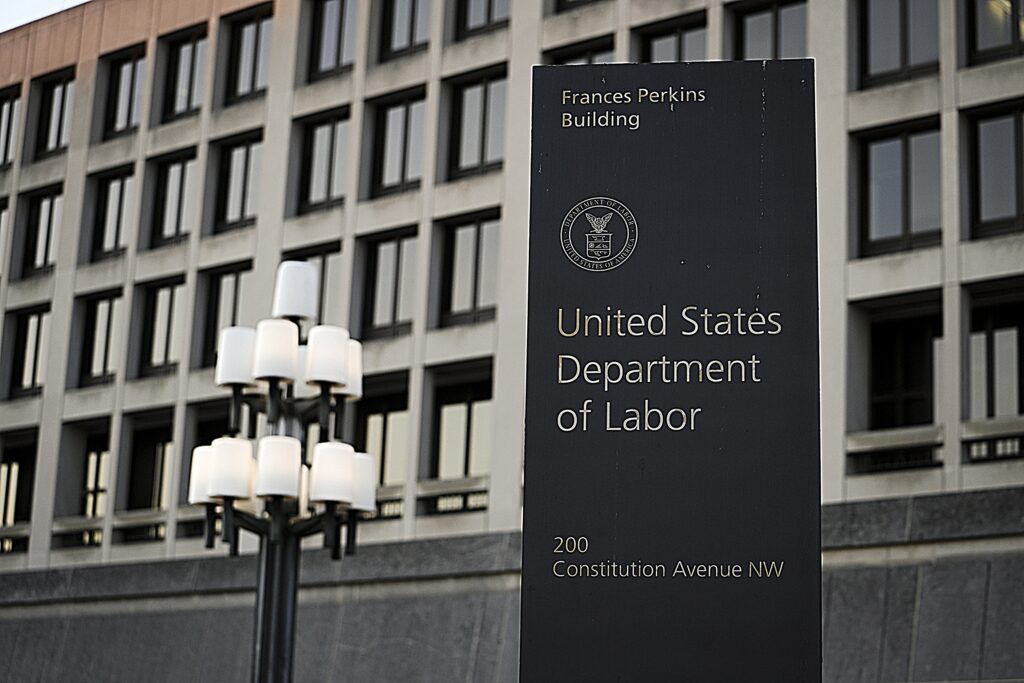
The U.S. Department of Labor (DOL) has recently proposed a significant reform to immigration policy, aiming to overhaul the procedures that employers must follow to apply for permanent labor certification (PERM) for foreign employees seeking employment-based green cards. This reform includes the elimination of certain hiring exemptions for various occupations, extending the duration for job advertisements, broadening the scope of layoff restrictions, and enhancing oversight of third-party staffing agencies and employers.
On November 17, the Department released a proposed rule titled “Modernizing the Labor Market Test and Improving Protections for U.S. Workers in the PERM Immigrant Visa Program” in the Federal Register.
This initiative marks the first comprehensive reform of the PERM system since its implementation in 2005, representing nearly 20 years since any major changes have been proposed. The primary objective of these reforms is to align the hiring processes with the realities of the modern job market while strengthening protections for American workers. The idea is to prevent employers from replacing American employees with foreign workers through the employment-based immigration process.
The PERM system, managed by the DOL, is primarily utilized by employers to sponsor foreign employees for the EB-2 and EB-3 categories of employment-based green cards. To proceed, employers must demonstrate that there are insufficient qualified, willing, and available American workers for the permanent position, ensuring that hiring foreign staff will not adversely affect the wages and working conditions of similar American workers.
The new proposal introduces several key changes, including the following six significant reforms:
Currently, the DOL’s Schedule A system allows certain professions to bypass the regular PERM recruitment process, divided into two groups:
These occupations are exempt from the typical PERM labor market testing requirements, although employers must still obtain the prevailing wage determination. However, they are not required to complete the entire recruitment process as necessary for other job categories.
The new proposal plans to eliminate Groups I and II of Schedule A, mandating that relevant employers conduct complete PERM recruitment to prove that no qualified American workers are available to fill the positions.
This means that the green card application process for foreign nurses and physical therapists employed by healthcare institutions could become more complex, necessitating additional recruitment efforts, record keeping, and documentation submission. Consequently, the costs and duration of applications may also increase.
The new proposal also intends to remove the traditional requirement for Sunday newspaper job advertisements, replacing it with recruitment methods that better reflect modern job-seeking habits. Employers will now be required to utilize several primary recruitment channels:
Job advertisements must be maintained for at least 90 calendar days. If an employer has recruited for the same or similar positions within the past 12 months and customary advertisement periods exceeded 90 days, the PERM recruitment must adhere to the longer timeframe.
Moreover, recruitment activities must be completed within 30 to 60 calendar days before the submission of the PERM application.
Another critical change is that the recruitment methods must align closely with how the employer generally hires for the same or similar positions. This includes consistency in recruitment channels, resume collection, interviewing, and candidate evaluation processes.
In essence, employers cannot engage in merely formal recruitment to meet PERM application requirements or intentionally utilize methods that differ from their usual hiring practices. The human resources departments will also be required to maintain more comprehensive hiring records to demonstrate that eligible American applicants were genuinely considered.
Currently, if an employer has laid off American employees in the same relevant job category within 180 days before submitting a PERM application, they must notify and consider qualified laid-off workers. The new proposal aims to extend this 180-day limit to two years.
This means that if an employer has laid off American workers in the relevant job category within the two years before submitting the PERM application, they will be prohibited from submitting that PERM application for the position.
Furthermore, if layoffs of qualified American workers occur after the submission of the PERM application but before approval of the related I-140 immigration petition, the employer must fulfill new notification and re-hiring obligations.
As per the proposal, employers must notify the Department of Labor within five business days following the layoff; if the related I-140 is still under review, they must also inform the U.S. Citizenship and Immigration Services (USCIS).
Moreover, employers are required to offer the PERM position to qualified laid-off American employees and document in the updated recruitment report whether the employee accepted or refused the job, or if the employer rejected them for lawful and job-relevant reasons.
These reforms will impose stricter conditions on businesses that have previously conducted layoffs when applying for green cards for foreign employees.
The new proposal also expands layoff restrictions to certain third-party contracting and outsourcing arrangements. For instance, if an IT consulting firm or a staffing agency places a foreign worker at a client company, and that client company has laid off the same or similar American employees in the past two years, the staffing firm may face limitations in assigning that foreign worker if there is evidence of a significant employer-employee relationship.
In determining the existence of such a relationship, the Department will consider several factors, including who has authority over the employee’s work schedule, location, and method, who provides the work equipment, and who is responsible for arranging the job content.
This means that even if the staffing company has not conducted layoffs, it could still be impacted by the layoffs conducted by the client company.
The proposal also requires employers to disclose the third-party company and job site to which the foreign employee is assigned in the PERM application, allowing the Department of Labor to oversee these arrangements.
The PERM process requires employers to notify American workers about the position held by foreign employees and the relevant immigration application information, providing workers with a chance to understand the role and report any potential issues to the Department of Labor.
The new proposal intends to enhance these notification requirements. If there is no applicable union representative at the job site, employers must post notifications in at least two conspicuous locations at each relevant site where the foreign employee will work.
However, qualified employers may also utilize electronic postings as a substitute for physical postings. Relevant websites must be familiar to employees, easily accessible, and regularly used by the employer to post conditions of employment and related announcements.
In terms of timing, announcements must commence within ten business days prior to the submission of the PERM application and continue until the related I-140 is approved. If either the PERM or I-140 application is denied or withdrawn, the notice must be maintained until the date of the relevant decision.
Additionally, if the foreign employee is assigned to a third-party client’s worksite, that site must also be included in the announcement requirements, regardless of whether the employer owns or operates that work location.
The new proposal requires employers to provide more comprehensive recruitment evidence and extend the actual retention time for related documents, focusing on two primary changes.
First, the starting date for the five-year document retention requirement will be altered. Currently, employers typically must retain applications and all relevant documentation for five years from the date of submitting the PERM application.
The new proposal plans to adjust this to start the five-year period from relevant dates, such as the approval, denial, or withdrawal of the related I-140 immigration petition.
If an employer fails to submit an I-140, they must retain relevant documents for five years from the applicable date of labor certification expiration or withdrawal. This adjustment aims to ensure that the Department of Labor and other government agencies have sufficient time to access these records for compliance reviews or investigations after immigration case adjudication ends.
Second, recruitment reports must now be submitted alongside the PERM application. Under current regulations, employers need to create and retain recruitment reports, but these are typically submitted only if requested by the Department of Labor during their review.
The new proposal mandates that employers must submit the recruitment report concurrently with the PERM application, along with evidence of related job advertisements and resumes or applications from American job seekers.
The report must also detail each American job seeker’s application status, whether they met the position’s qualifications, whether they received job invitations, and the legitimate grounds for the employer not hiring a particular candidate.
This will allow the Department of Labor to review each employer’s recruitment efforts individually, rather than only accessing recruitment records for cases selected for review.
The Department of Labor continues to seek public comments on this proposed rule until January 19, 2027.
As this is still a policy proposal and has not yet become an enforceable regulation, employers must continue processing applications in accordance with current PERM regulations until the final rules are published and take effect.
The Department indicated that should the proposal be approved, a 90-day transition period is anticipated: the final rule will take effect 60 days after its publication, along with an additional 30-day adjustment period. According to the current proposal, PERM and prevailing wage determination applications submitted 90 days after the final rule’s publication will be subject to the new regulations.
If implemented, these reforms will significantly impact U.S. employers who sponsor foreign employees for EB-2 and EB-3 green cards, especially those in healthcare, technology, and companies utilizing third-party staffing arrangements, potentially requiring them to revise their recruitment processes, internal compliance protocols, and document management systems.