
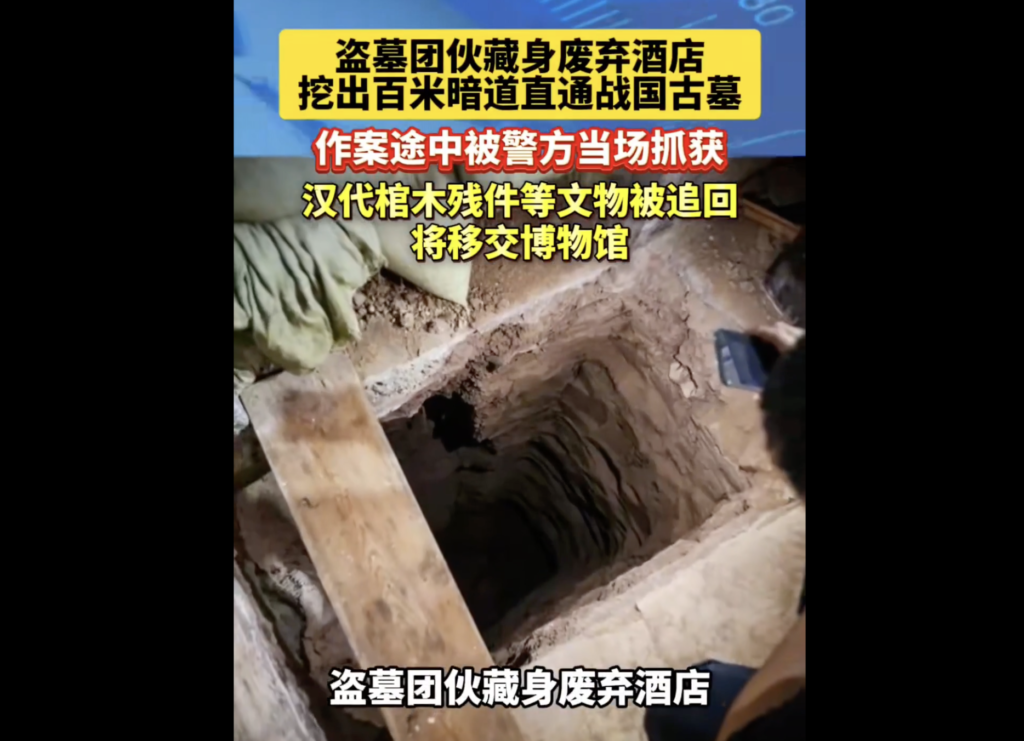
In a stunning revelation from Shandong province, a neglected hotel in Qingzhou has turned out to conceal a hidden underground tunnel that stretches over one hundred meters, directly leading to an ancient tomb from the Warring States period. The situation escalated when police unearthed a substantial number of soil bags, excavated by grave robbers, which nearly reached the hotel’s ceiling.
According to a report from a Chinese media outlet, on August 25, local police in Qingzhou discovered that a tomb robbing hole near the Erwangzhuang and Nanxin ancient graves had collapsed. The signs of disturbed earth indicated that an excavation attempt had recently taken place.
Subsequently, investigators found the lower level of an abandoned hotel in the western mountainous region of Qingzhou filled with bags of soil stacked high. This excavation bore a vertical shaft that plunged seven meters deep and extended horizontally for more than a hundred meters, culminating in a secret passage that led directly to the nearby ancient tomb.
Reports highlight that the robbers had chosen the secluded and obscure environment of the abandoned building with the intention of avoiding detection from the outside world. Unfortunately for them, their activities caught the attention of law enforcement, resulting in their swift capture during the acting operation. The mountain of soil bags left behind has become crucial evidence of the extensive illegal digging conducted by these grave robbers.
It is known that Qingzhou is rich in historical and cultural heritage, with 906 protected cultural relic sites scattered across its mountains and villages.
Interestingly, some internet users noted that a video exploring real grave robbery sites in Qingzhou had surfaced as early as April 30, suggesting that this issue has been under the radar for some time.
Moreover, in China, there are instances where police have allegedly acted as protectors for tomb robbers. A shocking case known as the “grave robbing gang in Shanxi” was exposed between 2017 and 2018. The Hou brothers, part of this organized crime syndicate, operated under police protection for over a decade. They not only looted ancient graves but also ran illegal gambling dens, took over mines, engaged in high-interest lending, and utilized violent debt collection tactics.
This incident serves as a grave reminder of the challenges faced in preserving cultural heritage, as well as the persistent issue of corruption that can complicate law enforcement efforts in tackling such illegal activities. The risks taken by these criminals not only threaten invaluable historical relics but also highlight the need for increased vigilance and protection of cultural sites across the nation.