
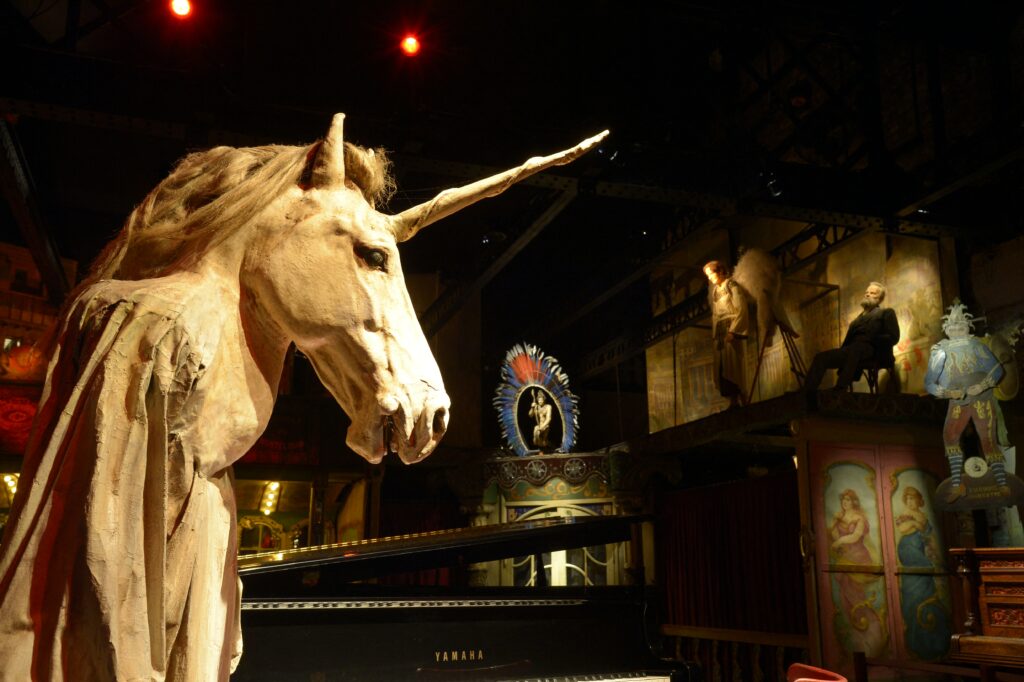
In a fascinating occurrence recently captured by a wildlife camera in Estonia, a creature that resembles the mythical unicorn has sparked curiosity and excitement. Traditionally depicted in Western mythology as a horse-like beast with a single spiraled horn on its forehead, the unicorn is said to possess magical qualities, including the ability to neutralize toxins. However, the creature identified in Estonia has turned out to be something more earthbound yet equally intriguing.
According to a report dated November 17, a wildlife camera set up on an island in Estonia recorded this elusive “unicorn” – in reality, it is a roe deer, sometimes referred to as the European roe or Western roe deer. This particular deer was seen sporting a horn-like growth on its forehead, reminiscent of the legendary creature.
The footage was captured by the Lutreola Foundation, a conservation organization in Estonia, which had installed these cameras with the primary aim of monitoring the activities of the European mink. To their surprise, they discovered this unusual animal instead.
The organization took to Facebook to share the footage, exclaiming, “A unicorn has been discovered on Saaremaa Island! The dreams of little girls have finally come true!” Their post further noted the presence of other rare wildlife in the area, including the European mink and the black stork.
In the video, viewers can see the “unicorn” drinking water, showcasing the distinct horn-like protrusion on its head. Following this moment, the video also features the black stork hunting for small fish, adding to the rich tapestry of life captured in this serene environment.
Experts have weighed in on the peculiar growth observed on the deer’s forehead. They noted that it is difficult to definitively ascertain what the horn-like appendage actually is based solely on the footage. They speculate it could either be a newly formed antler or perhaps even a remnant of another ear.
Interestingly, this is not the first time a creature resembling a unicorn has been reported. In a previous instance in November 2023, the Petrified Forest National Park in Arizona shared a photo on Facebook that humorously depicted a “unicorn” alongside a full moon. The post joked that the full moon had lured out the park’s own unicorn.
In reality, the image captured was of a one-year-old male elk, which was missing one of its antlers. This led to the single remaining antler giving it a horn-like appearance, echoing the imagery associated with mythical unicorns.
The lore surrounding unicorns is not a mere figment of imagination; its origins can be traced back to ancient Greece. As far back as the 5th century BC, Greek physician Ctesias, who served as a physician at the Persian court, documented various observations about India, including descriptions of a unicorn—a creature with a singular horn extending from its forehead.
The enchantment of unicorns continues to captivate the human imagination, blending the line between reality and myth, and providing a glimpse into the wonders of the natural world that can sometimes resemble the extraordinary. In cases like the one in Estonia, nature surprises us with its ability to inspire and delight, reminding us of the stories that have persisted through the ages.