
In the aftermath of Brazil’s presidential election held on October 25, 2026, a dramatic sequence of events unfolded closely related to the family of the former president, Jair Bolsonaro. The day after the election, which resulted in a victory for the incumbent Luiz Inácio Lula da Silva, Flávio Bolsonaro, a presidential candidate and son of Jair Bolsonaro, visited his father, who was under house arrest. As they said their goodbyes, Jair, visibly emotional, expressed his worries to Flávio about the escalating political persecution against them.
Outside the residence, Flávio was unexpectedly halted by federal police, who presented him with a notice prohibiting him from leaving the country and demanded that he surrender his passport due to an ongoing investigation related to money laundering and illegal overseas fund transfers. This demand came shortly after Lula’s victory was declared, highlighting the turbulent political landscape in Brazil.
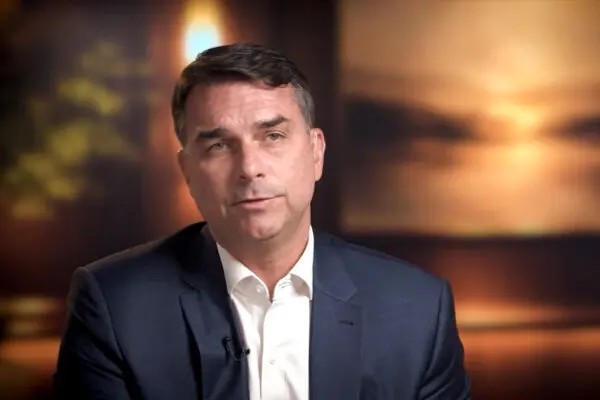
Flávio Bolsonaro recounted this moment during an exclusive interview, where he confirmed his father’s fears about the political climate and acknowledged the difficult choices ahead of him, stating, “Yes, I know. I also know what I must do.” This exchange took place on the morning of October 26, just hours after Flávio’s loss in the presidential runoff against Lula.
On the night of the election, just seven minutes post-results, the federal police initiated the passport seizure process for Flávio, citing concerns over his potential flight from Brazil amid accusations against him. The request was granted by Supreme Court Justice Alexandre de Moraes, a figure perceived to have close ties to President Lula and known for his pivotal role in presiding over the legal challenges against Jair Bolsonaro.
To evade a similar fate as his father, Flávio embarked on a perilous journey across four countries, covering about 5,000 miles to escape Brazilian authorities. Remarkably, for over 24 hours, even his closest allies and media sources were unaware of his location. In order to protect those who assisted him, Flávio has chosen not to disclose the specifics of his escape, acknowledging the risks involved for anyone who might aid him.
On October 27, Flávio and his family managed to enter Argentina, and the following day, they arrived in southern Florida, USA. Reflecting on his father’s situation, he expressed deep concern, implying that his father had been wrongfully imprisoned for over 27 years for actions he did not commit, which cast a shadow over Flávio’s own circumstances.
Jair Bolsonaro, who has been serving his sentence at home due to health issues, continues to claim his trial was politically motivated and lacks legal validity. Meanwhile, Flávio and his family were granted humanitarian protection in the United States, where he was able to reunite with his brother Eduardo Bolsonaro, also a political figure who left Brazil citing political persecution.
As a sitting senator in Brazil, Flávio expressed his intentions to remain in the U.S. until the political situation in Brazil transforms. He stated, “I will stay in the United States, legalize my immigration status, and continue to work for Brazil from here.” Upon arrival in the U.S., he released an open letter to the international community and the Brazilian populace, asserting that he was “not fleeing Brazil, but leaving for Brazil,” and drawing historical parallels with figures like Charles de Gaulle and Venezuelan opposition leader María Corina Machado.
In this letter, Flávio pledged to lead the opposition from abroad and to air grievances that others couldn’t express, taking risks others would not dare to take. In stark contrast, President Lula characterized Flávio’s departure as “shameful,” arguing that he should have surrendered his passport and claiming that the federal police should have anticipated his exit, given the ongoing investigation.
On election night, while Lula’s win was confirmed, Flávio stood outside his campaign headquarters refusing to concede, surrounded by supporters who echoed his sentiments. This refusal was part of a larger controversy spurred by a temporary ruling made after voting ended, which extended polling hours in certain areas following a request from Lula’s coalition to the Supreme Court.
Flávio maintains that this decision led to a delay in the counting process, claiming potential electoral manipulation occurred during the extended hours, raising suspicions about the integrity of the election. On October 26, the Brazilian Superior Electoral Court dismissed his claims, emphasizing the legitimacy of the voting process.
Despite the precariousness of his situation, Flávio continues to believe in the future of his party, the Liberal Party, which gained substantial ground in the recent elections. He relayed the successful election of conservative candidates in 17 out of Brazil’s 27 states, suggesting a potential political comeback in the future.
Emerging from exile, Flávio Bolsonaro remains optimistic about a political shift in Brazil, predicting that within four years, a more conservative government could reclaim power, driven by a public exhausted from perceived political abuses and discontent with Lula’s administration. He contemplates the 2030 presidential election, prepared to re-enter Brazilian politics if conditions align favorably.
As he navigates this complex landscape, pressure from certain Democratic lawmakers in the U.S. to repatriate him continues. Flávio, however, is committed to the vision he holds for Brazil’s future and remains hopeful, borrowing strength from the support he receives, which has been forthcoming from everyday Americans he encounters.
Flávio Bolsonaro acknowledges the challenges ahead but firmly believes in his cause, advocating for a return to democratic principles and safeguarding the future of Brazil amidst evolving geopolitical dynamics, particularly concerning relations with the United States and increasing influence from China.