
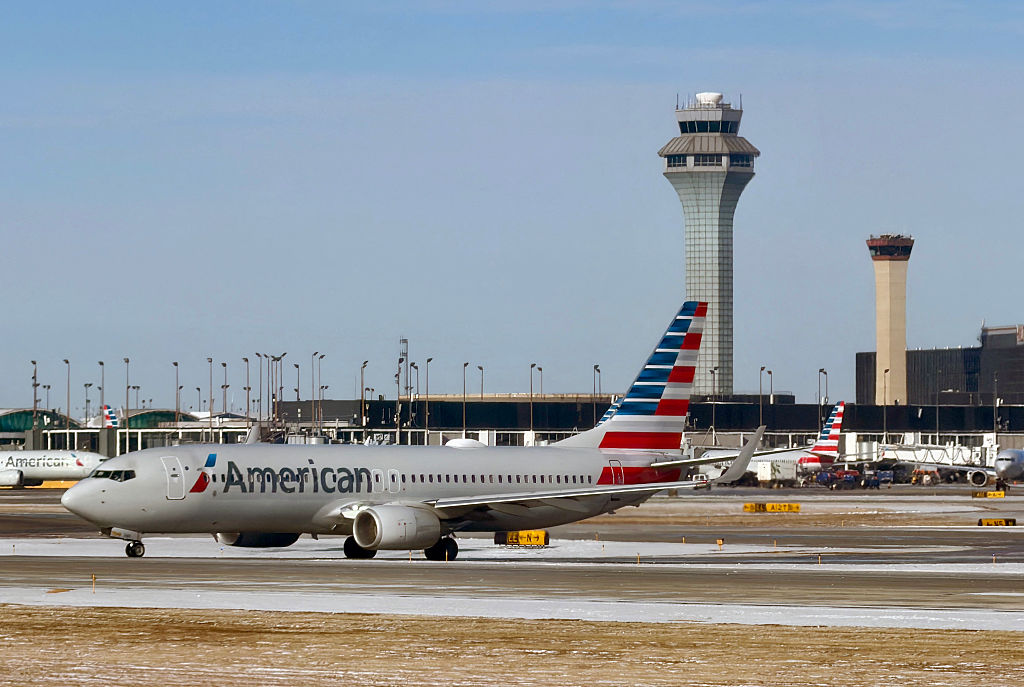
On November 17, a federal judge in the United States mandated that Weiheng Zeng, a Chinese national accused of taking photographs of aircraft and logistics hubs on behalf of the Chinese Communist Party, must remain in custody until his trial.
According to reports from CBS, Federal Magistrate Judge Kimberly Altman, stationed in Detroit, rejected a request from Zeng’s legal team, who sought his release on bail so he could return to live in Canada during the proceedings.
The U.S. Department of Justice indicated that Zeng’s family is willing to “pay any bail set by the court,” and even suggested purchasing an apartment in the United States for him to reside in post-release. Currently, Zeng is an undergraduate student at the University of Waterloo in Ontario, Canada.
Documents from the U.S. District Court for the Eastern District of Michigan reveal that a federal grand jury officially charged Zeng on November 5 with making false statements to government authorities.
Earlier this month, Zeng entered a plea of not guilty. It is critical to note that he has not been charged with photographing aircraft but rather for allegedly lying to investigators.
The indictment details an incident from August 23, where Zeng was questioned by U.S. Customs and Border Protection (CBP) officials at the Ambassador Bridge port of entry. He reported having entered the U.S. in April and, during his unauthorized entry into the FedEx facility at O’Hare International Airport, claimed it was merely a “hobby.”
An affidavit from an FBI agent points out that Zeng allegedly took photographs inside the FedEx facility at O’Hare and even climbed onto a parked forklift, attempting to access a locked trailer. The Justice Department stated that surveillance footage shows him trying to open a container and using the forklift to elevate himself for better shots.
Investigators later identified a deep blue Chrysler minivan with Ontario plates at the scene, linking it to Zeng.
As reported by CTV News and gleaned from court documents, Zeng obtained a U.S. visa nearly four years ago and has since entered the country approximately 24 times. On August 23, he drove the same minivan from Canada across the Ambassador Bridge when he was subjected to additional inspections due to the April incident, leading to multiple interrogations by CBP officials.
Court documents indicate that Zeng’s accounts varied greatly during the questioning sessions. When agents searched his mobile phone, they discovered photographs of civil and military aircraft, as well as images of him and others dressed in tactical attire wielding rifles. Zeng contended that these weapons were just replica air guns.
The indictment further reveals that during a third round of questioning, he stated that a Chinese contact had assigned him the task of photographing specific aircraft by their tail numbers, with compensation ranging from $20 to $30 per photo. Initially, he claimed to have earned only $100 but later admitted to a total of $500 transferred to his Chinese bank account.
Zeng claimed that he used a SIM card sent to him by this contact for communication and that he would destroy the SIM card after each interaction, erasing chat histories and the photographs taken.
He informed customs officials that he was contacted through an “aviation enthusiast website,” stating that these photographs would be used for “research.” However, the FBI later found that this website did not exist. He also confessed to having trespassed at the FedEx facility at Toronto Pearson International Airport in 2025.
The FBI subsequently took over the questioning, during which Zeng eventually admitted that he suspected the contact might be tied to the Chinese Communist Party. He explained that the communication became increasingly organized and methodical over time, departing from a casual conversation among friends.
The FBI’s investigations revealed that Zeng confirmed having communicated with the contact over messaging services for three months. He expressed his intentions to assist this person because he found it “cool” and hoped for an opportunity to work with such agents. Zeng also acknowledged being given a cover story to explain his activities, claiming he was simply photographing rare aircraft.
He mentioned that the contact encouraged him to further investigate the logistics and transportation situation in the United States, with aspirations for him to capture images around airports in Orlando, Las Vegas, and Los Angeles. However, Zeng asserted that he declined those tasks, limiting his photographic pursuits to O’Hare and Pearson airports.
Zeng was formally arrested on August 26. His legal team has not responded to requests for comments on the detention order, and the University of Waterloo has refrained from issuing any statements regarding the ongoing criminal investigation.