
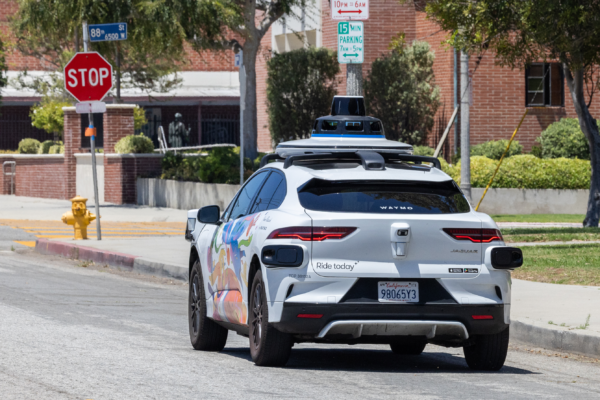
In response to a series of incidents deemed potentially hazardous to public safety, the California Department of Motor Vehicles (DMV) has decided to suspend the operation of Waymo’s self-driving vehicles on highways throughout the state. This action has been taken as a precautionary measure, and Waymo has also proactively suspended operations of its autonomous vehicles on highways in other states.
As of November 11, the DMV issued a prohibition against Waymo’s autonomous vehicle testing and operations on all California highways, citing that the vehicles posed an “imminent danger to public safety” during their highway travels. DMV spokesman Jonathan Groveman communicated that this decision stems primarily from two recent incidents that raised concerns.
The first incident involved three Waymo self-driving vehicles entering a construction zone on U.S. Highway 101 near Burlingame. The DMV noted that such incursions into construction zones have occurred repeatedly.
The second incident that raised alarms was shared on the X platform, where a video showed a Waymo vehicle ignoring directions from California Highway Patrol (CHP) units managing traffic control on I-280. Instead of complying, the vehicle attempted to maneuver past the patrol cars. It continued this evasive action until a second police car intervened and stopped it.
The DMV indicated that despite having previously imposed restrictions and corrective actions regarding Waymo vehicles entering construction zones, the self-driving cars continued to present risks by driving into areas where construction activity was taking place, thereby directly threatening public safety.
This restriction will remain in effect until Waymo can demonstrate to the DMV that effective corrective measures have been implemented to resolve these issues. Groveman emphasized that Waymo must provide substantial evidence showing that its vehicles can safely detect and respond to construction zones, emergency vehicles, and other road conditions within their operational design space. The DMV will review this information to determine if highway operations can resume.
Waymo currently offers services in three major metropolitan areas in California, namely Los Angeles, San Francisco, and San Jose, including operations at local airports. The suspension from highway access may impact the company’s ability to efficiently transport passengers to and from these airports.
Presently, Waymo provides fully autonomous taxi services in several urban areas across the United States, including California, Texas, Arizona, and Florida.
In a statement to the media, Waymo clarified that the DMV’s order applies solely to highways within California, aiming to enhance vehicle performance in construction areas and strengthen existing safety measures. Following the issuance of the ban, and consistent with its safety-first policy, Waymo has temporarily halted highway operations in all areas where it operates.
Waymo’s statement noted that the recent incidents did not result in injuries or collisions. “In our commitment to putting safety first, we have also imposed a temporary limitation on highway operations in other regions to assess performance,” the company said.
Meanwhile, testing continues with the involvement of trained safety drivers in equipped vehicles. Waymo’s ride-hailing services remain operational on city streets away from highways.
According to safety and insurance data provided by Waymo, when compared to human driving benchmarks, their autonomous vehicles have significantly reduced property damage claims by 88% and bodily injury claims by 92% over more than 25 million miles of purely passenger-carrying driving miles. Additionally, in over 270 million miles of fully autonomous driving, incidents resulting in severe injuries or worse outcomes were 95% less frequent compared to those occurring during the same mileage with human drivers.