
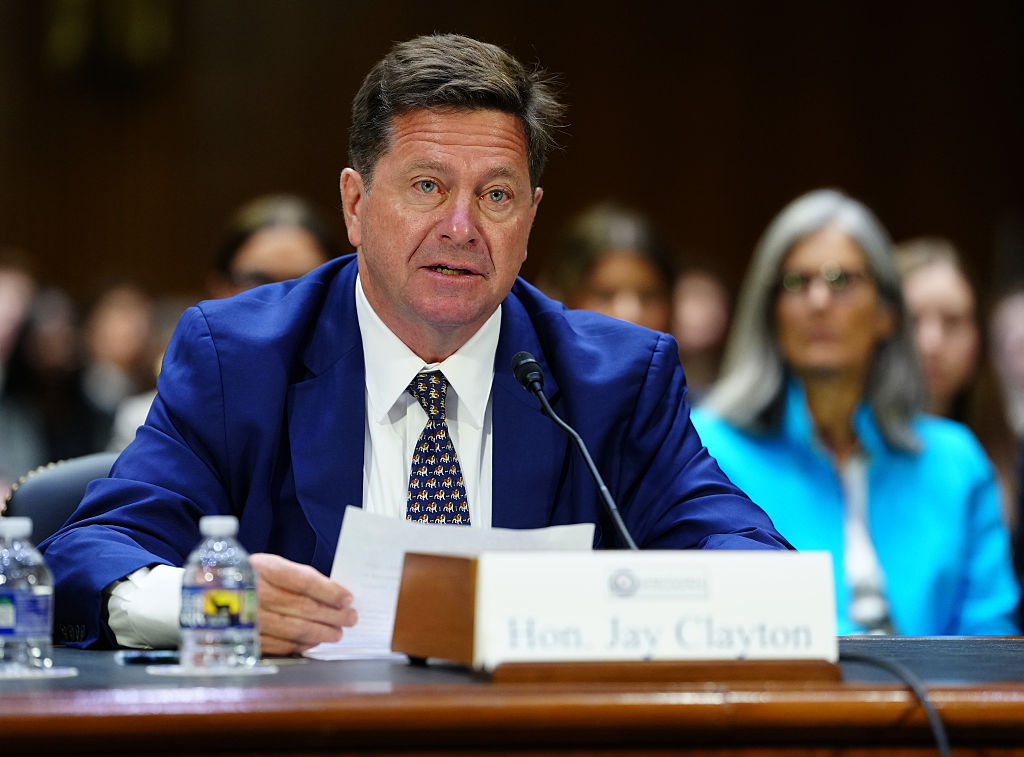
On November 17, Jay Clayton, the United States Director of National Intelligence, addressed a series of recent disruptions in technology systems while speaking on Fox Business’s program “The Claman Countdown.” He indicated that officials have found no evidence suggesting that these incidents were the result of coordinated cyber attacks or actions backed by nation-states. Instead, Clayton surmised that the outages were primarily linked to routine security updates and the installation of software patches by various agencies.
During the interview, Clayton explained that the interruptions in system operations were a direct outcome of efforts to address known security vulnerabilities. He detailed that, following updates and patches, some systems failed to restart as expected or encountered difficulties communicating with other systems.
“We have not discovered any signs of organized cyber attacks, nor have we identified any indicators of state-sponsored activity,” Clayton stated.
He elaborated further, noting, “Many agencies are currently engaged in remediation efforts after detecting these vulnerabilities. They have taken systems offline to perform upgrades and apply necessary patches.”
According to Clayton, some systems are required to transfer operations to others, but these transitions did not occur as smoothly as anticipated. He specifically pointed out that the cyber interruption experienced by the National Security Agency (NSA) on the same day was related to patching work undertaken after they identified vulnerabilities concerning PHP code.
PHP is an open-source scripting language widely used in backend web development. Vulnerabilities in PHP refer to security issues that arise from logical flaws in the programming, improper memory management, or inadequate security configurations in applications or websites developed using PHP.
Clayton explained, “After applying a patch for a specific PHP vulnerability, some systems failed to resume operations smoothly and as expected post-patching. This was precisely the situation encountered by the NSA.”
He further emphasized the responsibilities of system operators, stating, “If vulnerabilities are identified that make systems more susceptible to malicious attacks, those tasked with maintaining the systems have an obligation to remediate them.”
He stated that the recommendations from the FBI and NSA were quite reasonable; it was best to take systems offline and complete the necessary remediation work.
Clayton also called for continued collaboration between the government and the artificial intelligence industry to address cybersecurity concerns before deploying increasingly powerful models.
“As these advanced models undergo each iteration of updates, we must remain engaged with both the government and the industry to ensure that cybersecurity issues are adequately resolved before the models are officially launched,” he urged.
Within just a week, the United States experienced multiple significant system failures across various sectors, including technology, aviation, finance, and intelligence.
On November 12, Microsoft’s Microsoft 365 services suffered a major outage, causing disruptions in over 70 countries for approximately 24 hours.
Following that, on November 13, a failure in the American air traffic system resulted in the grounding of over 10,000 flights nationwide.
On November 16, trading was interrupted for several hours at four major U.S. banks, including JPMorgan Chase.
Then, on November 17, the NSA encountered failures in its internal communications system, coinciding with issues at Apple with some of its services.
During this period, cloud software company Workday and hotel group Marriott reported technological failures in their booking and check-in systems.
Due to this series of events, speculation ran rampant, leading to Clayton’s timely interview in response to the string of technical disruptions encountered across a variety of sectors.