
On November 16, the Mayor of New York City, Mamdani, and the City Council Speaker, Jumana, found themselves at odds once again over police reform. During a press conference, Mamdani announced the disbanding of the Strategic Response Group (SRG) within the New York City Police Department (NYPD), which is responsible for law enforcement during protests. He expressed public support for the CURB Act, proposed by City Council Member Chi Ossé, which stands for Communities United to Reject Brutality Act.
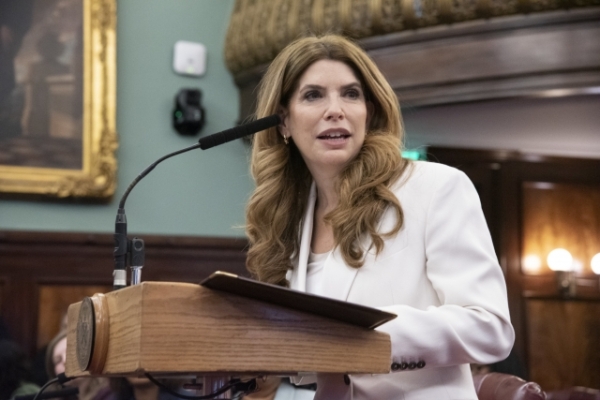
In contrast, Jumana believes that the city government can adjust police department policies through its executive powers without the need for additional legislation that could constrain future administrations. As a result, the CURB Act has not been included in any hearing or voting procedures.
At the aforementioned press conference, held alongside Police Chief Jessica Tisch, Mamdani declared that the SRG would be disbanded by spring 2027. Its counter-terrorism duties will be transferred to the Police Department’s Intelligence and Counterterrorism Bureau, while some crowd control responsibilities will be handed over to a newly formed Patrol Support Unit. Additionally, the city plans to establish a “Community Dialogue and De-escalation Team,” primarily composed of civilian personnel, to assist in managing protest activities. This administrative reform explicitly prohibits officers from deploying tear gas, long guns, bicycles, and engaging in kettling tactics during protests.
The CURB Act, championed by Ossé, aims to further legally restrict the police’s response to demonstrations. Key provisions of the proposed legislation include prohibiting the SRG and any future departments with similar responsibilities from intervening in protests, limiting the use of pepper spray and bicycles for crowd control, and capping the volume of Long Range Acoustic Devices (LRADs) at 90 decibels or lower. Moreover, the bill mandates the police to publish quarterly reports on protest deployments, arrests, use of force, and complaints regarding misconduct.
The core difference between the two proposals lies in whether the reforms can be made permanent. Currently, Mamdani’s announced measures are mainly implemented through administrative policies and internal regulations within the police department, which may still be revoked by future administrations. Conversely, the CURB Act seeks to inscribe these limitations into city law, thereby preventing any future shifts in government stance that may revert to previous enforcement methods.
As of now, the CURB Act has garnered co-sponsorship from 26 city council members, more than half of the city council’s 51 seats. This supportive group includes representatives such as Council Member Christopher Marte, who represents Chinatown, and Council Member Alexa Aviles, representing Sunset Park in Brooklyn. However, the bill is currently stalled in the Public Safety Committee, with no hearings scheduled yet.
During a television interview on the same day, Chief Tisch stated that the police’s approach to managing large crowd control events would not undergo fundamental changes. This indicates that while administrative adjustments are being made, the underlying strategies employed by the police may remain largely intact. This ongoing struggle between the mayor’s reforms and the council’s proposed legislation underscores the complexities and contentious nature surrounding police reform in New York City.