
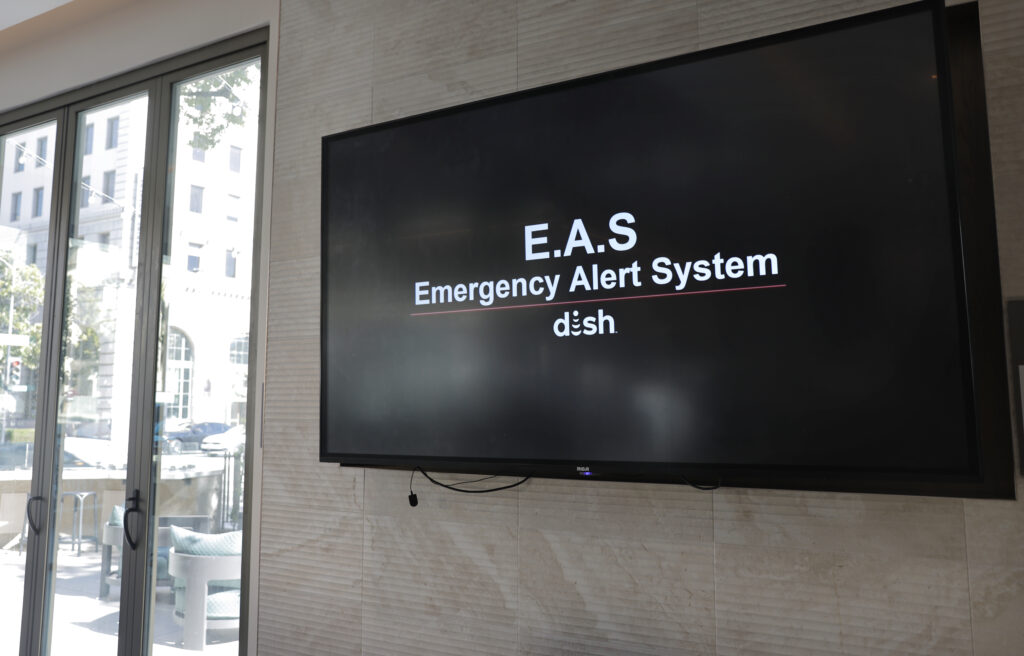
On November 17th, the Federal Emergency Management Agency (FEMA) conducted a nationwide test of the Emergency Alert System (EAS), interrupting television and radio broadcasts for one minute across the United States. The timing of this test has raised concerns among the public, particularly in light of the recent spate of service disruptions.
According to an announcement posted on FEMA’s official website, the test commenced at 2:20 PM Eastern Time. During this brief interruption, programming on radio stations, television channels, cable networks, and satellite services was temporarily halted to broadcast the test message.
The message relayed during the test stated: “This is a test of the national Emergency Alert System, issued by the Federal Emergency Management Agency. This is only a test; no action is required by the public.”
The test lasted less than a minute, and by 2:21 PM, all broadcast channels had returned to their regular programming.
Unlike the last nationwide test held in October 2023, this recent EAS test was limited to broadcasting platforms and did not include the Wireless Emergency Alerts (WEA). As a result, cell phones across the nation did not emit loud alert sounds during the test. FEMA noted that the previous test in October had encompassed both broadcast and mobile alerts.
In the days leading up to FEMA’s test, the United States experienced a series of significant technical failures, including disruptions of Microsoft Outlook email services and issues affecting several banks. Last Friday, the Federal Aviation Administration (FAA) had ordered a temporary nationwide flight grounding, nearly bringing all airports to a standstill.
This string of failures has left many Americans feeling uneasy about the digital infrastructure they rely on daily. Consequently, some individuals have begun to question FEMA’s choice to conduct a national emergency alert system test at this particular time, with conspiracy theories proliferating on social media.
In response to widespread speculation, FEMA took to social media platform X (formerly Twitter) the day before the test to clarify the situation. Their post stated: “We have heard many rumors about the EAS test happening tomorrow. Let’s clear this up. The test will last only one minute, and no action is required. There is no major power outage, no secret emergency. This is simply a routine test mandated by law, taking place around 2:20 PM on television and radio.”
FEMA further indicated they do not oppose people making various speculations but clarified that this test was straightforward with no hidden agendas.
The agency pointed out that legal requirements mandate testing of the emergency alert system every three years, enabling officials to effectively communicate with the public during a national emergency. This particular test was intentionally scheduled for November, carefully avoiding the high-tension month of October that precedes midterm elections to prevent unnecessary panic.
Cameron Hamilton, the Administrator of FEMA, emphasized the importance of every second during emergencies, stating that it is crucial to ensure the alert system operates efficiently to deliver vital safety information to the public. He noted that conducting such operational tests allows potential issues to be identified and addressed before any real emergency occurs.
The Emergency Alert System (EAS) serves as a traditional broadcasting alert channel under the Integrated Public Alert and Warning System (IPAWS).
IPAWS also encompasses Wireless Emergency Alerts (WEA), which are the modernized “national alerts” we receive as notifications on our phones, alongside broadcasts issued by the National Oceanic and Atmospheric Administration (NOAA), and alerts through other channels such as the internet, digital billboards, and public transportation screens.
This system is the only one in the United States capable of functioning under various circumstances to disseminate lifesaving information to the public.
It is crucial to note that IPAWS does not generate alerts by itself but rather provides a secure channel for authorized public safety officials to issue alerts. During emergencies, alerts can be propagated through a range of methods—such as mobile phones, television, radio, and weather broadcasts—within seconds.
Members of the public do not need to download any applications or register to receive alerts. During a national emergency, the national public warning system can cover about 90% of the U.S. population through high-power AM radio broadcasting.
FEMA’s announcement reiterated the importance of these tests by stating: “Imagine you are going about your normal life at home, at work, or on the road when suddenly an unexpected event occurs. A wildfire is spreading toward your community. A flash flood threatens your commute. A child is reported missing in your neighborhood. You need to know what is happening, and you need to know it immediately. This is where IPAWS comes into play.”