
As the Canadian government seeks to enhance trade relations with China, the Canadian automotive industry has raised alarms regarding potential implications for domestic employment. Industry leaders are concerned that the Canadian market could open its doors to “knock-down kits,” a term that refers to kits for assembling vehicles from parts manufactured in China. This has sparked warnings from those in the automotive sector about the potential impact on local job opportunities.
According to a report by Global News on November 17, the President and CEO of the Canadian Vehicle Manufacturers’ Association, Brian Kingston, emphasized that there is no indication from the global market that China plans to adopt any automotive export models other than “knock-down kits.”
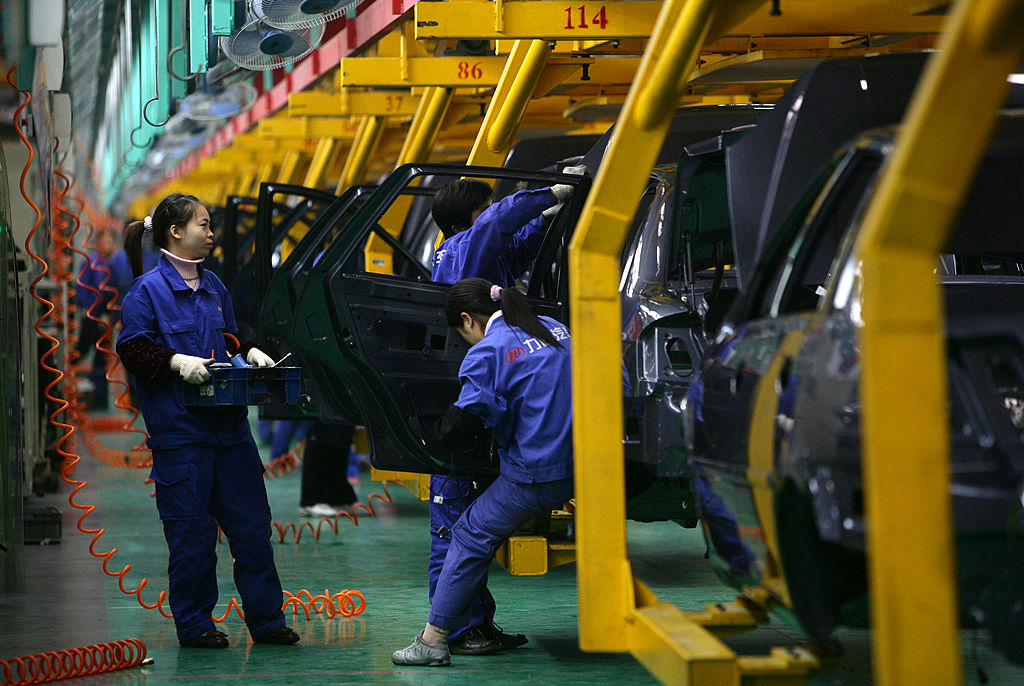
Knock-down kits consist of automotive components that are manufactured in China and shipped overseas, where they are assembled into complete vehicles. This model allows Chinese automotive firms to enter international markets more rapidly, but it often involves minimal local manufacturing operations.
Colin Mang, an economist at McMaster University, likened these kits to toys that come with all the necessary pieces for assembly at home. Once the components arrive at their destination, they are simply put together, highlighting the streamlined nature of this process compared to traditional automotive manufacturing.
While the assembly aspect does require labor, it is significantly less involved than the comprehensive manufacturing processes typical to the industry. This has led automotive representatives to express concern that the “kit car” model could diminish job opportunities within Canada. Mang noted that the core of the North American, Canadian, and southern Ontario automotive industries lies not in assembly but in parts manufacturing.
Kingston pointed out that Chinese manufacturers leverage “lower labor standards, lax environmental regulations, and coal-generated electricity” to undermine the competitive advantages of global rivals. He further indicated that, in Europe, the entry of Chinese electric vehicles has led to local job losses.
He cited statistics revealing that the European automotive sector has lost approximately 104,000 jobs in the last two years, with Germany itself shedding over 40,000 positions in just six months. Kingston warned that if Canada fully opened its automotive market to Chinese products, it could inflict substantial damage on the domestic manufacturing sector. His members include major companies such as Ford, General Motors, and Stellantis, all of which operate within Canada.
The automotive industry in Canada is a significant contributor to the economy. As reported by Statistics Canada, the sector directly employs about 125,000 individuals, with an additional 427,000 jobs supported indirectly. In 2024, the automotive sector is expected to contribute approximately CAD 16.8 billion to the Canadian GDP.
Prime Minister Mark Carney addressed the issue of kit cars on November 15, stating that any automotive manufacturing agreements with China must offer “significant added value” for Canada. Speaking from Cambodia, he affirmed that Ottawa will not accept arrangements that merely relocate final assembly to Canada.
He also emphasized the importance of utilizing Canadian critical minerals in the manufacturing of vehicles.
Nonetheless, Elizabeth Donkervoort, a senior advisor on China initiatives at the Asia Pacific Foundation of Canada, pointed out a lack of public evidence indicating that Chinese automotive manufacturers have established substantial local supply chains in other countries. She noted that, after setting up overseas facilities, Chinese companies have not integrated local parts suppliers on a significant scale. Furthermore, she highlighted the absence of a clear framework in Canada to ensure that Chinese firms genuinely develop local supply chains.
Donkervoort explained that while Chinese enterprises have built a comprehensive ecosystem domestically—from critical mineral processing needed for technology development to hardware manufacturing for electric vehicles—all these processes are conducted within China.
She referenced Thailand as a typical example where attempts were made to encourage Chinese companies to develop local supply chains rather than relying solely on knock-down kits, but those efforts ultimately fell short.
Kingston expressed skepticism regarding the willingness of Chinese companies to truly invest in local manufacturing if it meant sacrificing their existing cost advantages. He maintains that the Canadian automotive industry should prioritize sustaining trade agreements with the United States, emphasizing that the automotive supply chain has been highly integrated over decades between Canada, the U.S., and Mexico, making shifts to other markets challenging.