
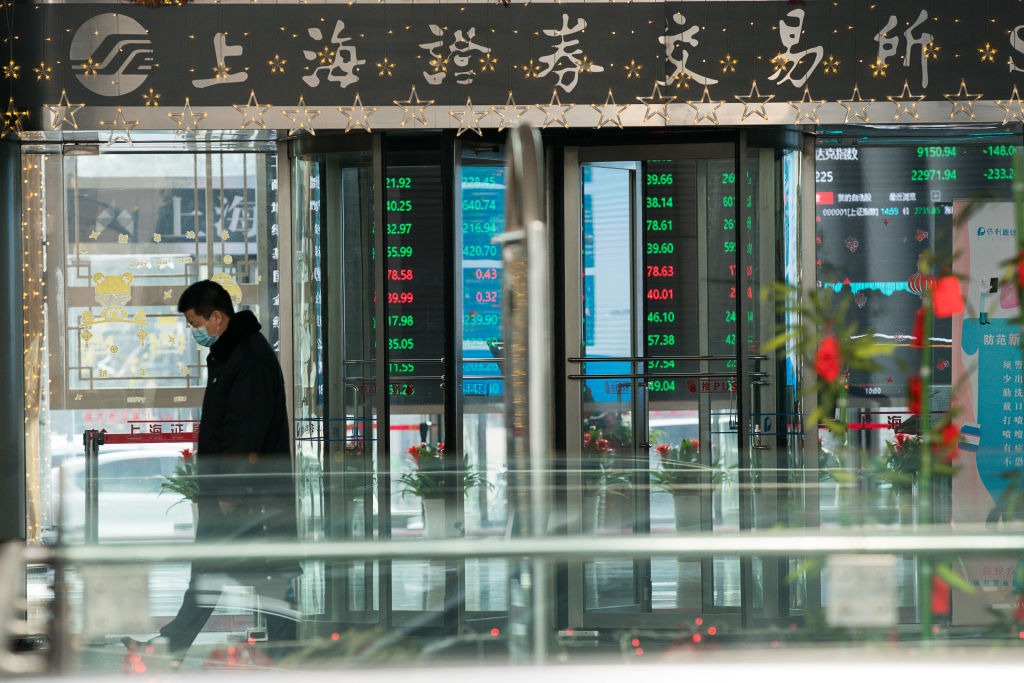
As of November 17, 2026, the A-share market has continued its downward trajectory since July, leading to a significant increase in the number of low-priced stocks. Currently, 107 listed companies have share prices below 2 yuan, more than double the figures from early June. Recently, five A-share companies have warned investors about delisting risks due to their stock prices falling below 1 yuan.
In the last two trading days, five A-share companies, including Rongsheng Development, *ST Huaxing, *ST Meili, Jinke Property, and Shanying International, have flagged delisting risks as their share prices dipped below 1 yuan. Additionally, *ST Dongzhu on the Shanghai Stock Exchange issued its own delisting alert after its total market value fell below 500 million yuan for the first time.
At the closing price on Tuesday, Shanying International was at 0.85 yuan, reflecting a drop of 9.57%; Jinke Property hit its limit down at 0.87 yuan, falling 10.31%; *ST Meili closed at 0.86 yuan; *ST Huaxing was reported at 0.92 yuan; and Rongsheng Development ended at 0.90 yuan, down by 10%. Notably, Shanying International, *ST Meili, and Jinke Property have all had stock prices below 1 yuan for two consecutive trading days.
Reports indicate that this is the first concentrated appearance of “delisting warnings due to face value” since the A-share market’s decline began in 2026. According to the regulations set by the Shanghai and Shenzhen stock exchanges, if a listed company sees its stock price close below 1 yuan for 20 consecutive trading days, the exchange will decide to terminate its stock listing.
The prolonged downturn in the real estate sector has significantly impacted several real estate development and construction companies, pushing them into losses. Companies such as *ST Huaxing, Jinke Property, Rongsheng Development, and *ST Meili primarily operate in the real estate development and construction sectors.
Jinke Property’s stock performance illustrates this trend quite well. At the beginning of July, the company’s stock was around 1.3 yuan, but it has plunged over 32% since then to reach a closing price of 0.87 yuan on November 17, marking a new low not seen since July 2023.
According to the company’s financial reports, Jinke Property has recorded negative net profits year-on-year since 2022. The non-recurring losses for 2025 reached a staggering 35.576 billion yuan. In the first three quarters of this year, the company’s operating revenue was merely 349 million yuan, representing a year-on-year decline of 93.88%.
In July, Jinke Property had just removed the “ST” tag from its stock name following its 2025 annual report, transitioning from “*ST Jinke” to “Jinke Property,” and now it faces the possibility of being delisted due to its stock trading below par.
The overall number of low-priced stocks has noticeably increased in recent months. Data from Wind shows that the number of stocks trading below 2 yuan was 50 as of June 1, 75 by July 1, and has surged to 107 as of November 17, marking an increase of 32 stocks, or approximately 43%, since early July. Out of these, nine stocks were trading below 1 yuan.
Some companies are perilously close to the 1 yuan threshold. For example, ST Yigou closed at 1.05 yuan, *ST Guozhong at 1.07 yuan, *ST Yabo and Guangtian Group at 1.08 yuan, and *ST Liyuan and *ST Dongzhu at 1.09 yuan.
The concentration of low-priced stocks is largely in traditional sectors. Among the 107 stocks observed, there are 22 from real estate, 12 from construction and decoration, and 10 from the steel industry, together accounting for over 40% of the total. Other sectors such as retail, basic chemicals, and environmental protection also show significant representation.
The operational performance of these low-priced stocks is generally concerning. Analysis of the quarterly reports reveals that out of the 107 low-priced stocks, 80 reported net losses attributable to shareholders, equating to 74.8% of the total. Moreover, 76 stocks experienced a year-on-year decline in operating revenue, representing 71.0% of the pool. Among these, 20 low-priced stocks reported net losses exceeding 1 billion yuan in the first three quarters, with *ST Huaxing suffering a loss of 7.505 billion yuan, Huafa Group 6.437 billion yuan, and Overseas Chinese Town A 4.707 billion yuan.
The growth in low-priced stocks has coincided with the adjustment pace of the broader market. From July 1 to November 17, the Shanghai Composite Index fell from 4,112.45 points to 3,584.58 points, a decrease of 12.84%. The CSI 300 Index dropped from 4,958.98 points to 3,976.46 points, a decline of 19.81%. During the same period, both the ChiNext Composite Index and the STAR Market 50 Index fell more than 40%, indicating a persistent deflation in the tech growth sector.
Experts in Chinese economic issues have identified three major reasons for the sustained decline in the A-share market.
First, the quality of most listed companies is alarmingly poor and continues to deteriorate. A very small number of leading enterprises monopolize most market profits while the vast majority of firms struggle at the bottom. The top 5% of enterprises (278 companies) command 86.08% of total market profits, while the bottom 50% (2,786 companies) collectively incurred losses amounting to over 312.486 billion yuan.
Second, the number of Initial Public Offerings (IPOs) is high, but the number of companies being delisted is low, making it difficult to drive substantive delisting efforts.
Third, the significant premium rates between A-shares and H-shares have a damaging effect on the overall ecosystem, financial supply, and long-term trends of A-shares.