
A coalition of nuclear and radiation safety regulatory bodies from multiple European countries has issued a joint statement on November 16, highlighting the escalating risks of a nuclear incident in Ukraine due to ongoing Russian assaults on the nation’s energy infrastructure. These organizations have called for an immediate cessation of attacks on Ukraine’s nuclear facilities and the energy infrastructure critical for their safe operation.
The statement was released by the Western European Nuclear Regulators Association (WENRA), the Heads of European Radiological Protection Authorities (HERCA), and the Nordic Radiation Safety Authority (NORA).
The organizations expressed profound concern regarding the war initiated by Russia against Ukraine and the associated nuclear safety risks posed by its continuous assaults on Ukrainian energy infrastructure.
Recently, Russia has intensified its drone and missile strikes targeting Ukrainian energy facilities, which include power generation plants, transmission lines, and substations. After nearly five years of conflict, Ukraine’s energy system has been significantly weakened, and repeated attacks threaten to push it towards complete collapse.
The joint statement remarked that throughout the course of the war, Russia has consistently targeted Ukraine’s power grid, energy infrastructure, and substations. These attacks have resulted in prolonged and widespread power outages, undermining the essential conditions required for the safe operation of nuclear facilities.
The three regulatory bodies jointly urged: “Russia must immediately halt its attacks on Ukraine’s nuclear facilities, as well as on the energy infrastructure necessary to ensure their safe operation.”
A primary concern for these organizations is the risk that a failure in the Ukrainian power grid to provide stable electricity may impact the cooling systems of nuclear reactors and other safety systems at the nuclear power plants.
In the event of external power cuts, if backup power sources and safety systems also fail to operate effectively, the nuclear fuel could overheat due to insufficient cooling. In the worst-case scenario, this could lead to a meltdown of the reactor core, with the potential for the release of radioactive materials.
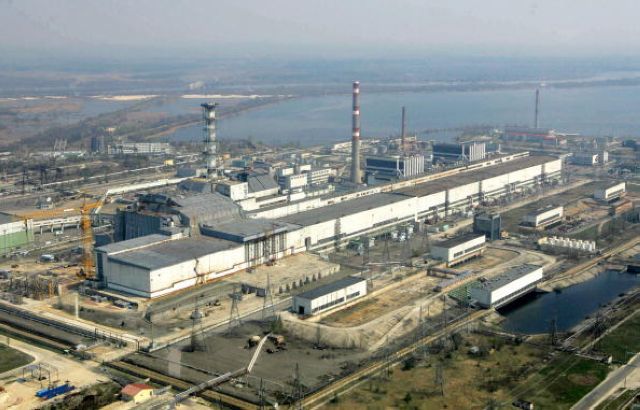
Such incidents could result in severe transboundary environmental contamination, akin to the catastrophic Chernobyl disaster of 1986, which is regarded as one of the most serious civil nuclear accidents in history. At that time, radioactive substances like iodine-131, cesium-134, and cesium-137 dispersed across Ukraine, Belarus, Russia, and into parts of Northern and Central Europe.
The three organizations issuing this warning collectively represent 38 countries, which include all EU member states, the United States, the United Kingdom, Canada, and Japan.
Per Strand, a leader from HERCA and NORA, noted in an interview with Reuters that recent attacks from Russia have become increasingly deadly, utilizing larger payloads and more precise targeting with drones.
He stated: “Given that Russia has adopted these new tactics, it is evident that the risk of a nuclear incident will reach its highest levels this winter.”
Strand highlighted the dire possibility of a total blackout affecting Ukraine’s national power grid, which would simultaneously impact the operation of nine active nuclear reactors in the country.
He cautioned that the consequences of all nine reactors facing the risk of radioactive material leakage would be extremely severe.
Nonetheless, he emphasized that such a scenario could still be avoided if action is taken now, pressuring Russia to cease its attacks on Ukraine’s energy infrastructure. Alternatively, European nations must enhance cooperation and prepare for emergency responses to potential nuclear incidents.
The International Atomic Energy Agency (IAEA) reported on November 14 that military activities have caused instability in Ukraine’s power supply, forcing some operational nuclear units to reduce their electricity generation.
Ukraine has a total of four nuclear power plants, three of which remain operational: Rivne, Khmelnytskyi, and South Ukraine. Together, these plants provide approximately 80% of Ukraine’s electricity during the winter months.
The fourth plant, the Zaporizhzhia Nuclear Power Plant, located near the front lines and currently under Russian control, is the largest nuclear plant in Europe.
Although Zaporizhzhia is not generating electricity at present, it still relies on external power to maintain the cooling systems and safety measures for its nuclear fuel. The IAEA noted that since Russia’s full-scale invasion of Ukraine, the plant has lost external power supply 27 times, necessitating the activation of emergency diesel generators each time.
Since the end of March, the plant has been dependent on one external transmission line for electricity, further amplifying the risk of supply interruptions.
Both Russia and Ukraine continue to accuse one another of attacking nuclear power plants and cutting off related power lines.