
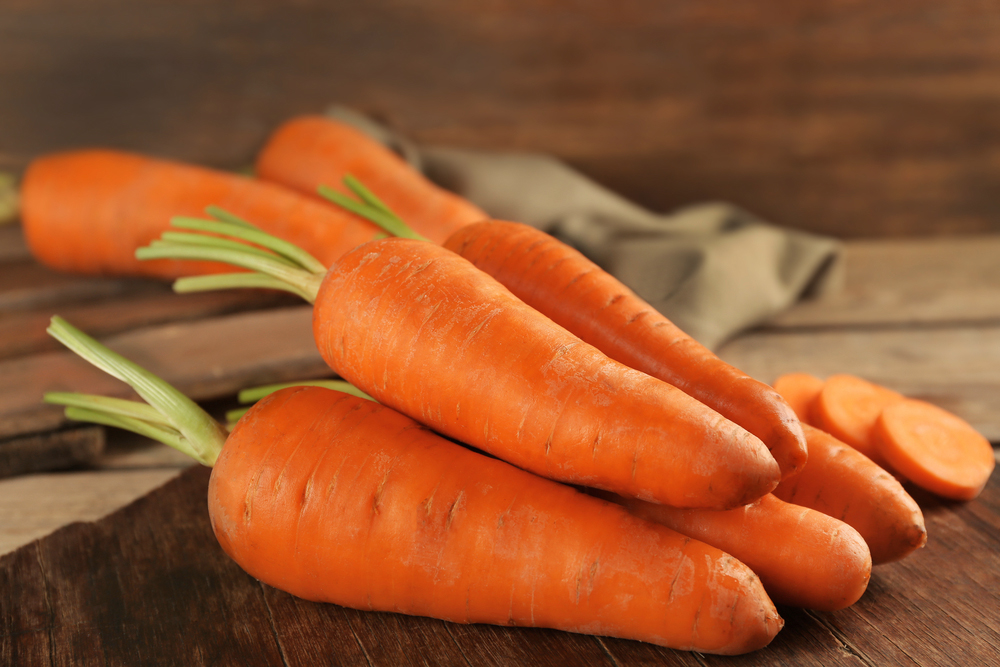
Carrots contain a variety of nutrients and are one of the most common vegetables in daily life. However, if not stored properly, these vegetables tend to become shriveled and lose their flavor. Research has confirmed the secret to storing carrots. By storing carrots together with a common kitchen item, their shelf life can be extended tenfold.
People often store carrots and other vegetables together in the crisper drawer of the refrigerator, but vegetables tend to release moisture after harvest, increasing the humidity in the drawer.
Take carrots as an example. When moisture accumulates in the refrigerator, these vegetables shrivel. In severe cases, they quickly rot or grow white fuzzy mold. Even if the situation is not that bad, it can still shorten the shelf life of carrots and produce an unpleasant sour taste.
The non-profit organization “Love Food Hate Waste” in New Zealand has collaborated with the University of Otago to research how to extend the shelf life of common vegetables in the refrigerator, including carrots.
The research found that simple methods could prolong the shelf life of agricultural products and dispel many rumors about the best preservation methods. For carrots, all you need is a common kitchen paper towel to significantly extend their shelf life.
This study confirmed that placing carrots in a sealed container lined with paper towels could extend their shelf life by ten times compared to just scattering them in the refrigerator.
These results indicate that minimizing the loss of moisture and condensation on the surface of carrots can extend their shelf life. Paper towels absorb and release moisture, helping to regulate the humidity and condensation around agricultural products.
If you don’t have a large enough sealed container to accommodate all the carrots, you can wrap the carrots in paper towels first and then place them in a sealed ziplock bag, achieving a similar preservation effect.
Photos provided by the organization show that carrots stored with and without paper towels look equally fresh on the first day, but by the 29th day, the carrots without paper towels have shriveled and discolored, while those with paper towels still appear fresh.
In addition to carrots, the organization also provides the best preservation methods for other commonly seen fruits and vegetables in the refrigerator, recorded in a vegetable storage guide, listed as follows:
– Lettuce: Wrap lettuce in paper towels, place it in a sealed ziplock bag or container, and refrigerate to extend its shelf life by four times.
– Avocado: Wrap avocado tightly in cling film or place it in a sealed container in the refrigerator to extend its shelf life by four times. You can also use a sealed container instead of cling film.
– Leafy greens for salads: Store in a sealed container in the refrigerator to extend their shelf life by two times.
– Chopped celery: Place chopped celery in a sealed container lined with paper towels to extend its shelf life by five days.
– Cut pumpkin: Wrap cut pumpkin in cling film, place it in the refrigerator to extend its shelf life by 4.5 times. Alternatively, remove the pumpkin seeds and wrap it in beeswax wrap as an alternative solution.
The study also found that the common practice of applying lemon juice or olive oil to avocado flesh, recommended by many, is actually harmful.
Miranda Mirosa, a researcher at the University of Otago, stated that vegetables account for nearly one-third of the food wasted in New Zealand households due to their short shelf life. They aim to help reduce food waste by finding the best preservation methods for vegetables through this research.
The key message conveyed by this research is that taking action is better than doing nothing at all. Small measures, such as placing bagged lettuce in a sealed container, can significantly extend the shelf life of food.