
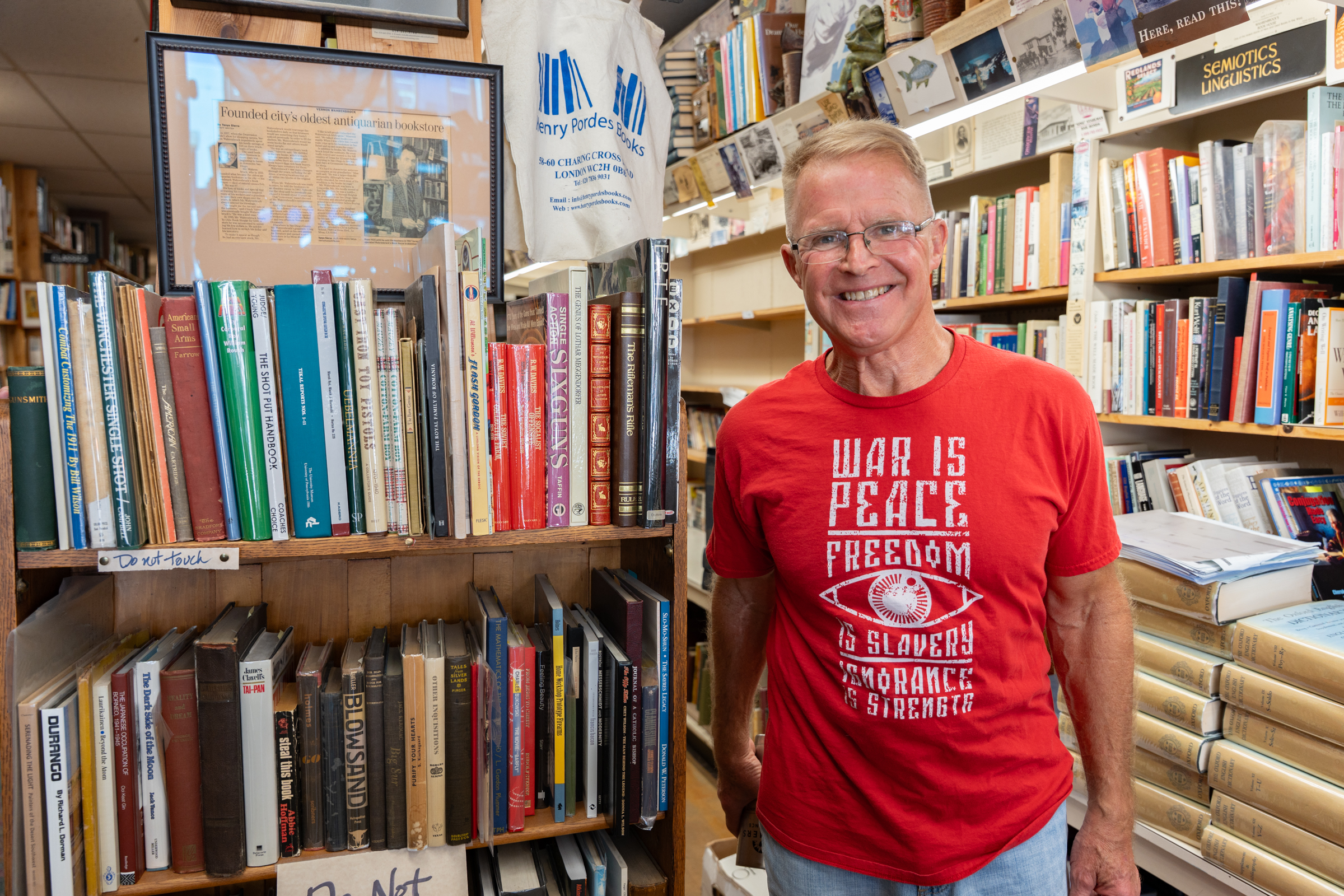
In La Mesa, San Diego County, Southern California, a second-hand bookstore has turned down several large orders totaling over $5,000. For an independent book merchant, this is a significant income. So why did he refuse?
The owner of Maxwell’s House of Books, Craig Maxwell, told Epoch Times that he suspected these orders came from book brokers associated with AI companies. According to media reports, the scanned content of the books was being used to train AI models, but the scanned books were being destroyed.
For Maxwell, who opened his bookstore out of a love for books, he couldn’t condone the mass destruction of books. He stated that even though it meant losing some money, refusing such a transaction was “the easiest decision to make.”
Maxwell mentioned that he has been in this industry for over 20 years and many of his books are sold through online channels. He highlighted how the online book-selling landscape had been stable for a long time with Amazon being the dominant platform for orders. However, he noted that this online business order had been completely disrupted.
Around three to four months ago, they started noticing unusual large orders from companies they rarely did business with. This raised suspicions, especially when they began receiving orders from companies they had never heard of before.
Despite not initially understanding the situation, Maxwell prepared to ship as usual. But as doubts lingered about why these companies were purchasing so many books, he eventually realized that the books ordered from his bookstore were likely being used for this purpose.
Realizing this, he swiftly halted shipments to these companies to prevent further involvement in the book scanning and destruction process.
This decision came with evident economic losses. Not only did he lose over $5,000 in orders, but his decision to not ship could potentially impact his online ratings and, consequently, his reputation.
However, without hesitation, Maxwell reasserted that this was “the easiest decision to make.”
Why? Maxwell expressed that it all boiled down to his love for books.
Maxwell’s grandfather, Vernon Wahrenbrock, founded Wahrenbrock’s Book House in downtown San Diego in 1935. The bookstore operated until 2009 when it closed due to the impact of online shopping. It had stood as one of San Diego’s oldest and largest second-hand bookstores.
Inheriting his grandfather’s passion for books, Maxwell opened his own second-hand bookstore over two decades ago. He emphasized that venturing into the used book industry wasn’t driven by a pursuit of money but rather by a deep love for books.
Books represent human language and wisdom, particularly those published before 2022, carrying untainted “clean” human language.
Developers of AI have acknowledged that training models with human books can enhance AI’s ability to “write engaging and high-quality content,” surpassing what is possible with the low-quality text available on the internet. This has led tech giants to focus on books. Yet, the methods used by different companies in acquiring books have sparked controversy.
In the legal case Bartz v. Anthropic, people witnessed how the company behind the Claude AI model, Anthropic, purchased millions of books, removed their spines for easier scanning, and disposed of the scanned books. Despite the court ruling the scanning and archiving of these purchased books as “fair use,” the mass destruction of books garnered significant attention.
While the company reassured that their training project did not involve the destruction of valuable or ancient documents, many booksellers have expressed concern that the systematic destruction of numerous books erases not just language but also cultural heritage.
Maxwell emphasized that by scanning human language to train models, some individuals were willing to provide millions of books to AI companies, only to have them scanned, destroyed, and then discarded. This human behavior was deemed “frightening” by Maxwell.
Reflecting on the situation, Maxwell expressed regret, questioning what else individuals might be willing to do for money. On a particular note, he cancelled an order for a book on antique military firearms from a company he identified as an AI book broker, reiterating his refusal to engage in such transactions.
Maxwell believed that AI companies did not directly order books but instead did so through “book brokers.” He explained how over the past few months, he had encountered many such broker companies. He added that with each shipment refusal, he included a message stating that he would not sell books to book brokers.
Maxwell admitted the emotional toll of handling this situation. Balancing his disregard for economic losses, love for books, and explaining his refusals, he found himself faced with what he believed were robotic orders on the other end of the transaction.