
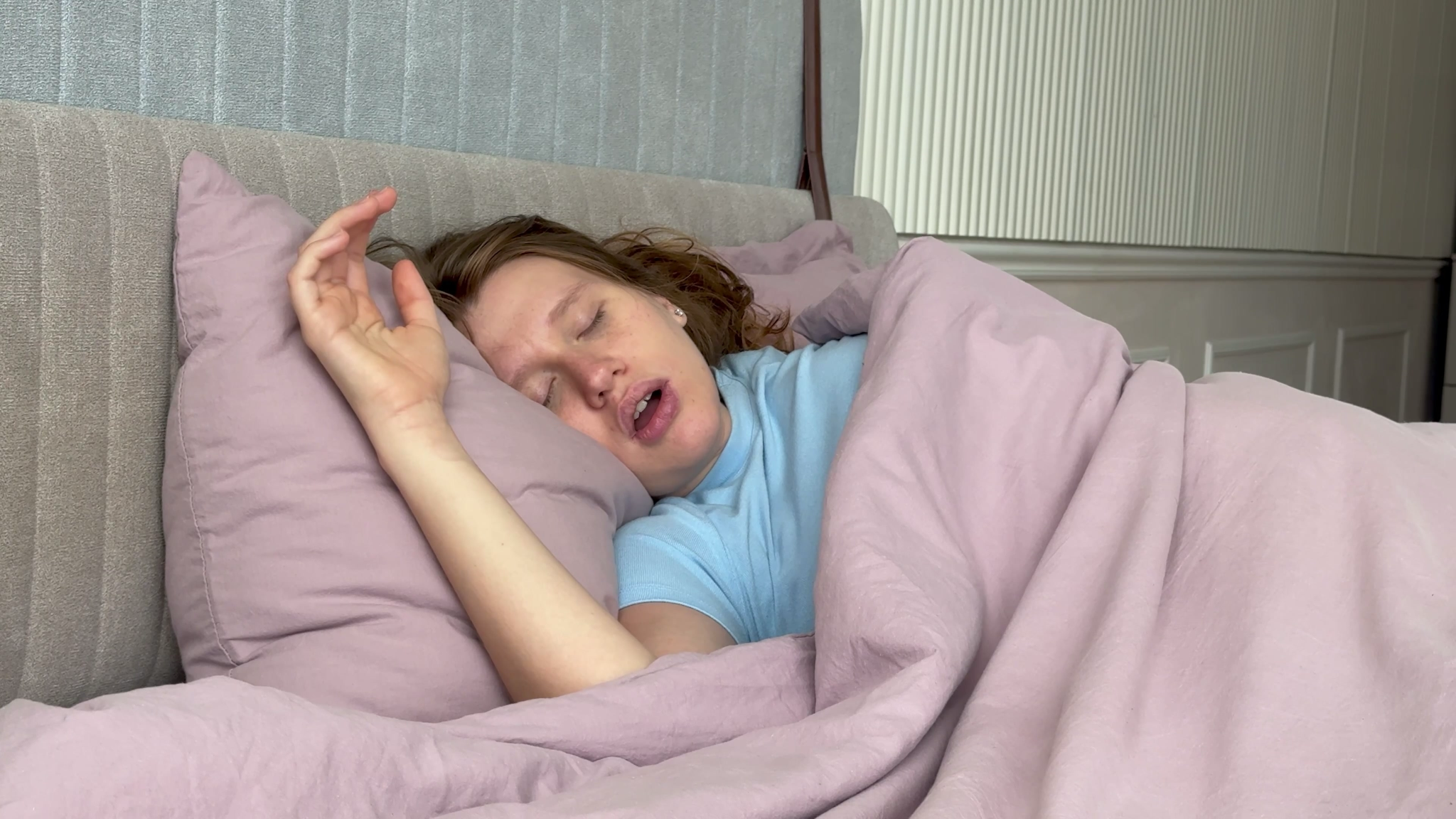
Waking up to a wet pillow can be a bit of a downer, and it may also raise concerns about your health. Experts suggest that in most cases, there is no need to panic about this phenomenon, but if specific symptoms accompany it, it’s still worth paying extra attention.
According to the “USA Today,” the most common reason for drooling during sleep is mouth breathing and the effect of gravity.
Matthew Walker, a professor of neuroscience and biomedical engineering at the University of Texas at Dallas, mentioned that occasional drooling is completely normal and harmless. Our salivary glands do not rest completely at night, and if the mouth is open, saliva naturally flows out due to gravity.
Michael Perlis, director of the Behavioral Sleep Medicine program at the University of Pennsylvania, pointed out that this phenomenon often occurs during the Rapid Eye Movement (REM sleep) stage. During this phase, the body is in a temporary state of muscle paralysis, with facial and jaw muscles greatly relaxed, along with a reduced frequency of swallowing reflex at night, making it easier for saliva to accumulate and flow out.
Furthermore, many people mistakenly attribute drooling to drinking too much water. However, medical research shows that dehydration actually thickens saliva, making it harder to swallow naturally, leading to accumulation in the mouth.
Perlis also indicated that if you wake up extremely dehydrated or with a “dry mouth sensation,” it could be a health warning. Walker also emphasized that if drooling suddenly appears, intensifies significantly, or persists continuously, attention should be given to whether it is accompanied by the following symptoms and seek professional medical assistance:
Sleep Apnea (recommended to consult a sleep center or ENT specialist):
Accompanied by loud snoring, night-time gasping, or extreme daytime fatigue, often due to airway blockage forcing mouth breathing.
Gastroesophageal Reflux Disease (GERD, recommended to consult a gastroenterologist):
Acid reflux stimulating the esophagus can trigger a reflex, causing the salivary glands to produce excess alkaline saliva to neutralize stomach acid.
Nasal obstruction (recommended to consult an ENT specialist):
Chronic allergies, colds, sinusitis, or a deviated septum causing nasal congestion, leading to mouth breathing at night.
Medication side effects (consult the prescribing physician):
Certain antidepressants, antipsychotics, or sleeping pills may stimulate saliva production.
Potential neurological issues (seek immediate emergency medical care):
If accompanied by facial weakness, unclear speech, or difficulty swallowing, it may involve acute neurological abnormalities such as a stroke and prompt medical attention is necessary.
Since the primary cause is often mouth breathing, maintaining clear airways is essential:
Improving nasal congestion:
Actively treating nasal congestion or allergies, using nasal wash or nasal strips before sleep can help the mouth naturally close.
Adjusting sleep positions:
Side and prone sleeping positions are more prone to drooling, while lying flat on your back allows saliva to flow naturally towards the throat, triggering swallowing. If you prefer side sleeping, focus on correcting the habit of mouth breathing rather than forcefully changing your sleep position.
Hydrating and managing reflux:
Drink water evenly throughout the day to avoid thick saliva and actively control acid reflux.
Using aids when necessary:
Under the guidance of a healthcare professional, the use of mouth guards, anti-snoring mouthpieces, or chin straps can help stabilize the jaw.
Experts stress that drooling is not directly related to sleep quality. It simply indicates a “mouth-open posture” and “muscle relaxation,” rather than being a measure of sleep quality. Many individuals who experience deep sleep do not drool at all, while those with sleep apnea may actually drool frequently.