
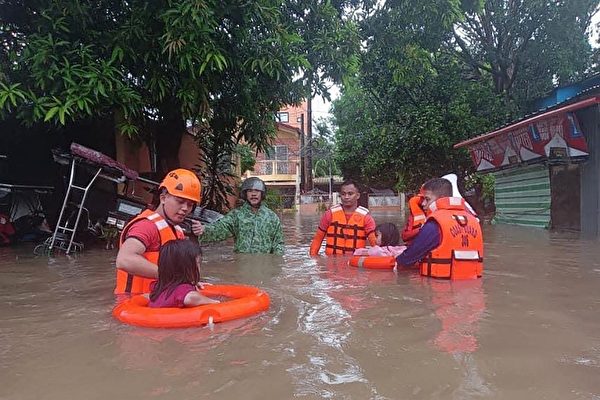
The Philippine authorities stated on Tuesday (May 28) that the tropical storm “Ewiniar” that struck the country over the weekend has caused at least seven deaths. President Ferdinand Marcos Jr. said that rescue efforts will continue.
“Ewiniar” brought strong winds and heavy rains to provinces south of the Philippine capital, resulting in the closure of airports and seaports, as well as power outages.
According to reports from Reuters and the Associated Press, in Misamis Oriental province, a girl and her sister were tragically struck by a falling tree while riding a motorcycle to school, resulting in the death of the girl.
Officer Elizabeth Capistrano told DWPM radio that in Quezon province in the eastern part of the capital, reports indicated that six people died, including two men who drowned aged 56 and 22, as well as a 39-year-old man hit by a falling tree.
President Marcos stated before his state visit to Brunei that nearly 27,000 people were affected by the storm, disrupting operations at three airports and nine seaports over the weekend.
Many villages were submerged by flash floods. Some low-lying areas in Lucena, the capital of Quezon province, were engulfed in water up to 8 feet (2.4 meters) deep. Provincial Governor Angelina Tan and other officials attributed part of the flooding to unusually hot summer weather and clogged drainage systems.
On Tuesday, the storm was moving away from the Philippines towards the east coast of Japan, maintaining wind speeds of up to 130 kilometers per hour (80 miles per hour). The storm warning was lifted in the Philippines on Tuesday. The shift in the storm’s direction spared the densely populated capital city of Manila from potential catastrophic impact.
“Ewiniar” marks the first tropical storm to hit the Philippines this year. This Southeast Asian country experiences an average of 20 storms annually, often leading to heavy rains, strong winds, and deadly landslides.