
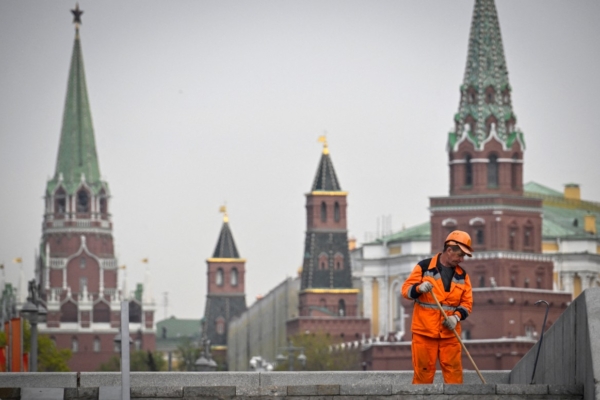
On December 1st, Russian President Putin signed an order allowing Chinese citizens to travel to Russia visa-free for tourism and business purposes from the date of signing until September 14, 2026. The news quickly caught the attention of many, with discussions and reactions spiking on Chinese social media platforms.
A post titled “First Batch of Visa-Free Chinese Travelers to Russia in Disbelief” surged to the second spot on Weibo’s trending list on December 15th, sparking widespread interest.
According to the post by “Travel Times,” it recounted the story of Ah Hao, a young businessman from Guangdong province, who was among the first group of Chinese tourists to set foot in Moscow after the visa-free arrangement. His expectations of Russia were based on his global travel experiences over the past decade – arrival, SIM card insertion, taxi booking, and hotel check-in, a routine he thought he had mastered.
However, upon landing, he found himself struggling to connect to the internet despite activating his roaming package beforehand. The signal kept circling, and after walking for 2 kilometers with his luggage, assuming it was the airport’s signal blocking, he had to resort to an expensive black cab. Only after reaching the hotel and connecting to Wi-Fi did he realize it was not a technical glitch but a new invisible rule for foreign arrivals in Russia. Due to security measures, foreign SIM cards have a 24-hour silent period upon landing.
Sharing his experience with local business friends, Ah Hao realized they were all disgruntled. His friends mentioned that the situation had triggered an uproar within the Chinese community in Moscow.
Similarly, Lao Chen from Beijing, an experienced independent traveler, and his wife immediately booked a direct flight to Moscow upon the implementation of Russia’s visa waiver policy towards China on December 1st. However, upon finalizing their flight, Lao Chen was taken aback. The familiar names like Hilton and Marriott were nowhere to be found while only expensive local options were available, with budget accommodations asking for five-star hotel prices.
Arriving in Moscow, Lao Chen experienced severe disruptions in his phone’s map navigation, with the location constantly shifting. He found himself in Red Square while his phone placed him at the airport. Worse, when it came to payments, WeChat, Alipay, Visa, and Mastercard were all rendered useless.
Thinking of redirecting to Murmansk to chase the Northern Lights, Lao Chen was shocked by exorbitant prices for hotels and flights – three-star hotels easily exceeded four digits in price, and any slightly upscale options started at two thousand yuan, while domestic flights within Russia were unreasonably expensive.
Reflecting on his journey, Lao Chen lamented that his trip was nothing like budget travel but more akin to charity work. He considered Russia to be the most challenging destination he had ever visited in terms of independent travel.
The misfortunes faced by Ah Hao and Lao Chen were not isolated incidents. Social media is flooded with grievances, from travelers stranded in blizzards for days in Irkutsk due to road closures to those experiencing breakdowns and tears due to communication barriers and malfunctioning translation apps.
Chinese tourists in Russia repeatedly find themselves stumbling into pitfalls, but what truly stings them is the completely imbalanced cost-benefit equation. Apart from pricing, another frustrating aspect for Chinese tourists is the deteriorating maintenance of tourism facilities.
The initial group of visa-free travelers to Russia inadvertently became guinea pigs in testing this vast information gap. They paid a hefty price to acquire some real-life lessons while witnessing the flip side of the world folding.
After the official Weibo account of “Vista Showcasing the World” reposted the aforementioned article, it sparked a wide-ranging discussion on the platform.
Netizens commented, “Considering the history, government, society, and people of Russia, one can fairly anticipate the challenges Chinese travelers might face. What was unpredictable, however, is the trending nature of these incidents.” “Now you understand why Russia implemented the visa waiver.” “Shouldn’t there be some relief assistance?” “Instead of going to Russia, head to Cambodia, recommended by the country. Right.” “Some people actually fell for it.” “Let’s explore the true portrayal of Russia.” “Vladivostok is quite nice, spread Chinese culture there.”