
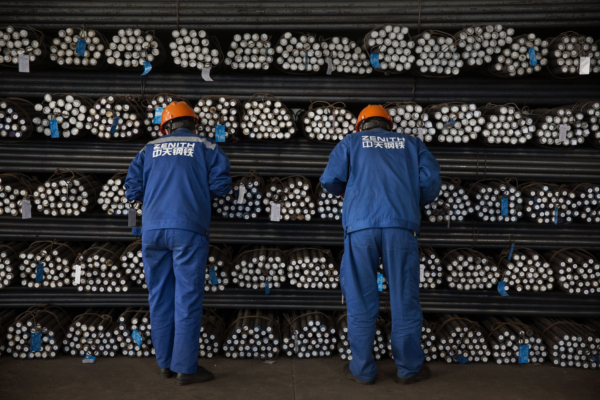
South Korea is considering implementing anti-dumping measures on certain steel products from China and Japan to protect its domestic enterprises. The South Korean Trade Commission is expected to announce its decision on imposing anti-dumping tariffs on Chinese steel plates as early as Thursday.
The South Korean Ministry of Trade, Industry and Energy stated in a press release that they will investigate potential dumping behaviors of hot-rolled steel products from China and Japan, but a final decision is yet to be made.
Local South Korean steel manufacturers have raised concerns that imported steel products have been damaging their businesses. Hyundai Steel, a major steel company in South Korea, has filed an anti-dumping complaint on this issue.
On December 19th last year, Hyundai Steel filed an anti-dumping complaint requesting the government to investigate the dumping practices of hot-rolled steel plates from Japan and China.
According to the regulations, the government needs to decide within two months whether to officially initiate an anti-dumping investigation and notify the relevant businesses.
Statistics from the South Korean Trade Association show that from 2021 to January 2025, South Korea has imported a total of 14.98 million tons of hot-rolled steel plates. Among them, Japan accounted for 7.53 million tons and China accounted for 6.49 million tons, totaling more than 90% of the import volume.
Imported hot-rolled steel products from Japan and China are more than 30% cheaper than local products in South Korea and can be processed without the need for blast furnace smelting, thereby impacting the South Korean steel market.
Last July, Hyundai Steel filed an anti-dumping complaint with the South Korean Ministry of Industry, pointing out that Chinese thick plate traders were exporting surplus products to South Korea at prices below the market price, causing losses to the company. Thick plates refer to steel plates with a thickness of over 6 millimeters, mainly used in shipbuilding or as construction materials.
In addition to Hyundai Steel, South Korea’s largest steel company, POSCO, has reduced its production scale due to the influx of low-priced steel products from Japan and China.
POSCO decided in November last year to close the first wire rod factory at the Pohang Steel Works that had been in operation for over 45 years. In July last year, the company had already closed the steelmaking plant.
The continuous downturn in the real estate market in China has led to severe overcapacity in the steel industry, resulting in a large influx of cheap steel products from China into the international market, leading to a crisis in the global steel industry.
Countries around the world have been imposing additional import tariffs on steel products to protect their domestic industries. The United States, for instance, announced plans to impose a comprehensive 25% tariff on all imported steel and aluminum products.
(Credit: References were made to reports by Bloomberg and Asia Times)