
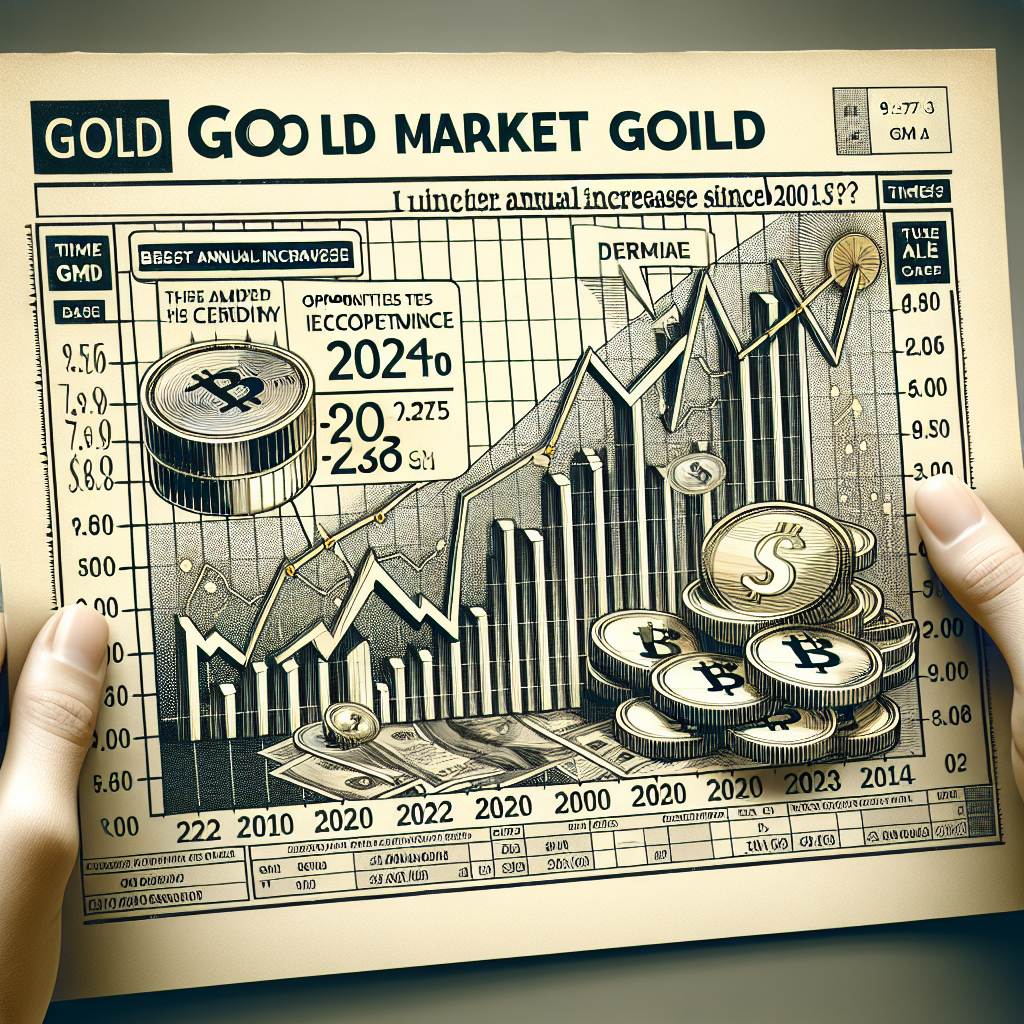
In 2024, the performance of the gold market has been eye-catching, with prices reaching their best annual increase since 2010. As the year came to a close, gold prices continued to rise, indicating a future filled with both opportunities and uncertainties.
As of 9:27 a.m. GMT on Tuesday, December 31, spot gold rose by 0.4% to $2,615.00 per ounce, while U.S. gold futures increased by 0.4% to $2,627.30 per ounce.
According to reports from Reuters, gold prices have climbed more than 26% throughout the year, primarily driven by significant purchases from central banks worldwide, geopolitical tensions, and the shift towards looser monetary policies by major central banks.
In 2024, gold broke a series of records and hit a historic new high of $2,790.15 on October 31, showcasing its enduring appeal as a safe-haven asset.
Market analysts believe that the rise in gold prices this year is closely linked to expectations of falling interest rates.
Tim Waterer, Chief Market Analyst at KCM Trade, stated that market expectations of low interest rates have boosted gold demand and supported the strong performance of prices throughout the year.
The Federal Reserve cut interest rates three times in 2024, but its latest policy statement suggests that the magnitude of future rate cuts may decrease. Market expectations for interest rate trends in 2025 have injected uncertainty into the gold market. Additionally, the trade policies of the newly elected U.S. President Donald Trump may become another key factor influencing gold prices in 2025.
Aneeka Gupta, Director of Macroeconomic Research at WisdomTree, indicated that even with a slower pace of interest rate cuts by the Federal Reserve or a strengthening dollar, rising geopolitical risks, trade tensions, and continued demand from central banks worldwide could support gold prices in the future.
Daan Struyven, Commodities Strategy Director at Goldman Sachs, stated, “We expect gold prices to rise to $3,000 per ounce.”
As a traditional safe-haven asset, gold has been favored by investors amid global economic uncertainty and inflationary pressures. However, a high-interest-rate environment could diminish its attractiveness, so the policy direction of major central banks will continue to impact the gold market. Analysts believe that the trend towards moderate global monetary policies will likely help gold maintain its competitiveness.
In addition to gold, the performance of other precious metal markets varies. Silver rose by over 21% throughout the year, achieving its best annual performance since 2020. However, palladium and platinum prices fell by approximately 18% and 8%, respectively, over the year.
Overall, looking ahead to 2025, whether gold can maintain its strong position will depend on interest rate policies, trade policies, and the further development of geopolitical situations.