
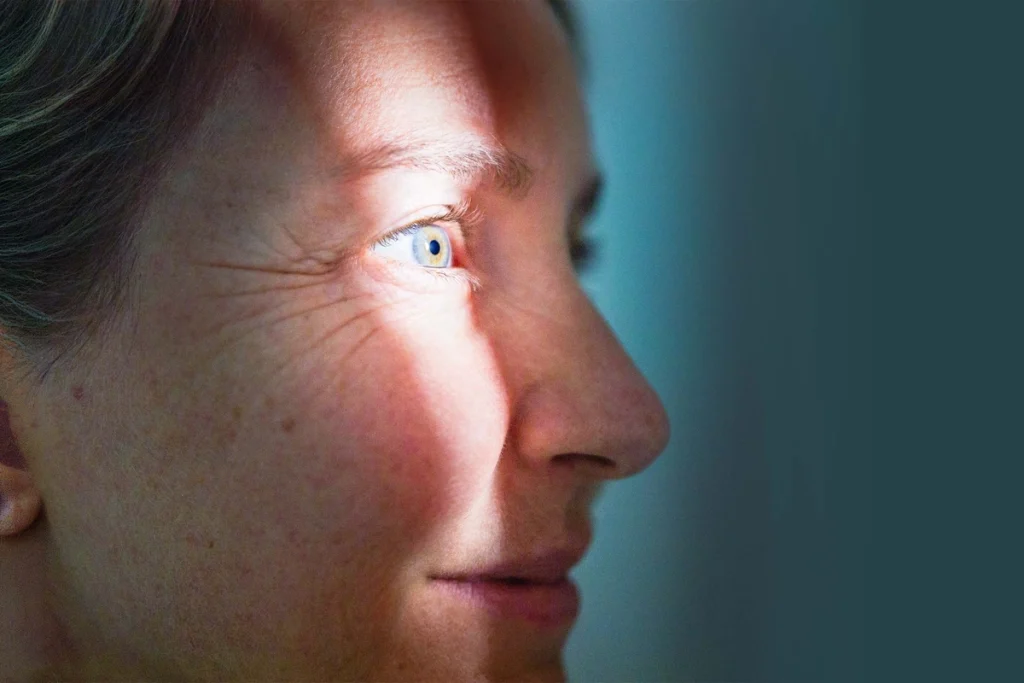
Older adults often require more light for their eyes, yet many fail to receive adequate sunlight.
A recent study involving 202 healthy seniors discovered that simply increasing exposure to bright light at appropriate times can significantly improve their sleep quality and energy levels. This research was published in the Journal of Pineal Research and is part of an extensive European project known as “ENLIGHTENme.” The study tracked independent seniors living in Amsterdam, Netherlands; Bologna, Italy; and Tartu, Estonia. The results indicated that seniors who previously received little natural light were able to establish more regular sleep-wake patterns and increased daytime activity simply by using light therapy lamps each morning.
Greg Elder, a researcher on sleep and circadian rhythms at Northumbria University in the UK, highlighted that the eyes contain photoreceptive cells that send signals directly to the brain’s areas responsible for regulating sleep and wakefulness. Natural daylight plays a crucial role in maintaining an accurate biological clock; it enhances alertness during the day and triggers melatonin secretion at night, which signals the body to unwind and prepare for rest.
Elder pointed out that as individuals age, changes in the eyes can decrease sensitivity to light. Starting around the age of 50, the pupils constrict and the lens becomes somewhat cloudy, resulting in less blue light entering the eyes—blue light is essential for the circadian rhythm system. Over a lifetime, from age 10 to 80, the amount of critical light reaching the retina can decrease by as much as 72%, profoundly impacting sleep patterns.
He emphasized the significance of light in regulating our circadian systems, stating, “Light is the most important signal.”
Additionally, the indoor environment poses its own challenges. Many older adults spend the majority of their day indoors; even in bright, sunny weather, their exposure to strong light is relatively limited. In an interview, Mariana Figueiro, director of the Mount Sinai Light and Health Research Center, noted that such limited exposure can diminish the contrast between day and night, which is vital for maintaining a healthy biological clock.
In this context, using bright lighting to supplement natural sunlight may prove beneficial. Figueiro suggested that relying solely on ceiling fixtures is insufficient to achieve adequate light exposure; the intensity of ceiling light must be exceptionally high for the eyes to receive enough illumination.
For seniors who are not getting enough outdoor light, integrating additional lighting during the day can help calibrate their biological clocks by ensuring their eyes receive sufficient light. Those with the least daily exposure to natural light seem to gain the most benefits from supplemental lighting.
The study enrolled 98 participants who utilized lamps that provided a light intensity of 10,000 lux at close range. Lux is a unit of measurement for the intensity of light perceived by the human eye. Participants were instructed to turn on the lamps within an hour of waking, use them for at least two hours during the day, and turn them off at least four hours before bedtime.
Findings from the study further revealed the critical importance of timing: individuals who initiated lamp use earlier in the day demonstrated greater daytime activity and more consistent patterns of rest and activity.
At the baseline of the study, those with more exposure to natural light engaged in higher levels of daily activity and reported better sleep quality; compared to the group with the least exposure to natural light, they were three times more likely to believe their sleep was of good quality.
This information is particularly significant for individuals who, due to their daily routines, find themselves confined indoors. Elder pointed out that many seniors spend significant time at home or in care facilities, while others might experience mobility issues, wake up before dawn, or live through long, dark winters. For these individuals, the problem may not be an absolute lack of light but rather insufficient brightness at the right times or a lack of prolonged bright exposure.
The best way to obtain more daylight is through direct sunlight. However, if this is not feasible, one might consider using a light therapy box with an intensity of 10,000 lux, similar to the devices utilized in the study.
Figueiro’s research center, which is a partner in the “ENLIGHTENme” project, has also explored various approaches to increase light exposure for individuals with mild cognitive impairment and conditions like dementia or Parkinson’s disease during the day.
In a trial focusing on adults with mild cognitive impairment and sleep issues, they observed cognitive improvements by placing table or floor lamps near participants’ usual sitting areas. These lamps were set to turn on when participants woke and turned off at 6 PM, utilizing warm white bulbs that produced around 300 to 500 lux at eye level—significantly lower than the 10,000 lux used in the recent study.
Nonetheless, this group showed improvements in the “memory” section of the Alzheimer’s Disease Assessment compared to the control group.
Figueiro recommends that light exposure throughout the day should be thoughtfully planned and adjusted:
– **Morning Light:** Spend at least 30 minutes outside in the first few hours after waking, whether walking, sitting on the porch, or just wandering outdoors. If indoors, open the curtains and sit by a bright window for about an hour.
– **Increase Indoor Brightness During the Day:** Place lamps next to your favored chair, reading area, or dining table, and switch to brighter bulbs to allow more light to penetrate your eyes—aiming for brightness around 3000 lumens. The goal is for the indoor environment during the day to be significantly brighter than at night.
– **Dim Light in the Evening:** Turn down or switch off some lighting as evening approaches rather than keeping the home brightly lit until bedtime. Ideally, the bedroom should be kept dim to facilitate sleep.
– **Maintain Consistency:** Try to expose yourself to light at the same time each day, preferably in the morning. Figueiro emphasizes, “The regularity of light exposure is crucial.”
She added that the key is to avoid keeping the home excessively bright throughout the day, but rather to restore the “day-night contrast” upon which our biological clocks depend.
Figueiro concluded with a simple principle: “Bright during the day, soft in the evening, dark at night.”
For those limited by weather, mobility, scheduling, or home environments that impede access to sufficient natural light, a light therapy box may be effective. Many such therapeutic light boxes available on the market, especially online, are targeted at individuals with Seasonal Affective Disorder (SAD), a form of depression that recurs typically in autumn and winter. These boxes generally emit light at an intensity of 10,000 lux and are recommended for 20 to 30 minutes after waking. However, they may not always be the ideal tool for those seeking healthy aging.
If you decide to use one, don’t merely rely on the “10,000 lux” label to make your purchase blindly; these boxes may only reach that intensity at specific distances as stipulated by the manufacturer.
When shopping, look for products that feature:
– Clearly labeled light intensity at specific distances with clear usage positioning guidance.
– Wide-spectrum white light that filters out ultraviolet (UV) rays—ideally marked as “UV-free,” because exposure to UV rays can harm the eyes and skin.
– A substantial light source to enable position adjustments for a comfortable experience while minimizing glare; it is advisable to select products with a luminous area greater than 200 square inches (about 14 inches by 15 inches).
– Caution should be exercised for products claiming to offer features like “full spectrum,” “simulated sunlight,” or “circadian rhythm support” without providing measurable data on light intensity, distance, and safety.
Individuals with bipolar disorder, severe eye conditions, or those taking medications that increase light sensitivity should consult a healthcare professional before starting bright light therapy.
Figueiro noted, “You don’t necessarily have to use those extremely bright light therapy boxes. Sometimes the simplest first step is just to open the curtains.”