
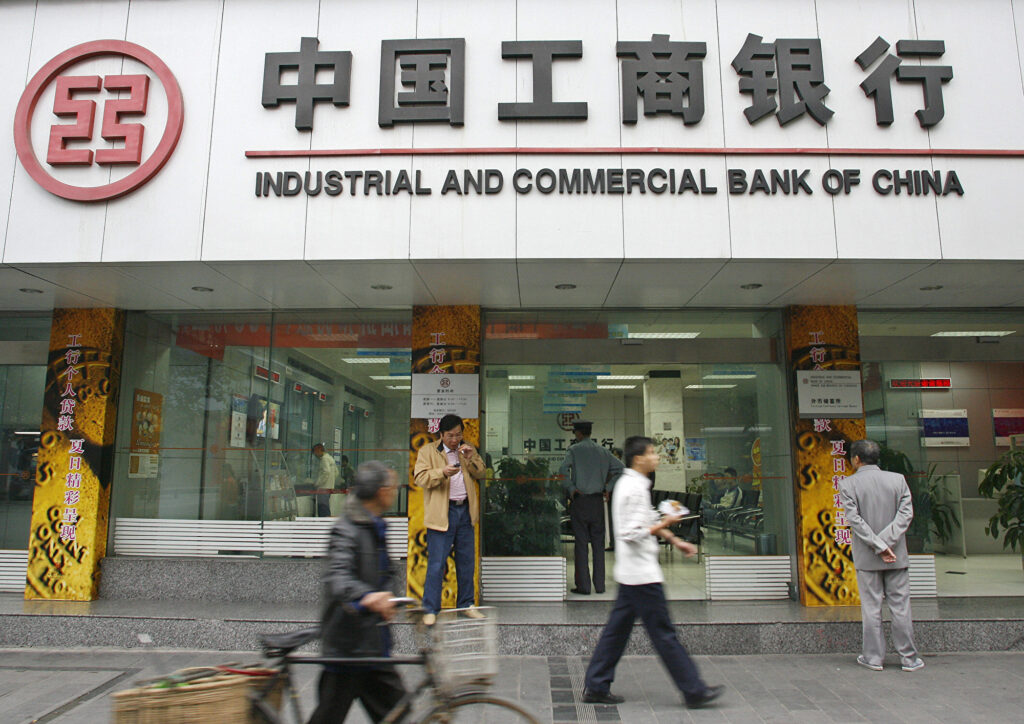
A recent report has unveiled critical insights regarding the prevailing financial risks faced by China’s banking sector, highlighting a confluence of factors leading to a significant increase in bad debts.
An employee from Jiangsu Commercial Bank revealed in an interview that the bank has been forced to write off bad debts amounting to 2.7 billion yuan (approximately $380 million) every month. This situation is indicative of a broader trend within the country, where the intertwining issues of real estate market downturns, corporate debts, residents’ liabilities, and local fiscal strains have culminated in substantial financial risks.
Recent data from the Chinese Financial Supervision Administration indicates that over 670 banking institutions were shut down in 2025, marking a historical high, with a majority of these closures occurring in rural areas.
The struggles faced by the banking sector are closely linked to a protracted slump in the real estate market as well as a growing local debt crisis. Notably, Bloomberg reported in May that China might have hidden non-performing loans totaling as much as $3 trillion.
The downturn in the real estate market has not only put developers in financial distress but has also placed countless bank loans secured against property at risk. The plummeting housing prices and dwindling transaction volumes have exposed numerous flaws in the traditional banking practice of extending loans based on property valuations.
Yexinru, a pseudonym for a bank employee involved in debt collection and restructuring, described how the banking sector adopted aggressive lending practices during periods of real estate booms. Loans were sometimes granted with little regard for borrowers’ actual income or repayment capability, instead focusing on the market value of the properties.
“Back then, if your house was considered valuable, banks would lend you several times more than your actual income didn’t matter,” Yexinru explained.
However, the sudden collapse of the real estate market led to a significant decrease in property values and exacerbated the asset-liability situations of many borrowers, resulting in a spike in the number of bad debts for banks.
The Jiangsu bank where Yexinru works has already written off a considerable amount of bad assets, and larger banks are equally burdened. The term “write-off” refers to the banks’ accounting practices of removing eligible bad debts from their balance sheets. This action does not absolve debtors of their repayment responsibilities nor does it signify successful recovery of funds.
“Every month, we have to write off bad debts. Our branch alone had more than 2.7 billion yuan worth of bad loans written off,” Yexinru noted.
In response to borrowers who are unable to meet their loan obligations, banks have altered their strategies. Yexinru mentioned that for some clients unable to pay back the principal, banks might reduce interest rates or extend repayment periods to facilitate continued payments.
“As long as clients are not completely bankrupt, we try to ensure they can at least pay back the interest, rolling over the principal for later,” she added.
Internally, banks are focusing on restructuring the debts of clients who are not yet severely overdue, typically through adjusting repayment plans, delaying payments, or modifying interest rates to avoid further deterioration of loans. In contrast, loans that have been overdue for extended periods transition to litigation and enforcement procedures.
Nevertheless, even if banks secure a court judgment, recovering the funds is often uncertain. Yexinru explained that some mortgaged properties can fail to sell during judicial auctions due to a lack of buyers.
She recounted an instance where a client purchased a property at 15,000 yuan per square meter, only to have it auctioned for a mere 1,200 yuan per square meter, with no interest from buyers.
According to Yexinru, diminishing real estate values are reshaping how banks manage debts. In the past, banks could recover loans by auctioning off mortgaged properties; today, even properties in foreclosure may not yield realizable cash flow. Banks now find themselves renegotiating with borrowers in hopes of recouping a portion of their funds.
This begs the question: why do banks rely on write-offs to survive financially? This relates back to the scale of bad debts that remains obscured by official statistics.
The Chinese authorities claim that the bad loan rate for banks is approximately 1.5%, yet many external estimates suggest that the actual rate is significantly higher. An analyst at Absolute Strategy Research estimates that the true ratio could be around 10%. Some analysts even argue that the real scale of bad loans might be double this estimate.
Due to the insufficient transparency of Chinese financial data, some overdue loans might be handled through extensions, transfers to asset management companies, or write-offs, meaning the official bad loan rate does not accurately reflect the risks that banks are shouldering.
Previously, reports from Reuters stated that China’s banking system is inundated with high-risk assets. In addition to the officially stated 3.3 trillion yuan worth of bad loans, another 4.8 trillion yuan was categorized as special attention loans, which include credit extended to distressed real estate developers and fiscally challenged local governments.
As suggested by estimates from Gavekal Dragonomics, non-performing loans within the real estate sector alone could surpass 7.1 trillion yuan.
Another shift brought about by the sluggish real estate market is a marked decline in banks’ willingness to lend. Previously, banks flourished from real estate collateral and business loans, but they are now increasingly emphasizing risk management, resulting in fewer new loans.
Yexinru noted that since the easing of COVID-19 restrictions in 2023, bank employees’ earnings have noticeably dwindled, alongside the sharp decline in new loan business. “There was a time when my performance was strong, and I could earn 70,000 to 80,000 yuan in a month, but now we’re lucky to issue two or three loans a year.”
In her region, it’s projected that some banks may only process two or three new loans within the entire year, shifting the daily focus to extending existing loans.
This transition indicates that banks are now more concerned with managing loan risks accumulated over previous years rather than expanding their lending portfolio.
Simultaneously, the handling of banking debt cases has evolved, particularly in certain regional courts where the acceptance of banking financial cases has significantly decreased. Some courts, especially in Nanjing, have become less proactive in processing credit card and personal loan cases. There are variations by district, with some areas opting not to accept personal credit cases below a certain threshold.
For example, Yexinru said that some personal loans, even those reaching millions, may struggle to enter litigation proceedings due to regional differences in processing practices.
Additionally, she pointed out that while certain debtors face restrictions on high-cost consumer activities, they can still travel by ordinary train services, and some cases see reduced execution efforts compared to the past.
It is also noteworthy that not all debts will immediately go through judicial auction processes when banks handle non-performing loans.
Yexinru indicated that for borrowers genuinely unable to make payments, banks occasionally reduce collection pressure, allowing them to postpone repaying principal, or they may stop collection calls altogether. “I tell such clients that their properties have been auctioned already, so they no longer owe anything. Some folks genuinely cannot repay, then they just default,” she explained.
“Some clients previously worked in sectors like engineering or equipment manufacturing. The downturn in real estate led to delayed project payments, causing interruptions in their income streams, which, in turn, hampered their ability to continue repaying their mortgage loans. Some have lost their homes, experienced family breakdowns, or found that their accounts were frozen, forcing them to do odd jobs just to get by,” she recounted.
“Many of these individuals face severe mental and emotional distress, with some even having children who suffer from depression; they manage to work temporary jobs for minimal pay. Because their accounts are frozen, they’re forced to find ways to survive,” Yexinru said, reflecting on her encounters with many clients grappling with illnesses, such as cancer or renal failure, who also struggle to meet loan obligations, subsisting on meager rations.
In Yexinru’s view, the current financial risks facing China transcend the banking sector’s bad debt issues; they are intricately linked to a web of intertwined factors including real estate downturns, corporate challenges, residential debt, and local government finances.
As the banking sector condenses its operations, it is further evident in the income and work conditions of employees.
Yexinru shared that bank employees’ earnings have noticeably declined in recent years, with frontline staff previously earning over 10,000 yuan monthly during peak loan activity, now only receiving around 3,000 to 4,000 yuan, with some marginally better off at 6,000 to 7,000 yuan.
Previously, bank performance relied heavily on loan business, where employees earned commissions based on the amounts they lent out. But with the drop in new loans and an increasingly muted real estate market, income linked to performance has fallen sharply.
“Previously, I could earn 600 yuan for every 100,000 yuan loan I disbursed, but now we hardly see any new loans, focusing mostly on existing ones.”
She noted that many employees now rely on social insurance and housing fund benefits to maintain job enthusiasm, as the former commission-based income model is increasingly untenable.
Recent reports suggest that over half of the banks listed in the A-share market in Shenzhen revealed in their mid-year financial statements a reduction in employee headcount compared to earlier this year, with state-owned banks and leading city commercial banks driving the layoffs.
For instance, Agricultural Bank reported a net decrease of 10,900 employees, leading the announced layoff figures, while several regional banks like Jiangsu Bank, Beijing Bank, and Nanjing Bank also faced notable staff reductions in the first half of the year.
Finally, Yexinru expressed her concerns about the pressures on future social security systems. “The social security gap is vast; many funds have been misappropriated. Honestly speaking, things are rather chaotic now.”
She believes that with the ongoing economic slowdown, declining resident incomes, and challenging business conditions, the sustainability of social security funds may face even greater stress ahead.
In addition to falling loan volumes, banks are simultaneously grappling with increased pressure related to debt collection tasks.
Yexinru revealed that banks have collection targets, with some branches required to recover between 50 million to 60 million yuan in loans annually, an arduous task to accomplish. Failing to meet these targets can lead to penalties for employees.
Juggling both collection and debt restructuring roles, she explained, “I handle overdue loans while also arranging repayment plans for clients who still have the means to pay.”
For those clients who draw out repayments for long durations, she is responsible for coordinating with lawyers, courts, and enforcement departments to instigate procedures for seizing assets and conducting judicial auctions.
However, given the subdued state of the real estate market, even if banks proceed with litigation, the ultimate recovery of loans remains uncertain.
Yexinru characterized the current state of banking operations as a paradox: collection tasks are increasing while new business diminishes, leading to a decline in employee income. “Our bank culture is quite laid-back right now; employees can be seen sipping tea or leisurely working, as there’s a sense that if you can collect, great, but if not, penalties are inevitable.”
The pressure within the banking system does not merely manifest through institutional restructuring and salary cuts; it also starts impacting ordinary savers and corporate financing.
Beginning in 2024, numerous banks have reduced limits on personal bank card transfers outside of physical branch offices. Several customers reported that their cards were unexpectedly restricted without prior notification, complicating their ability to transfer salaries and manage daily expenses.
Banks have defended such measures as attempts to prevent telecom fraud, yet customers have voiced dissatisfaction regarding the restrictions placed on their fund usage and the intricate procedures required to access their funds.
Commentators have noted that the economic risks in China are shifting from the real estate sector and local debts to an emerging threat in the banking and bond markets. The downturn in real estate has reduced land revenues, thereby increasing fiscal pressures on local governments, which raises concerns about the solvency of financing platforms and may trigger further financial risk contagion.
Analysts emphasize the close ties between small to medium-sized banks, local governments, corporations, and financing platforms, asserting that a worsening debt risk will impact the quality of bank assets. While extending loans and lowering interest rates may postpone defaults, it could also accumulate more high-risk assets. Ultimately, providing liquidity from the central bank cannot resolve the root of the debt issue, and relying solely on money printing cannot mitigate the crisis at hand.