
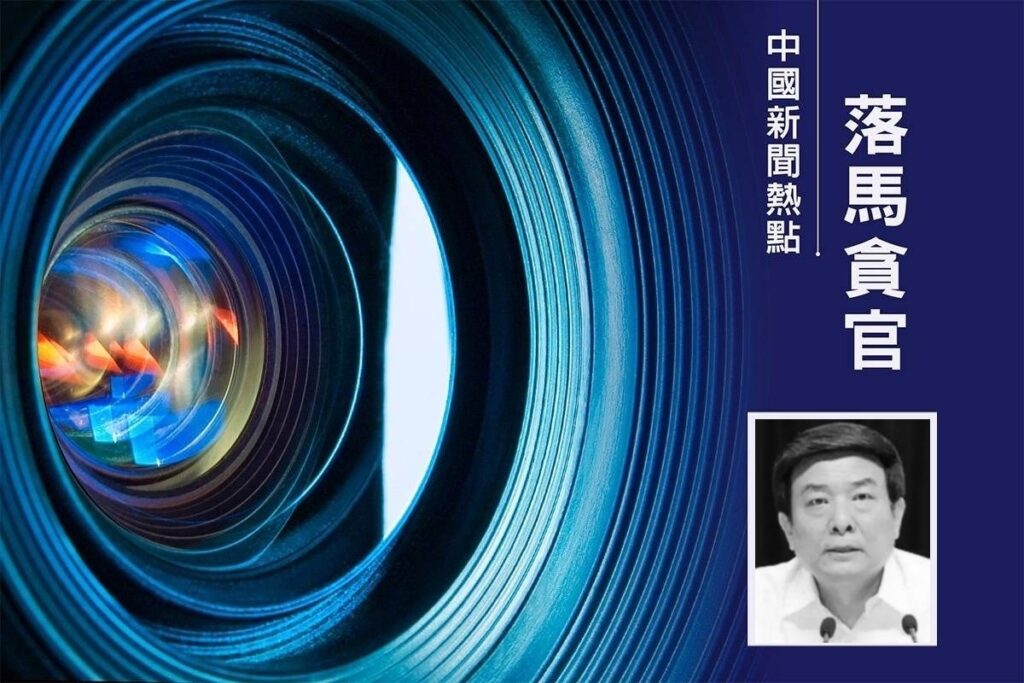
In a significant development within China’s political landscape, Cai Fuchao, the former deputy director of the Central Propaganda Department and former head of the National Press and Publication Administration, has been expelled from the Communist Party and handed over to judicial authorities more than four months after his downfall. Once a powerful figure overseeing news, publishing, broadcasting, and copyright reviews in China, Cai was known as a “big shot” in the country’s film and television industry, a person no one could afford to offend.
According to a report on November 26 from the Central Commission for Discipline Inspection and the National Supervisory Commission, Cai was found to have resisted organizational scrutiny. He violated regulations by accepting gifts and cash, indulging in banquets and travel arrangements that breached party rules. Furthermore, he was implicated in misconduct related to the employment of others, engaging in profit-seeking activities against regulations. His insatiable greed led him to use his official position for personal gain, facilitating trade-offs involving power and money, and leveraging his position to profit in areas such as film project approvals, sales, advertising rights, and tourism project developments. Cai is also accused of illegally accepting substantial assets during his tenure.
As a result of these serious violations, Cai has been stripped of his Party membership, his privileges have been revoked, and legal proceedings are set to commence against him.
Cai Fuchao’s downfall is particularly notable as it marks a return to accountability within the Communist Party framework. His political career had remained uninterrupted until his abrupt removal in July this year, after eight years of retirement from his active duties.
Born in April 1951 in Beijing, Cai began his professional journey in July 1971. He held various positions within the Beijing propaganda system, spending nearly 19 years at the Beijing Daily, before serving as the deputy director and later the head of the Beijing Municipal Propaganda Department.
From 2000 to 2002, Cai held the role of deputy secretary-general of the Beijing Municipal Committee and executive deputy director of the General Office. Following this, he became a member of the Beijing Municipal Committee and served as the head of the Propaganda Department from 2002 to 2008, while also holding the deputy mayor position.
In February 2011, Cai was promoted within the Central Propaganda System, eventually taking the role of deputy director of the Central Propaganda Department and head of the National Radio and Television Administration, as well as secretary of the Party group by March 2013. He held these influential positions until December 2014, when he continued in the same role but added responsibilities as deputy secretary of the Party group and director of the National Copyright Administration.
In September 2016, at the age of 65, Cai stepped down from his role as head of the National Press and Publication Administration following the mandatory retirement age for senior officials. He continued to contribute to public service as the deputy director of the Education, Science, Culture, Health, and Sports Committee of the National Committee of the Chinese People’s Political Consultative Conference from November 2016 until March 2018, after which he entered retirement.
Cai Fuchao’s case serves as a stark reminder of the ongoing accountability measures within Chinese politics, particularly concerning individuals who have wielded significant influence and authority in cultural sectors. The repercussions of such actions highlight the Party’s commitment to combating corruption and enforcing governance among its members.