
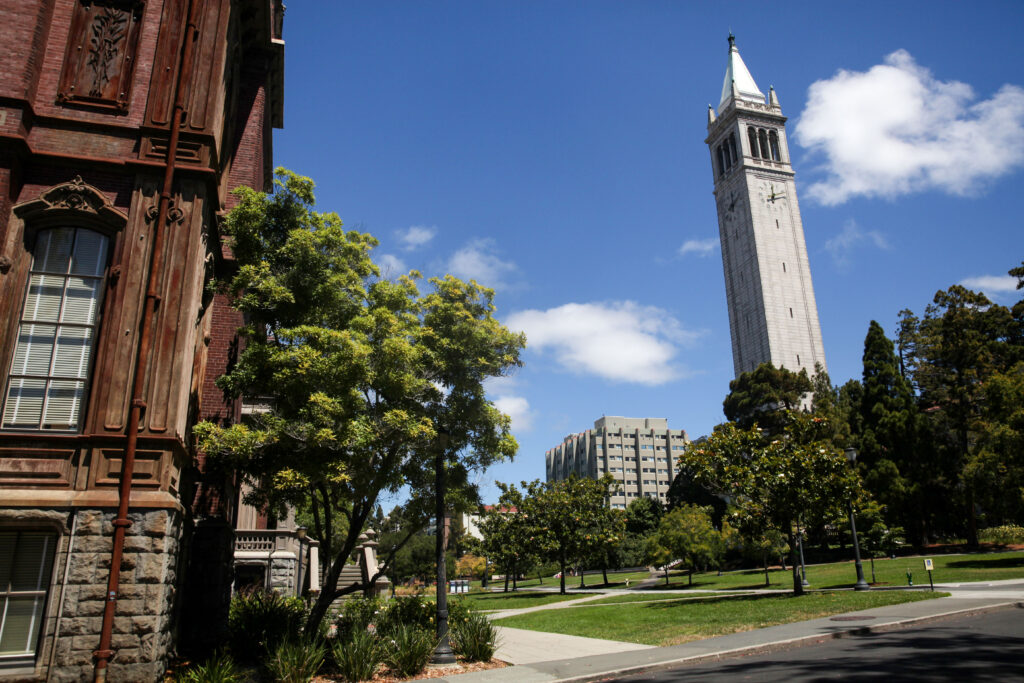
A senior law professor at the University of California, Berkeley, has announced his departure from the institution to join the University of Texas at Austin. His decision stems from concerns over a pervasive ideological radicalism that he believes has started to overshadow academic excellence at Berkeley, particularly regarding the university’s commitment to “Diversity, Equity, and Inclusion” (DEI) initiatives.
John Yoo, a prominent Korean-American legal scholar and professor at the UC Berkeley School of Law, will transition to the School of Civic Leadership at the University of Texas at Austin next year. Yoo has dedicated over 30 years to teaching at Berkeley, with a brief interlude in the George W. Bush administration, where he served as a Deputy Assistant Attorney General in charge of the Office of Legal Counsel, focusing on issues related to national security and terrorism following the events of 9/11. His earlier career also includes positions as a law clerk for Supreme Court Justice Clarence Thomas and a Chief Counsel for the U.S. Senate Judiciary Committee.
In a recent opinion piece published on November 22, Yoo articulated his motivations for leaving Berkeley. He expressed disappointment in how the university has transformed into an environment excessively focused on a singular liberal culture, sidelining other viewpoints.
Yoo stated, “Our colleges and universities have failed to uphold the values of intellectual freedom and free speech.” He criticized the pursuit of DEI goals within American higher education, arguing that it often comes at the expense of nurturing talented students and scholars with diverse opinions.
He continued, “In an effort to increase representation based on superficial characteristics like skin color and gender, this approach compromises the academic rigor and quality of education.” Furthermore, he warned that this trend makes institutions susceptible to harmful ideologies, including anti-Semitism and anti-Western Marxism.
Citing recent events, Yoo highlighted the concerning rise in anti-Semitic sentiments on campus following the horrifying attacks by Hamas against Israel on October 7; he noted that the Israeli self-defense actions sparked an unprecedented wave of anti-Jewish activity on the Berkeley campus.
He further criticized the university’s leniency towards radical behaviors juxtaposed with its intolerance toward conservative or libertarian views among faculty. Yoo reported that Berkeley has consistently refused to hire conservative scholars, despite their qualifications or contributions to the academic community. Instead, hiring committees appear to prioritize candidates based on race, ethnicity, and gender, often avoiding written documentation or public acknowledgment of these practices.
Given these factors, Yoo expressed his unwillingness to remain at Berkeley and retire peacefully and instead opted to move to Texas, inspired by a desire to join those who are committed to defending freedom of speech and intellectual diversity.
In a subsequent interview with Fox News, he expanded on his reasoning for the transition. He remarked, “I have noticed, and it disturbs me, that intolerance is on the rise, and there is a lack of respect for free speech and intellectual thought. I believe the university prioritizes its DEI goals over the pursuit of intellectual and academic excellence.”
In response to Yoo’s commentary, the University of California, Berkeley, issued a statement through its administration that defended its commitment to free speech. The statement indicated, “Berkeley Law has a long-standing tradition of protecting free speech and is committed to academic freedom and intellectual inquiry.” It continued, “In fact, we have been resolutely defending Professor Yoo’s rights to free speech and academic freedom. We believe that universities must be places of intellectual diversity where all ideas and viewpoints can be freely expressed and debated. Berkeley Law will continue to strive for academic excellence, rigorously selecting faculty and students based on merit.”
This situation points to a growing divide in academic environments between traditional values of free thought and the newer ideologies that emphasize representation and inclusivity. The implications of such transitions and the ongoing debates about ideological diversity in colleges remain a critical topic within the realm of higher education.