
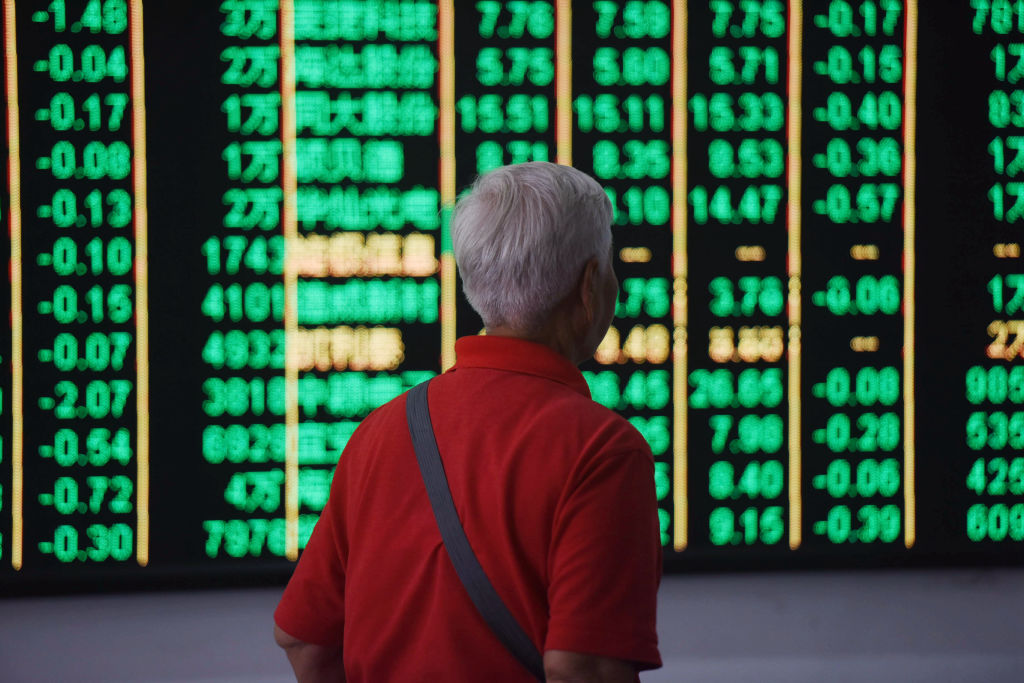
On November 24, the three major indices of A-shares in mainland China opened higher but subsequently retreated, with the Shenzhen Component Index and the ChiNext Index both ending in the red. According to data from Wind, during the opening of trading across exchanges in Shanghai, Shenzhen, and Beijing, 442 stocks were in decline. By midday, this figure increased to 2,271, and eventually reached 3,496 by the market close.
The ChiNext Index, which focuses on innovative and high-tech companies, initially surged by more than 4% in the morning session. However, by lunchtime, its gains had narrowed to 1.9%, and it eventually turned negative, concluding the day at a decrease of 0.05%, with a closing figure of 2,278.99 points. Meanwhile, the Shenzhen Component Index witnessed a decline of 0.29%, finishing at 10,423.6 points. In contrast, the Shanghai Composite Index managed to gain 0.27%, closing at 3,548.37 points.
Throughout the day, the turnover in the Shanghai and Shenzhen markets reached approximately 1.66 trillion yuan, an increase of 102.2 billion yuan compared to the previous trading day.
The evening of November 23 saw Nvidia announce the reinstatement of Jensen Huang as President, Chief Executive Officer, and Board Member. This announcement had a momentary positive impact on certain AI hardware stocks in the A-share market, which rose in the early trading session but subsequently fell back.
Among optical communications firms, both Zhongji Xuchuang and New Easycomm experienced substantial gains at one point, with increases of over 12% and 11%, respectively. However, both stocks reversed their upward trend, closing down by 0.05% and 0.74%, respectively.
In the sector of non-ferrous metals, shares faced significant downturns. Aluminum producer Xinbai Co. saw its stock hit the daily limit down, while Shengda Resources dropped more than 6%. Both Zhaojin Mining and Western Gold saw declines of around 5%. Stocks related to coal and petrochemicals also showed weakness, with opening transactions resulting in losses of over 3% for both Kailuan Co. and Shanxi Coking. Furthermore, Rongsheng Petrochemical and Guanghui Energy both fell by more than 2%.
The ChiNext Index had previously closed up 3.08% on the last trading day. According to an analysis by “China Fund News,” some investors opted to cash in on profits when stock prices surged in the morning of November 24 after the market rebound on the 23rd. “Daily Economic News” highlighted that despite an increase in trading volume for the day, new buying interest was still insufficient to sustain the gains of technology stocks observed in the morning.
In a recent strategic report, Everbright Securities expressed uncertainty regarding whether companies could maintain their current scale of AI investments in the short term. With limited space for economic recovery, the major indices of A-shares still lack the necessary conditions to reverse downward trends.
Additionally, when discussing the performance of A-shares and Hong Kong stocks, Ping An Securities pointed out that factors such as a strong US dollar, ongoing technological restrictions between the US and China, along with weak domestic demand, could continue to hinder a rebound in market valuations.